Women's Fine Gauge Cotton Sweaters Guide
Fine gauge is the knitwear of polish: smooth, light, flat-lying sweaters that layer under jackets and dress up or down. What gauge means, and how to choose and care for fine cotton knits.
Shop Women's Fine Gauge Sweaters Now
Shop Women's Fine Gauge Sweaters on Amazon Shop Women's Fine Gauge Sweaters on eBayThe Amazon and eBay links on this page are affiliate links. If you make a purchase through them, Apparel Search may earn a commission.
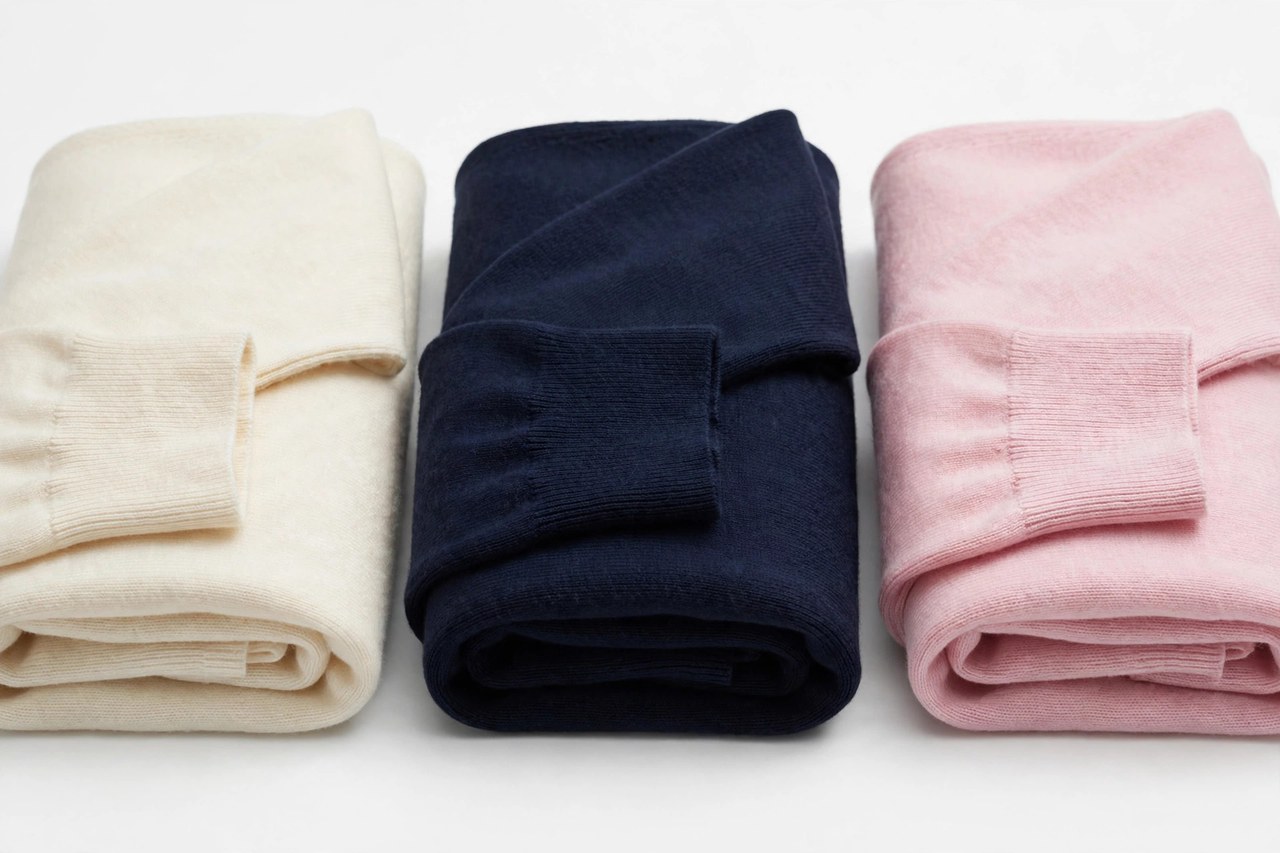
A fine gauge sweater is knitwear at the smooth end of the spectrum: many small stitches, a flat, almost fabric-like surface, and a weight light enough to wear as a top on its own or slide under a blazer without bulk. In cotton, fine gauge is the sweater of spring, summer evenings and air-conditioned offices — polish without warmth overload.
This guide explains what ‘gauge’ actually measures, why fine gauge behaves so differently from chunky knits, how to judge cotton knit quality, and how to care for sweaters that are, by construction, more delicate than their thick cousins.
Gauge, Explained Simply
Gauge is the number of stitches (needles) per inch on the knitting machine. Fine gauge runs roughly 12 to 18 gauge and beyond: more, smaller stitches per inch, giving a smooth, tight, lightweight fabric. Chunky knits sit at 3–7 gauge, with big visible stitches and heavy yarn. Between them, medium gauges (7–12) make the standard winter sweater.
More stitches means more knitting time and finer yarn, which is why genuine fine gauge costs more than its weight suggests. It also means a surface that takes detail beautifully — fine ribs, delicate pointelle, clean stripes — and a garment that folds to almost nothing in a suitcase.
Why Cotton, Why Fine
Cotton is the natural partner for fine gauge. Its smooth fibres knit into a clean surface with little fuzz, it feels cool against skin, and it takes dye in the clear, bright colours fine knits are loved for. A fine cotton sweater breathes in warm weather where a fine wool one would still insulate, and it layers in winter as a sleek under-jacket piece where bulkier knits bunch.
Cotton's trade-offs are real: it has little natural elasticity, so fine cotton knits can grow with wear (elbows and hems first), and it absorbs moisture rather than wicking it. Blends with a little nylon or elastane, or cotton-silk and cotton-modal mixes, quietly fix the shape problem — check the fibre label rather than assuming pure is better.
Quality Checks on Fine Knits
Hold the sweater to the light: a good fine gauge is even and dense, without ladders, snags or thin patches. Seams should be fully-fashioned or neatly linked rather than roughly overlocked — fine knits show sloppy seams through the fabric. Ribbing at cuffs and hem should recover when stretched, and the neckline (crew, V, boat or roll) should lie flat with no bacon-wave curling.
Weight in the hand is a fair guide: an all-cotton fine gauge that feels substantial for its size will wear better than a wispy one. Check for a spare-yarn or repair provision on premium pieces, and always note the care label before buying — most fine cotton is machine-washable on gentle, but not all.
Styling and Care
Fine gauge earns its keep in the in-between outfits: over a collared shirt with the cuffs showing, tucked into high-waisted trousers or a pencil skirt, under a blazer as the ‘top’, or over a slip dress on a cool evening. Because the surface is smooth, it takes jewellery and scarves without competition — see our fashion accessories guide for pairings.
Care is where fine cotton lives or dies. Wash cool and gentle, reshape while damp, and dry flat — never hang a wet knit, which will stretch it a full size longer. Store folded, never on hangers, and de-pill gently when needed. Treated as the refined garment it is, a fine gauge sweater stays in the wardrobe for years.
Fine Gauge Beyond Cotton
Cotton is this page's subject, but the fine gauge family is wider, and knowing the relatives helps you shop it. Fine merino wool gives the same smooth surface with warmth and natural elasticity cotton lacks — the layering choice for cold weather. Silk and silk-blend fine knits add lustre for evening. Linen-blend fine gauge is the high-summer version, cooler and crisper with a drier hand. The gauge stays constant across all of them; only the fibre personality changes. Many wardrobes end up with the cotton for warm months and the merino for cold, in the same few shapes and colours — a small system that layers under everything.
More Top & Knit Guides
More to Explore on Apparel Search
Looking for Women's Clothing Stores?
This guide helps you choose women's fine gauge cotton sweaters. To browse where to buy, visit our women's clothing store directory, where you can find retailers that carry them.