Women's Flannel Scarves Guide
One scarf is a staple; several are a system. How to build a flannel scarf rotation across colours, patterns and widths — plus gifting picks and storage that keeps the nap fresh.
Shop Women's Flannel Scarves Now
Shop Women's Flannel Scarves on Amazon Shop Women's Flannel Scarves on eBayThe Amazon and eBay links on this page are affiliate links. If you make a purchase through them, Apparel Search may earn a commission.
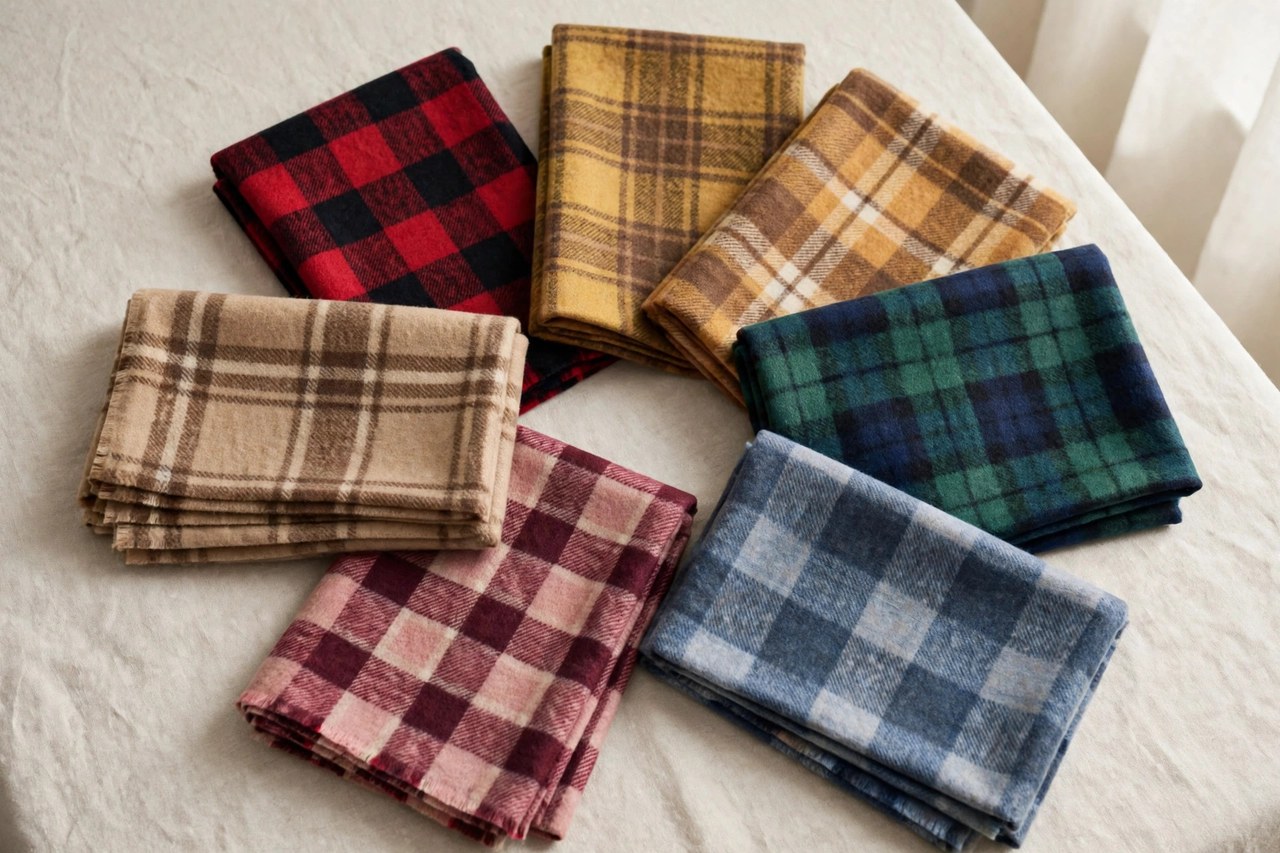
The plural is the point of this page. Our companion guide covers choosing and tying a single flannel scarf; this one is about choosing among scarves — building a small rotation in which each piece earns its place by colour, pattern or width, so that whatever the coat and whatever the weather, one of them is right. All of them share the same cloth virtues: brushed cotton flannel, napped soft, warm without weight, kind to skin that finds wool scratchy.
A rotation is not a pile. Scarves accumulate easily — gifts, impulse buys, the free one from an event — and most collections end up as five near-identical pieces and nothing for the day that is actually different. What follows is the deliberate version: the roles a collection needs filled, how to read colour and width across pieces rather than one at a time, and how to store the result so every scarf comes out of the drawer ready to wear.
The Three-Scarf Rotation
Start with three roles. The workhorse is a standard-length scarf in a deep, neutral solid — charcoal, navy, deep burgundy, forest — that goes with every coat you own and takes daily wear without showing it. The light layer is paler or lighter-weight: a soft heather or pastel for spring and autumn, indoor wear and outfits where the dark workhorse would land too heavily. The statement is the wide or long piece — blanket scale, a bold solid, or a rich colour you love — reserved for plain coats and cold days when the scarf is the outfit's top half.
With those three roles filled, every further scarf should have to argue its case: a new colour family, a genuinely different width, or a pattern type the drawer lacks. That discipline is what separates a rotation from a drawer of duplicates, and it makes getting dressed faster, not slower, because each morning's choice is between pieces that do different jobs.
Choosing Across Colours, Patterns and Widths
Plan colour as a palette, not as single purchases. Lay your coats out mentally — most wardrobes have two or three winter coats — and make sure the rotation covers each: one scarf that disappears elegantly into the coat's tone, one that contrasts for the days you want the scarf seen. In plain flannel the colour story is solid versus heather: heathers read softer and hide lint and wear, while clear solids look sharper and more deliberate. Skin tone arbitrates the close calls, because a scarf frames the face — hold candidates near your chin, not your hand, when choosing.
Width and length are the second axis. A collection of identical standard scarves in five colours is less useful than three widths: a standard for daily loops, a wide wrap for real cold, and a long slim scarf for styling moves and milder days. Patterns, where you add them, work hardest on the statement piece — one patterned scarf in colours drawn from your solids will coordinate with the whole rotation instead of fighting it.
Gifting Flannel Scarves
Flannel scarves are near-ideal gifts: one size, no fit risk, useful for months, and the brushed cotton suits almost everyone, including recipients who cannot wear wool. For gifting, buy the workhorse role unless you know the recipient's drawer well — a standard-length scarf in a deep, flattering solid gets worn weekly, while a novelty choice gets worn once. Check the finishing as you would for yourself: even nap, clean hems or tidy fringe, no skew in the cut.
Presentation is simple and effective: fold the scarf lengthwise, roll it, and tie the roll with ribbon or a strip of contrasting fabric rather than crushing it into a small box, which sets creases in the nap. Include the care basics on the card — cool gentle wash, line dry, brush to refresh — because the recipient will not have this page open when laundry day comes. A scarf given in autumn gets a full season of gratitude; the same scarf in late spring waits six months for its first compliment.
Storage and Care for a Collection
Store scarves so air reaches them and the nap is not crushed: folded loosely in a drawer, rolled in a basket, or hung over a wide bar or scarf hanger with several loops so no single crease becomes permanent. Keep colours together and the rotation visible — a scarf stored out of sight is a scarf that might as well not be owned. Cedar or lavender sachets in the drawer are a pleasant guard for natural-fibre storage, and a quick shake and brush when a scarf comes out restores the surface before wearing.
Wash by need rather than by schedule: scarves worn over makeup and perfume benefit from a gentle cool wash every few wears, while outer-layer pieces go longer. Wash like with like, dry flat or on a line, and never store a scarf away damp or soiled for the season — stains set and nap flattens. At season's end, wash the rotation, dry it fully, and store it clean; next autumn's first cold morning should start with a drawer of scarves that are ready, not a laundry project.
Related Women's Guides
More to Explore on Apparel Search
Looking for Women's Clothing Stores?
This guide helps you choose women's flannel scarves by colour, width and collection role. To browse where to buy, visit our women's clothing store directory, where you can find retailers that carry them.