Women's Lab Coats Guide
A knee-length protective coat that doubles as a professional uniform: what a lab coat is made of, how it should fit, and how it differs from scrubs.
Shop Women's Lab Coats Now
Shop Women's Lab Coats on Amazon Shop Women's Lab Coats on eBayThe Amazon and eBay links on this page are affiliate links. If you make a purchase through them, Apparel Search may earn a commission.

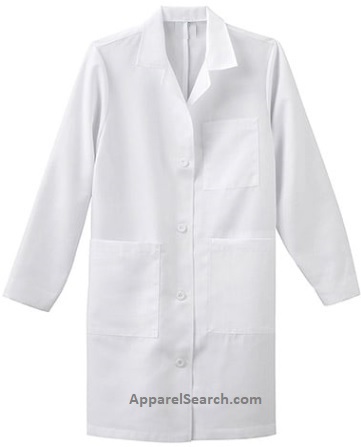
A women's lab coat is a protective coat worn by workers in a laboratory and by professionals across the medical field. A white coat — also called a laboratory coat — is a knee-length overcoat or smock: it protects your street clothes underneath and also serves as a simple, recognizable uniform. Ladies' lab coats are typically white, but that is not an absolute requirement; light colors are chosen because they make it easy to see if the coat is clean.
This guide covers the coat itself: the fabrics it is cut from, the details that make it protective rather than merely decorative, how it should fit, and how it is laundered. For the wider world of medical workwear, see the medical clothing directories, uniform stores and definitions linked at the foot of this page.
Fabrics: Cotton, Linen and Blends
The classic lab coat is made from white or light-colored cotton, linen, or a cotton-polyester blend. The fiber choice is practical, not cosmetic: the fabric must allow the coat to be washed at high temperature, wash after wash, without shrinking out of shape or yellowing. Cotton and linen are absorbent — an important safety property described below — while a polyester blend adds wrinkle resistance and durability for coats that are laundered daily.
Weight matters too. A heavier twill stands up to industrial laundering and gives the coat its structured, professional drape; a lighter poplin is cooler for warm clinics and teaching labs. Whichever cloth you choose, check that the white is a true, bright white: in clinical settings the coat is read as a cleanliness signal, and a greyed or stained coat undermines it.
Built for Protection
When used in the laboratory, lab coats protect against accidental spills — acids are the classic example. For that job they usually have long sleeves and are made of an absorbent material such as cotton, so that a splash is soaked up by the coat rather than reaching the skin at once, buying the wearer time to remove the garment safely.
Details follow the same logic. Some lab coats have buttons or elastic at the end of the sleeves, to secure them around the wrist so they do not hang into containers of chemicals. Short-sleeved lab coats also exist where protection from substances such as acid is not necessary, and they are favored by certain scientists, such as microbiologists, avoiding the problem of hanging sleeves altogether, combined with the ease of washing the forearms — an important consideration in microbiology. Knit cuffs, concealed snap fronts and side vents for access to trouser pockets are worth looking for when you shop.
Lab Coats and Scrubs
The white coat is sometimes seen as the distinctive dress of both physicians and surgeons, worn over street clothes or over scrubs. Scrubs themselves are the sanitary clothing worn by surgeons, nurses, physicians and other workers involved in patient care in hospitals. Originally designed for operating-room personnel, who put them on when sterilizing themselves — “scrubbing in” — before surgery, they are now worn by many hospital personnel, and their use has extended outside hospitals to work environments where clothing may contact infectious agents, such as veterinary and midwifery practices.
Scrubs are designed to be simple, with minimal places for contaminants to hide, easy to launder, and cheap to replace if damaged or stained irreparably. The lab coat plays the opposite role: it is the durable, identity-carrying layer — often embroidered with a name and title — worn over scrubs or office clothes. Many professionals own both: scrubs for procedures, the coat for rounds, consultations and teaching.
Fit and Care
A lab coat should close comfortably over the clothing beneath it without pulling across the back, and the sleeves should reach the wrist so the cuff can do its protective work. Knee length is standard; shorter “consultation” coats exist for settings where the full coat is impractical. Pockets are functional, not decorative: look for two large patch pockets and a chest pocket that will hold a pen, notebook or phone securely.
Care is industrial by design. Wash whites hot, treat stains promptly, and keep lab coats separate from ordinary laundry so the white stays white. Replace a coat when the fabric thins or the cuffs fray — a coat that no longer closes properly has stopped being protective equipment and become a costume.
Related Women's Guides
Photos
Looking for Women's Clothing Stores?
This guide helps you choose women's lab coats. To browse where to buy, visit our women's clothing store directory, where you can find retailers that carry them.