Women's Peasant Shirts Guide
The peasant shirt is the blouse that blouses: a wide-necked, full-sleeved top gathered so the fabric pouches softly over the body, echoing the informal folk dress worn long before the 1890s ended.
Shop Women's Peasant Shirts Now
Shop Women's Peasant Shirts on Amazon Shop Women's Peasant Shirts on eBayThe Amazon and eBay links on this page are affiliate links. If you make a purchase through them, Apparel Search may earn a commission.
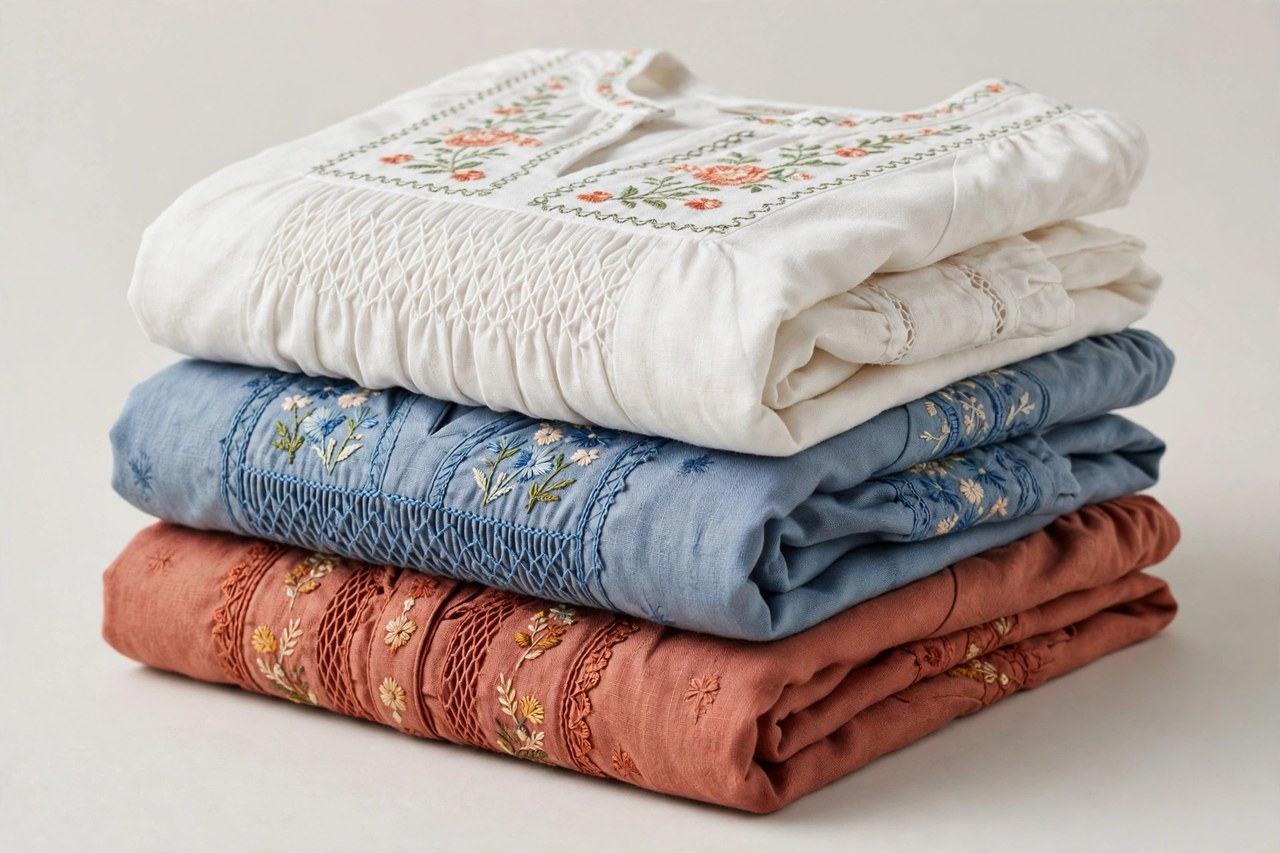
A peasant shirt — more often sold today as a peasant blouse — is a loose top modeled on traditional folk dress, defined by its gathering. The fabric is gathered at the neckline, and often at the waist and cuffs as well, so that it blouses: it pouches and billows softly out over the body between the gathered points instead of lying flat against it. That blousing is the garment's whole character — soft volume held in check at the edges.
The style echoes traditional dress that was already old by the late nineteenth century: before the 1890s, such gathered, informal blouses belonged to folk and working dress across Europe, worn for labor and festivals alike, in a world where formal clothing was structured and boned. Fashion has revived the peasant blouse in wave after wave ever since. This guide explains its construction — the wide neck, the full sleeves, the elastic and smocking — and how to choose and style it.
Construction: Gathering, Elastic and Smocking
The gathering is done three ways, sometimes combined in one garment. Elastic shirring threads elastic through channels at the neckline, waist or cuffs, giving stretch, adjustability and the familiar ruffled edge. Smocking gathers fabric with decorative elastic stitching worked in rows, creating a stretchy, textured panel often used across the bodice or at the waist; hand-smocking is the traditional craft version. Drawstrings and ties gather the neckline with a cord finished in tassels or beads, the most folk-authentic method and the most adjustable.
Where the gathering falls decides the silhouette. A blouse gathered only at the neckline falls free and full to the hem — the classic untucked peasant look. Gathering or elastic at the waist creates blousing above it and a defined middle, flattering with high-waisted jeans and skirts. Gathering at the cuffs creates the full sleeve's balloon; gathering at the neckline lets the wide neck sit on the shoulder, scooped, or off the shoulder. When shopping, test the elastic: it should recover crisply, because tired elastic is what turns blousing into mere bagginess.
Necklines and Sleeves
The neckline is characteristically wide — a broad scoop, square or boat shape cut generously so the gathering has room to work. Many styles are designed to be worn two ways, on the shoulder for a scoop-neck look or pulled down off both shoulders for the bardot-style version that dominates summer versions. Keyhole ties, split necks with tassel cords, and lace-edged square necklines are the common variants, all preserving the width that defines the style.
Sleeves are puffed or full, the natural partner of a gathered neckline. Short puff sleeves gather into bands at the upper arm; three-quarter and long sleeves gather into elastic or smocked cuffs at the forearm or wrist, blousing above them; and bell-shaped variants flare below the elbow with gathering only at the top. Sleeve volume balances the top: the fuller the sleeve, the simpler the bottom half of the outfit should be.
Fabrics, Embroidery and Choosing
Light, soft fabrics blouse best: cotton voile and gauze for summer, rayon challis for fluid drape, linen blends for a crisper folk feel, and chiffon for dressier evening versions, usually lined or worn over a camisole. Stiff fabrics fight the gathering and should be avoided in this style. Decoration follows folk tradition: floral embroidery at the yoke and cuffs, crochet or lace edging at the neckline, pintucked panels, and tassel ties, in white-on-white, earthy multi-color, or print versions where a floral or paisley pattern does the decorative work alone.
Fit is forgiving by design, but not scale-free. The blouse should blouse, not drown: if you are petite, choose shorter lengths and smaller sleeve volume; if you want definition, choose a style with a smocked or elastic waist rather than belting a free-hanging one and crushing its gathers. Check that off-shoulder elastic stays where you put it through a reach test, that embroidery is backed smoothly, and that the length works both untucked and tucked — a good peasant blouse does both, which doubles its wardrobe life.
Styling and Care
The peasant blouse is a natural partner for denim in every form — jeans, cut-offs, denim skirts, and it dresses up with a flowing midi skirt, wide-leg trousers or tailored shorts. The styling principle is balance: soft volume on top, cleaner lines below. Tuck it into high-waisted bottoms to use the blousing deliberately, or wear it loose over slim trousers. Jewelry follows the folk register — hoops, layered pendants that sit above the wide neckline, stacked bracelets below a gathered cuff — and a woven or leather bag completes the picture better than a structured one.
Care for the gathering first. Wash in cool water on a gentle cycle, inside out to protect embroidery and tassels, and avoid high dryer heat, which is the enemy of elastic at neckline, waist and cuffs — air drying keeps smocking and shirring alive years longer. Iron or steam around embroidered areas rather than over them, and store folded or hung by the body, not dangling from the neckline elastic. A peasant blouse is one of fashion's most durable revivals precisely because it asks so little: soft fabric, honest gathering, and a body allowed to move underneath both.
Related Women's Guides
Photos

More to Explore on Apparel Search
Looking for Women's Clothing Stores?
This guide helps you choose women's peasant shirts. To browse where to buy, visit our women's clothing store directory, where you can find retailers that carry them.