Women's Petite Belts Guide
A petite belt is shorter in total length, narrower in width and holed for a smaller waist — so it cinches a short torso and a shorter rise without a long tail or a waistband swallowed whole.
Shop Women's Petite Belts Now
Shop Women's Petite Belts on Amazon Shop Women's Petite Belts on eBayThe Amazon and eBay links on this page are affiliate links. If you make a purchase through them, Apparel Search may earn a commission.
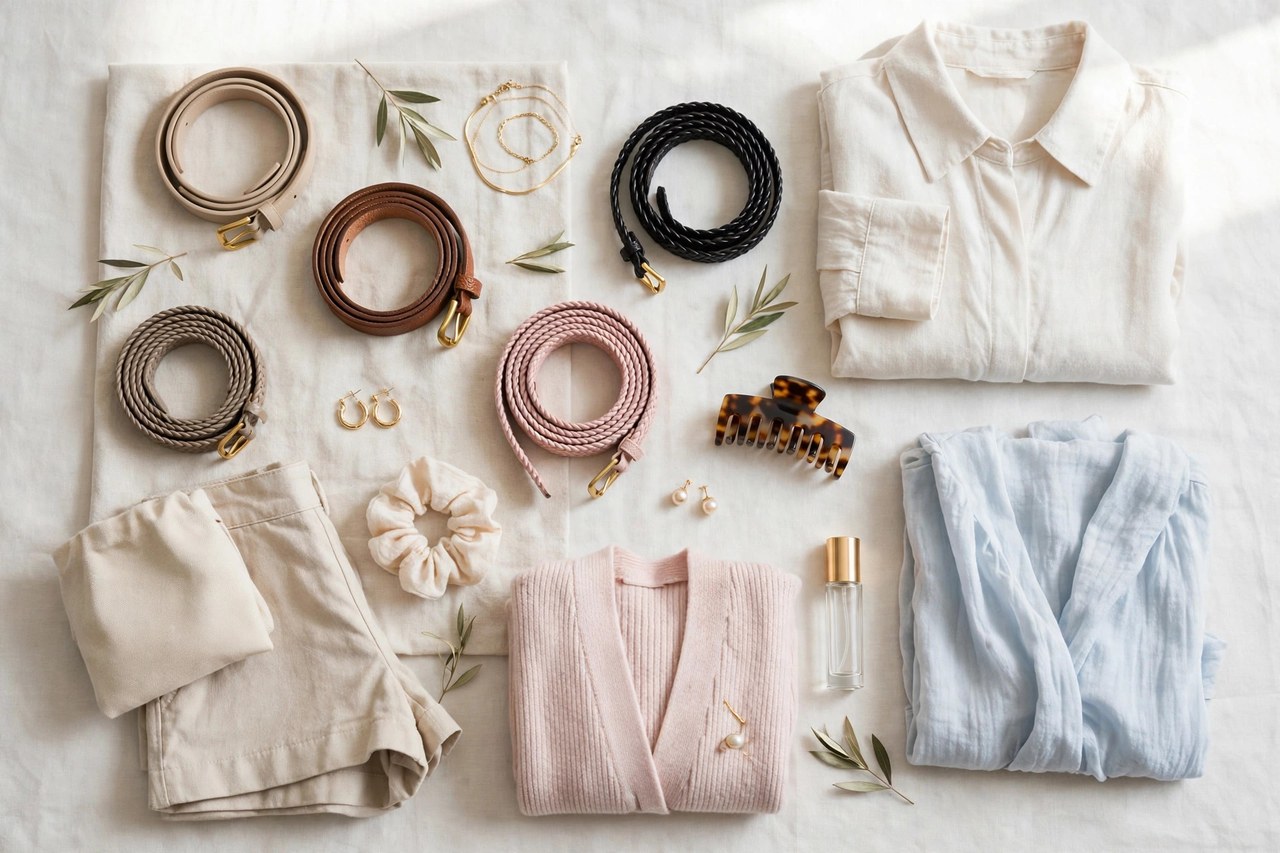
A petite belt solves two specific problems that regular belts create for women 5'4" and under. The first is length: a regular belt fastened on a smaller waist leaves a long loose tail that must be tucked, doubled back or left flapping past the hip. The second is width: on a shorter torso and a shorter trouser rise, a wide regular belt covers so much vertical space that it shortens the body further and crowds both the ribs and the hip bones. Petite belts are cut shorter, punched for smaller waists and made narrower.
This guide explains petite belt sizing in inches, the widths that suit dresses, trousers and jeans on a petite frame, the main buckle and material types, and how to wear a belt so it defines a petite waist at its true position. A belt is the cheapest fit tool in the wardrobe — it rescues loose petite dresses, keeps trousers at the right rise and adds finish — but only when its own proportions are right.
Petite Belt Sizing: Length, Holes and Waist Position
Belt size is measured from the buckle fold to the middle hole, and petite belts typically run about two to four inches shorter than regular equivalents, with five holes spaced to cover smaller waists without the strap ending halfway around the back. As a rule, choose a belt two inches above your trouser size, then check the actual inches: a petite small often centers near 28 to 30 inches, a medium near 32 to 34, but brands vary, so inches beat letters every time.
Hole placement matters as much as total length. On a petite belt the first hole starts closer to the tip, so the fastened belt still leaves a short, neat tail of about three to five inches that reaches the first belt loop and stops. Waist belts worn over dresses should be measured over the dress at the natural waist, which on a petite torso sits higher than many expect. If you consistently fasten a regular belt on its last hole with a long tail remaining, you are a petite belt size regardless of your dress size.
Widths and Styles for a Shorter Torso
Width is the petite belt decision. Skinny belts of half an inch to three-quarters define the waist of a dress or high-rise skirt without dividing a short torso in half, and they thread the small belt loops common on petite trousers. Classic widths around one inch suit jeans and tailored trousers. Wide belts above two inches work on petites only when worn at the true waist over a simple dress, in a color close to the dress, so they shape rather than slice the silhouette.
Styles follow the same scaled logic. Leather trouser belts with small, flat buckles sit cleanly under untucked tops. Stretch and woven belts fasten anywhere along their length, forgiving waist changes through the day and eliminating the hole problem entirely. Chain and sash belts in petite lengths drape at the hip without pooling. Buckles should scale down too: an oversized buckle on a narrow petite strap looks borrowed and digs when you sit, because a shorter torso brings buckle and ribs closer together.
Wearing Belts with Petite Dresses, Trousers and Jeans
With dresses, place the belt at the natural waist — on a petite dress, the waist seam is already raised to the correct point, and the belt should follow it, gathering bloused fabric evenly all around rather than pulling the front down. With high-rise petite trousers and jeans, whose rise is shorter by design, a one-inch belt fills the waistband channel exactly and keeps the rise from rolling; match the belt width to the loop height, since forcing a wide belt through petite loops distorts both.
Color strategy extends a petite silhouette. A belt matched to your trousers lengthens the leg line, a belt matched to your top lengthens the torso, and a contrast belt deliberately marks the waist — choose which effect the outfit needs rather than defaulting to contrast. Tucked tops on petites benefit from a neat, flat buckle that does not print through knitwear. For low-rise styles, a slightly longer hip belt worn on the diagonal softens the line, but keep the tail short or looped once, never trailing.
Materials, Care and Buying Tips
Full-grain and top-grain leather petite belts age best and hold their holes without stretching; bonded leather and coated synthetics cost less but crack at the fastening hole first. Fabric, elastic and braided belts trade longevity for adjustability and comfort at the waist. Check stitching at the buckle fold, smooth hole edges that will not fray, and a buckle fastening that is screwed or stitched rather than glued — the buckle end takes the strain of every fastening, on every wear.
Store belts rolled or hung by the buckle, never folded sharply, and keep leather away from the humidity that warps it. Condition leather occasionally and let a wet belt dry flat at room temperature. When buying online, insist on the length in inches and the width; if only a dress size is given, message for measurements or choose a stretch or braided style that self-adjusts. One black, one brown and one dress belt in true petite proportions will quietly correct the fit of half the clothes you already own.
Related Women's Guides
More to Explore on Apparel Search
Looking for Women's Clothing Stores?
This guide helps you choose women's petite belts. To browse where to buy, visit our women's clothing store directory, where you can find retailers that carry them.