Women's Vintage Vests Guide
A vintage vest is a women's waistcoat or vest from an earlier era — tailored suit waistcoats, 1970s suede and fringed vests, beaded evening vests, knitted sweater vests — worn as a layer over blouses and dresses.
Shop Women's Vintage Vests Now
Shop Women's Vintage Vests on Amazon Shop Women's Vintage Vests on eBayThe Amazon and eBay links on this page are affiliate links. If you make a purchase through them, Apparel Search may earn a commission.
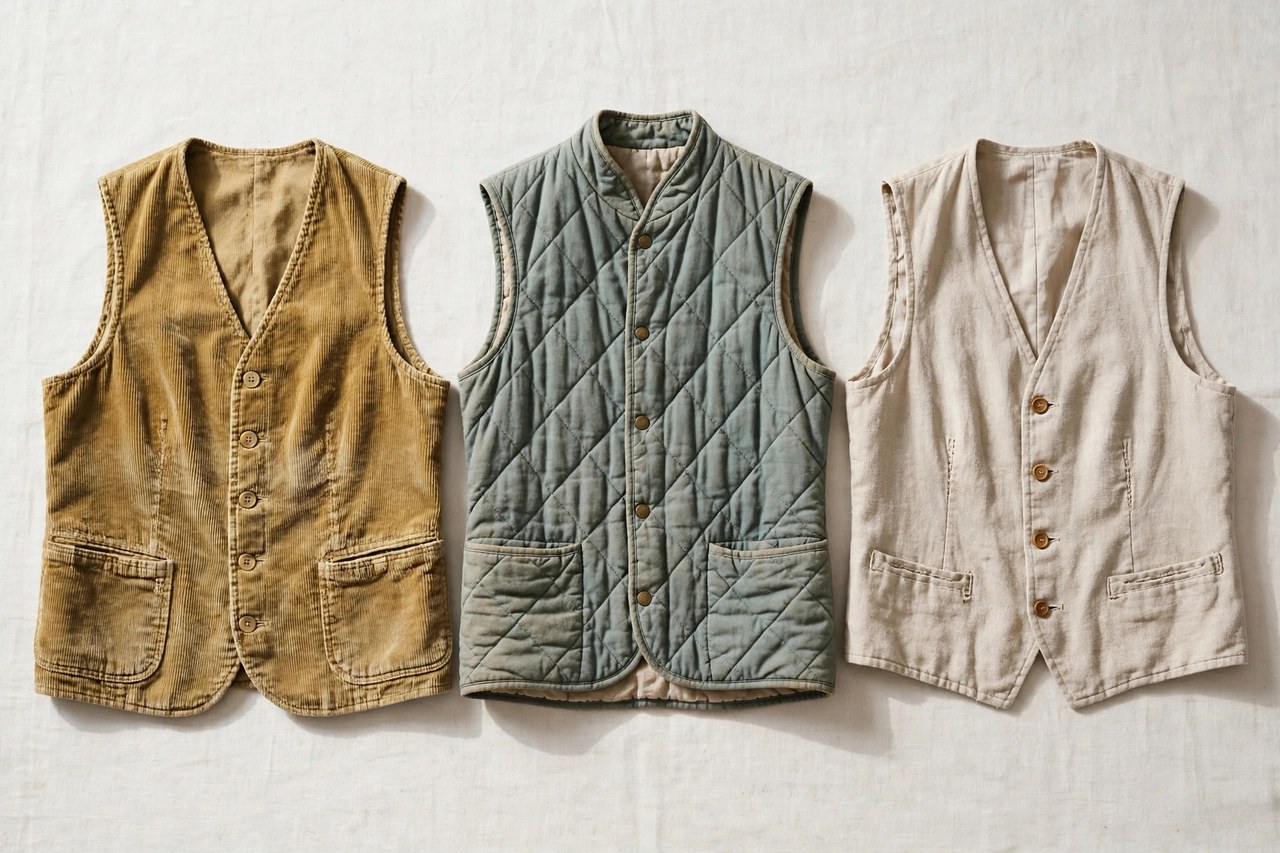
A vintage vest is a women's waistcoat or vest from an earlier era — tailored suit waistcoats, 1970s suede and fringed vests, beaded evening vests, knitted sweater vests — worn as a layer over blouses and dresses. Vests borrow from menswear, folk dress and evening wear at once, so this guide separates those three families: their fabrics and construction, how each was worn in its era, and fitting a garment that was often cut over other clothing.
This guide covers vintage vests in the order a careful buyer needs it: what the product is made from, how it is constructed, how it should fit, how to choose it for real use, and how to care for it so it lasts. Apparel Search has published guides to women's clothing for decades, and this rebuilt page keeps the subject focused — measurable details, named materials and checks you can perform in a shop or on a parcel's arrival, rather than general fashion language.
Fabrics and Construction of the Era
Vintage garments were made from the fibres and cloth of their time — rayon and silk in the early decades, nylon and the new synthetics from the 1950s, polyester at its 1970s peak, and quality wool, cotton and linen throughout — and finished with era methods: bound and pinked seams, hand-set zips, lined bodices and generous seam allowances that modern production rarely matches at the same price level.
Construction is a vintage garment's evidence and its value: it dates the piece, and it decides whether the piece can be altered, repaired and worn. Read the inside of any vintage garment before its outside. The tailored vintage waistcoat keeps menswear's construction inside a women's garment — a fashion-fabric front, a plain lining back with a cinch strap, because the back was never meant to be the show side. Fastenings, labels and seam finishes each narrow the era, and together they are more trustworthy than style alone.
Era Sizing and Modern Fit
Vintage sizing does not map to modern sizing: mid-century labels can run two or more sizes smaller than today's, era cuts assumed era foundation garments, and individual garments have been altered across their lives. The only reliable language is measurement — the garment's own bust, waist, hip, length and any fit-critical dimension, compared with yours.
Fit a vintage garment to its hardest dimension and tailor the rest: bust and shoulder on tops, waist and rise on trousers, waist on dresses and skirts. Era seam allowances often allow letting out an inch or more — more generosity than modern clothes offer — and a tailor who works with old textiles is the vintage wearer's essential tradesperson.
Buying Vintage With Confidence
Choose vintage vests by measurable criteria in a fixed order: condition graded honestly (fibre soundness first, seams, fastenings, odour), measurements against your own, alteration potential, and only then era and style. In practice, rank these checks in the order your own use demands — frequency of wear first, then weather, washing facilities and budget — because that order differs by wardrobe, and it is the real reason two careful buyers can correctly choose differently from the same rail.
Judge price by rarity multiplied by condition, not by age alone: common pieces in poor condition are cheap whatever their decade, and a sound, wearable garment in a sought-after style commands its price honestly. Buy the seller's evidence — measurements, flaw lists, clear photographs — and be wary of romance in place of facts.
Cleaning and Storage
Clean vintage gently and only as much as needed: many pieces need airing and spot care rather than washing, fragile fibres (old silk, early rayon) need specialists, and sturdy cottons, wools and nylons tolerate careful hand washing in cool water. Test colourfastness first, support a wet garment's weight, and never wring old fabric.
Store vintage clean, dry and dark: folded with acid-free tissue for heavy, beaded or fragile pieces, hung on padded hangers only for sound tailored garments, never sealed in plastic. Moths target soiled wool, light fades and weakens, and damp does everything at once — a cool, dark, dry cupboard is a vintage collection's whole preservation policy.
Common Questions
How should a vintage waistcoat fit?
Close across the bust and waist with the buttons closing flat, and long enough to meet the waistband beneath. Remember many were cut to be worn over a blouse, so a vest that feels roomy over bare skin may be exactly right over its intended layer.
What is the back strap on a waistcoat for?
The cinch buckle at the back adjusts the waist fit — a survival from menswear tailoring. On vintage pieces the strap and buckle are also dating details and a common loss; a missing buckle lowers value and is worth checking in photographs before purchase.
How do I style a 1970s suede vest today?
As the texture note in a simple outfit: over a plain dress or tee and jeans, with the suede's colour doing the work. Suede vests are robust survivors — brush the nap, treat water spots by steaming lightly, and they ask little else.
Related Women's Guides
More to Explore on Apparel Search
Looking for Women's Clothing Stores?
This guide helps you choose women's vintage vests. To browse where to buy, visit our women's clothing store directory, where you can find retailers that carry them.