Australia Clothing Customs
Importing apparel and textiles into Australia - the agency, the checks and the preparation
Clothing shipped into Australia crosses a border that is managed, first and foremost, as a security and integrity system. The Australian Customs Service - the agency importers deal with at www.customs.gov.au - manages the security and integrity of Australia's borders, and every carton of apparel, footwear or fabric entering the country moves through that system. For a fashion business, understanding what the agency does, who it works with, and how it chooses what to examine is the starting point for importing into Australia without surprises.
This guide explains the Australian customs operation in the terms that matter to the clothing trade: the scale of the organisation behind the border, the partner agencies whose work touches imported goods, the targeting methods used to select cargo for examination, and the practical preparation that helps an apparel shipment clear cleanly. Duty rates, classification rulings and entry rules change over time, so confirm the current requirements for your specific goods with the customs agency or a licensed broker before you ship.
Start Here
The Agency Behind the Border
Customs is a national organisation employing over 4,800 people in Australia and overseas, with its Central Office in Canberra. That scale matters to importers because it means the border is staffed as a continuous national operation rather than a set of local offices: the same agency that patrols the coastline also processes the flow of commercial cargo, postal items and travellers through Australia's ports and airports.
The agency's reach extends well beyond the dock. It maintains a fleet of ocean-going patrol vessels and contracts two aerial surveillance providers for civil maritime surveillance and response, so goods approaching Australia are watched long before they arrive. Its clients reflect that breadth: the Australian community, the Government, industry, travellers and other government agencies all rely on the same border system that an apparel importer uses.
Working With Partner Agencies
No single agency checks everything in a clothing shipment, and Australian Customs works closely with other government and international agencies to detect and deter the unlawful movement of goods and people across the border. Its named partners include the Australian Federal Police, the Australian Quarantine and Inspection Service, the Department of Immigration and Multicultural and Indigenous Affairs and the Department of Defence.
For the clothing trade, the quarantine partnership is the one felt most directly. Garments are low-risk compared with food or plant material, but the packaging around them is not: timber pallets, wooden cases and natural-fibre packing can attract quarantine attention in a country that guards its agriculture closely. An importer who understands that customs and quarantine operate side by side will choose packing materials, and prepare paperwork, with both agencies in mind rather than being surprised when a shipment is held for a second look.
How Cargo Is Targeted and Checked
Protecting the Australian community through the interception of illegal drugs and firearms is a high priority, and the methods built for that work shape how all cargo - clothing included - is screened. Sophisticated techniques are used to target high-risk aircraft, vessels, cargo, postal items and travellers, including intelligence analysis, computer-based analysis, detector dogs and a range of other technologies.
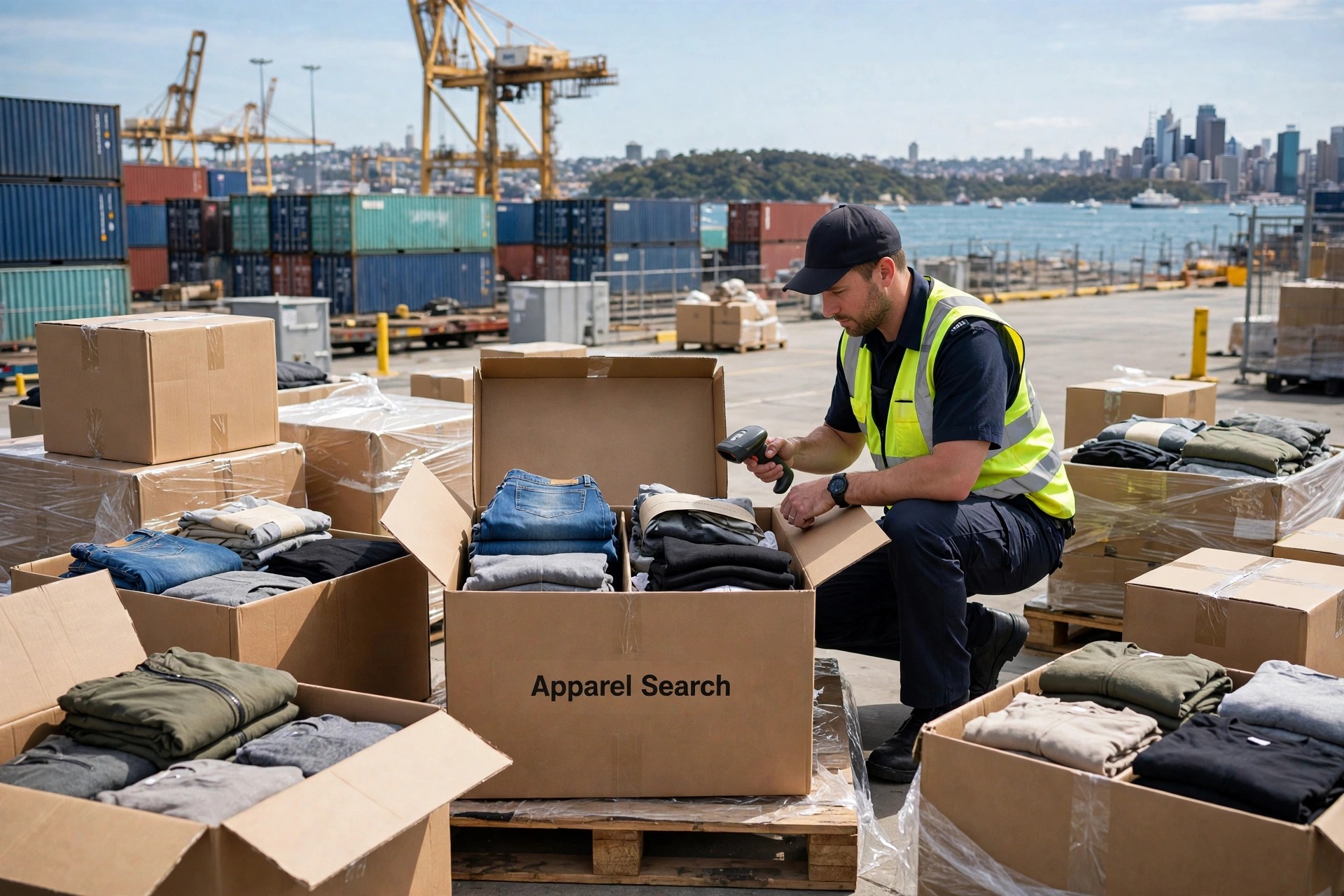
The practical lesson for apparel importers is that examination is risk-based, not random. A shipment whose documentation is complete, consistent and filed on time presents a low-risk profile; a shipment with vague descriptions, mismatched quantities or a muddled paper trail invites exactly the kind of analysis the system is designed to apply. Most clothing clears without being opened, but the decision rests on the quality of the information supplied before the goods arrive. Clear, accurate declarations are therefore not clerical detail - they are the importer's main tool for a fast clearance.
Preparing a Clothing Shipment for Australia
Good preparation follows from how the system works. Describe garments precisely on your commercial documents - fibre content, garment type and quantity - rather than using broad labels that force an officer to guess. Keep invoices, packing lists and transport documents consistent with each other, because computer-based analysis is built to spot where they disagree. Think about the whole consignment, including pallets and packing, with quarantine in mind. And build time into your delivery promises: even a well-prepared shipment can be selected for examination, and a retailer waiting on stock is better served by an honest buffer than by a promise that assumed instant release.
Finally, treat the customs agency itself as a resource. Industry is one of its named clients, and the agency publishes guidance for importers through its official site. Rules and requirements change, so check the current position for your goods before each new shipping programme rather than relying on what cleared last season.
Common Questions
Which agency manages Australia's border for imported clothing?
The Australian Customs Service manages the security and integrity of Australia's borders. It is a national organisation with over 4,800 people in Australia and overseas and its Central Office in Canberra, and it works with partner agencies including the Australian Federal Police and the Australian Quarantine and Inspection Service.
Why might a clothing shipment to Australia be examined?
Examination is risk-based. Customs uses intelligence analysis, computer-based analysis, detector dogs and other technologies to target high-risk aircraft, vessels, cargo, postal items and travellers. Incomplete or inconsistent documentation raises a shipment's risk profile, while complete and consistent paperwork helps it clear.
Does quarantine affect apparel imports into Australia?
It can. Customs works closely with the Australian Quarantine and Inspection Service, and while garments themselves are comparatively low-risk, packing materials such as timber pallets and wooden cases can attract quarantine attention, so packing choices should be made with both agencies in mind.
References & Further Reading
More to Explore
Return to the Customs & Import Guide main page for customs information on other countries and the full import guide:
Customs & Import Guide