Switzerland Clothing Customs
Importing apparel and textiles into Switzerland - the authority, the process and the preparation
Clothing shipped into Switzerland is cleared by the Swiss customs administration (Federal Customs Administration). For an apparel brand, importer or retailer, that authority sets the requirements the goods must meet, assesses the duties and taxes on them, and decides which consignments to examine before release. This guide explains who the authority is, what its record shows about how it works, and how a clothing shipment moves through its system.
The sensible first step is the one Switzerland's own customs resources recommend: contact the customs office and learn the country's current requirements for your specific goods before you ship. Duty rates and entry rules change over time; what follows describes the authority, its history and the clearance process in the terms that matter to the clothing trade.
Start Here
The Customs Authority for Switzerland
Switzerland - die Schweiz, la Suisse, la Svizzera, la Svizra in its four national languages - officially the Swiss Confederation, is a federal republic of 26 cantons with Bern as the seat of the federal authorities. It is a landlocked country in Western Europe bordered by Germany to the north, France to the west, Italy to the south and Austria and Liechtenstein to the east, and geographically divided between the Alps, the Central Plateau and the Jura. Its area is 41,285 square kilometres.
What the Record Shows
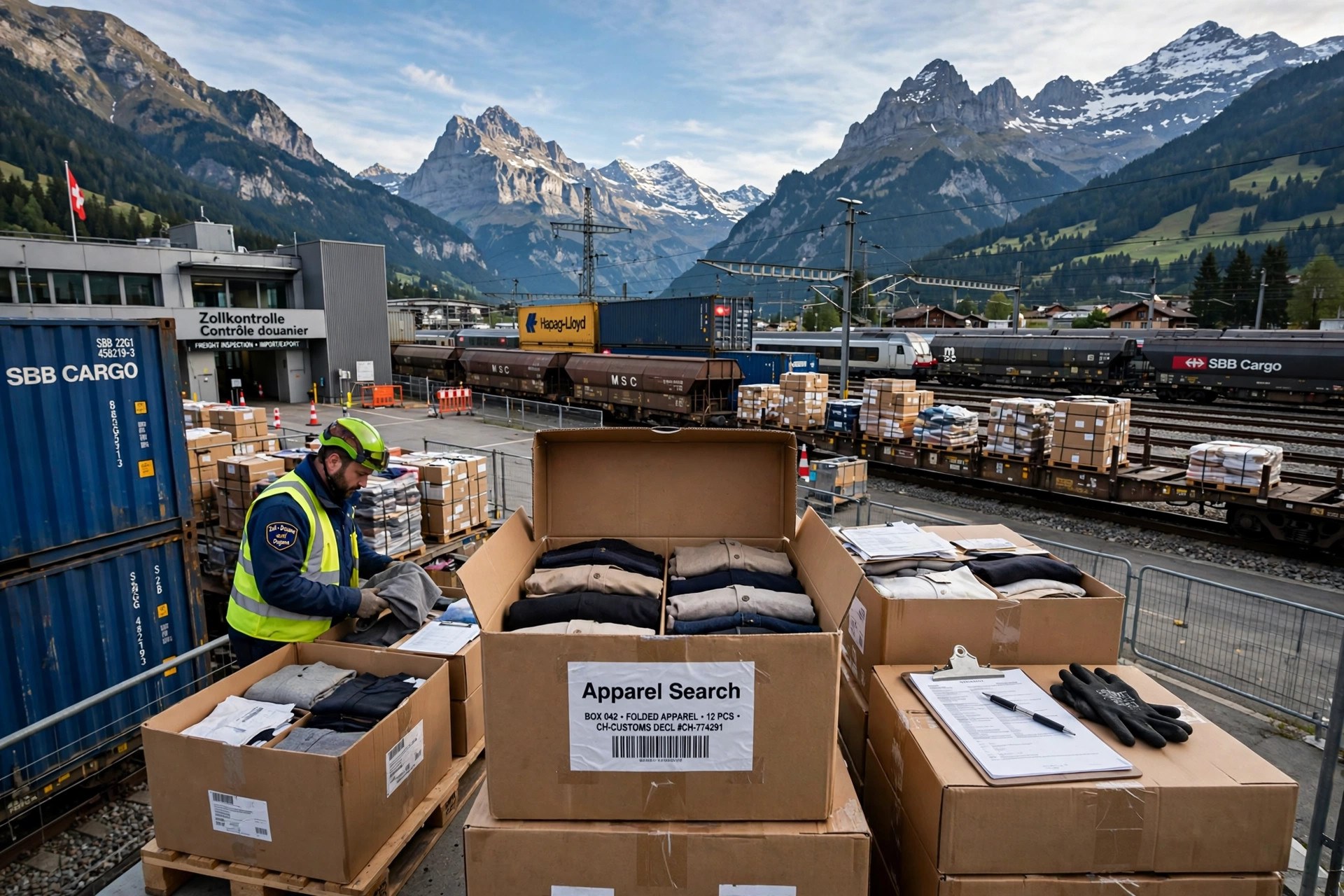
A landlocked country surrounded by EU member states but not itself an EU member, Switzerland runs its own customs system at borders that sit inside Europe's trading heartland. Every garment entering Switzerland crosses that system by road, rail or air - there is no seaport shortcut - so Swiss customs procedure is a daily reality for the brands and retailers supplying the Swiss market, administered through the federal customs channels (admin.ch).
How a Clothing Shipment Is Cleared in Switzerland
A clothing shipment is cleared on its documents before it is cleared on its goods. The declaration describes each garment line - what it is, what it is made of, how many, and what it is worth - and the commercial invoice, packing list and transport document must tell the same story. Where the documents agree, clearance is a process; where they disagree, it becomes an investigation, and the goods wait while it runs.
Release is the end of a chain that starts at the supplier's packing bench. Customs in Switzerland works from the entry the trader files, and the entry works from the invoice, and the invoice works from what was actually packed. A discrepancy introduced at any earlier link - a miscounted carton, a fibre content described loosely - travels down the chain and surfaces at the border, where it is most expensive to fix.
Preparing a Clothing Shipment
Prepare the consignment the way an examiner would read it: cartons marked and counted, sizes and colours rationalised in the packing list, fibre content stated the same way on labels, invoice and declaration. Confirm the current requirements for your specific goods with the customs authority or a licensed broker before the goods leave - duty rates, labelling rules and entry procedures change, and this guide describes the authority and the process rather than a current tariff schedule.
More Customs Guides
Common Questions
Why is Swiss customs different from its neighbours'?
Switzerland is landlocked - divided between the Alps, the Central Plateau and the Jura, 41,285 square kilometres across 26 cantons - and is not an EU member, so it runs its own customs system even though every neighbour is in or beside the EU framework.
How does clothing enter Switzerland?
By road, rail or air across the federal customs system - there is no seaport. The Swiss customs administration's official channels (admin.ch) publish the requirements for specific goods.
What should a clothing importer prepare before shipping to Switzerland?
Documents that agree with each other: a precise commercial invoice, a packing list matching the cartons, and fibre content, quantities and values stated the same way on every document and label. Confirm the current requirements for your specific goods with the Swiss customs administration (Federal Customs Administration) or a licensed broker before the goods leave.
References & Further Reading
More to Explore
Return to the Customs & Import Guide main page for customs information on other countries and the full import guide:
Customs & Import Guide