Apparel Search Industry Guides
Deadstock Fabrics Explained
What deadstock fabric is, why it exists, how to buy it without being caught by its one hard rule — when it is gone, it is gone — and an honest account of its sustainability claim.
Every clothing maker eventually meets the offer: good fabric, below the usual price, available right now — with one condition attached. When it is gone, it is gone. That fabric is deadstock, and it is one of the oldest channels in the garment trade and one of the most talked-about in its sustainability era. This guide explains what deadstock actually is, the production realities that create it, how to buy it without being caught by its one hard constraint, and — because the word now does marketing work — an honest look at what its sustainability claim does and does not prove.
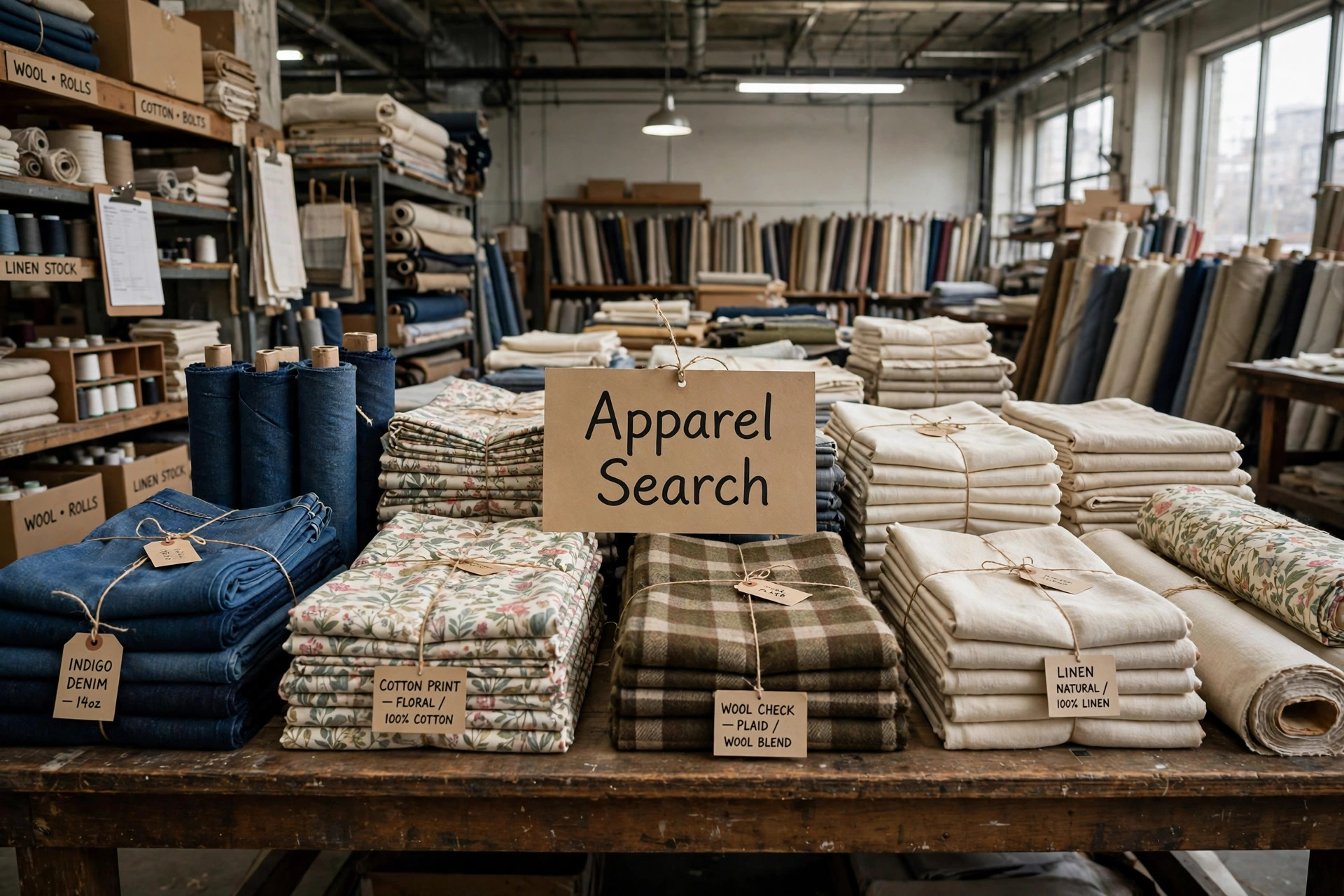
Deadstock fabric is textile left over from an earlier production cycle — cloth that was woven, dyed or printed for an order and never made into garments — resold, usually through jobbers and surplus dealers, to makers who did not commission it. It exists in a fixed quantity, in the colors and widths it happens to exist in, and it cannot be reordered.
Why Deadstock Exists
Deadstock is not an accident of careless factories; it is the arithmetic of textile production surfacing downstream.
- Mill overruns. Weaving and dyeing are not exact sciences. Mills produce above the ordered quantity to cover defects, shrinkage in finishing and inspection losses — and when a run comes out clean, the cover becomes surplus.
- Cancelled orders. A brand cancels or cuts an order after the fabric is made, and the mill is left holding finished cloth in that brand's color, print or specification. The fabric is perfect; its buyer has vanished.
- Brand overbuying. Forecasting a season means committing to fabric months ahead of sales. Forecasts miss in both directions, and the overbuys of successful brands — fabric bought for garments that were never cut — feed the same channel.
- End-of-line yardage. Discontinued colorways, last rolls of a print, and the tail ends of large productions accumulate at mills and converters until a jobber takes them away in bulk.
- The jobber system. Jobbers are the trade's surplus specialists: they buy leftovers from mills and brands, warehouse them, and sell in smaller lots to the makers, designers and retailers who can use a few hundred yards of something that will never exist again.
How to Buy It Well
- Buy against a real pattern, not an impulse. Calculate the yardage from your markers, add honest cutting loss, and buy the entire need in one transaction. With deadstock there is no second order to fix an optimistic estimate — a style that runs out of cloth mid-production is finished, not delayed.
- Sample and test before you commit. Surplus tickets are often approximate. Cut a sample and test what your product depends on: shrinkage after washing, colorfastness, seam slippage, and the fabric's behavior in your construction. Discover it on a sample, not on the production floor.
- Inspect every roll, and shade-band your cutting. Dye lots can vary within a single lot of surplus, and flaw rates hide inside rolls. Unroll, inspect, and where shade varies slightly, cut garments so panels from one roll stay in one garment.
- Price the risk, not just the yard. Cheap fabric that fails testing, cuts short or strands a style is the most expensive fabric you will ever buy. The saving over new cloth is real only when the quantity, quality and width have all been verified against the actual production plan.
- Plan the product around the limit. Fixed yardage means fixed production: size the run to the cloth, set replenishment expectations to zero, and if the style is sold to customers or stores, describe the limited run as what it is. Makers who design for the constraint produce clean sell-throughs; makers who ignore it produce apologies.
The Sustainability Claim — With Its Caveats
Deadstock's modern appeal rests on a simple argument: the fabric already exists, so using it avoids the fiber growing, spinning, dyeing and finishing that new cloth would require, and it keeps usable material out of storage or landfill. That argument is substantially true, and for small brands it also democratizes access to fabrics — luxury mill cloth, unusual prints — that minimum order quantities would otherwise lock them out of.
The caveats deserve equal plainness. The word is unregulated. Nothing in law defines deadstock, and some fabric sold under the label is produced deliberately for the resale market — new cloth wearing surplus clothing. The benefit depends on the counterfactual. Genuine surplus that would have been landfilled is one thing; surplus that would have been sold and used anyway is a smaller saving than the marketing suggests. And the constraint cuts both ways: a style that sells out and cannot be re-cut can strand matching trims, leave demand unmet, and tempt a brand into a near-match substitute that satisfies nobody. The honest claim a brand can make is specific — "cut from surplus fabric sourced from [channel], in a run limited by the quantity available" — rather than a blanket assertion of carbon savings it cannot measure. Handled that way, deadstock is both a sound sourcing method and a true story, which is the combination worth having.
For makers weighing deadstock against their other sourcing routes, fabric buying sits inside the wider production path set out in our Start a Clothing Line guide — where in the sequence fabric decisions belong, and what they commit you to.
Common Questions
Is deadstock fabric cheaper than ordering new cloth?
Per yard, usually yes — surplus changes hands below the price of commissioning the same fabric new, sometimes far below, especially for large lots a jobber wants to move. The honest comparison is total cost, though: deadstock adds testing, inspection and cutting risk, and the yardage cannot be topped up, so a production problem cannot be solved by reordering. For a small run planned tightly to the yardage in hand, deadstock is often the cheapest sound fabric available. For a style expected to reorder, the cheap yard can become the expensive mistake.
Can I get more deadstock fabric if a style sells out?
Almost never, and that is the defining constraint of the material. The lot you bought is the lot that exists: when it is cut, the style is finished unless a substitute fabric is close enough to pass, which for a print or a specific handle it rarely is. Plan size runs, replenishment expectations and customer communication around the fixed quantity from the start — sell the style as the limited run it genuinely is, rather than discovering the limit after the orders arrive.
Is deadstock fabric always the sustainable choice?
Not automatically. Using fabric that already exists does avoid the fiber production, dyeing and finishing impacts of new cloth, and it can keep usable material out of long storage or landfill — those benefits are real. But the word itself is unregulated: some fabric marketed as deadstock is produced deliberately for the resale channel, and the benefit of genuine surplus depends on what would have happened to it otherwise. Treat deadstock as a sourcing method with a good case to answer questions about, not as a claim that answers itself.
What should I check before paying for a roll of deadstock?
Five things, in order: the true fiber content (tickets on surplus are often approximate — burn or lab test if the garment's labeling depends on it); the usable width, which can run narrower than stated; shrinkage and colorfastness on a tested sample, washed the way the finished garment will be washed; shade consistency across rolls, because dye lots can differ within one lot of surplus; and the flaw rate, by unrolling and inspecting rather than trusting the ticket — then price what you found into the deal before you commit.