Apparel Search Consumer Guides
Dressing for Menopause & Hot Flashes
Fabric-first dressing for a body temperature that will not sit still: layers that come off in one motion, necklines that let heat go, and sleepwear that adjusts.
This page is a spoke of our Style Over 50 hub, and it takes up the subject that hub's comfort guide touches only in passing: dressing when your body temperature will not sit still. Hot one moment, chilly the next, and rarely dressed right for either — the answer is not a special wardrobe. It is a way of building ordinary outfits so they can change as fast as you do: the right fabrics against the skin, layers that come off without fuss, and necklines that let heat go. Everything here is about clothing and comfort. Guidance about the condition itself belongs with your own clinician — nothing in a wardrobe takes that role.
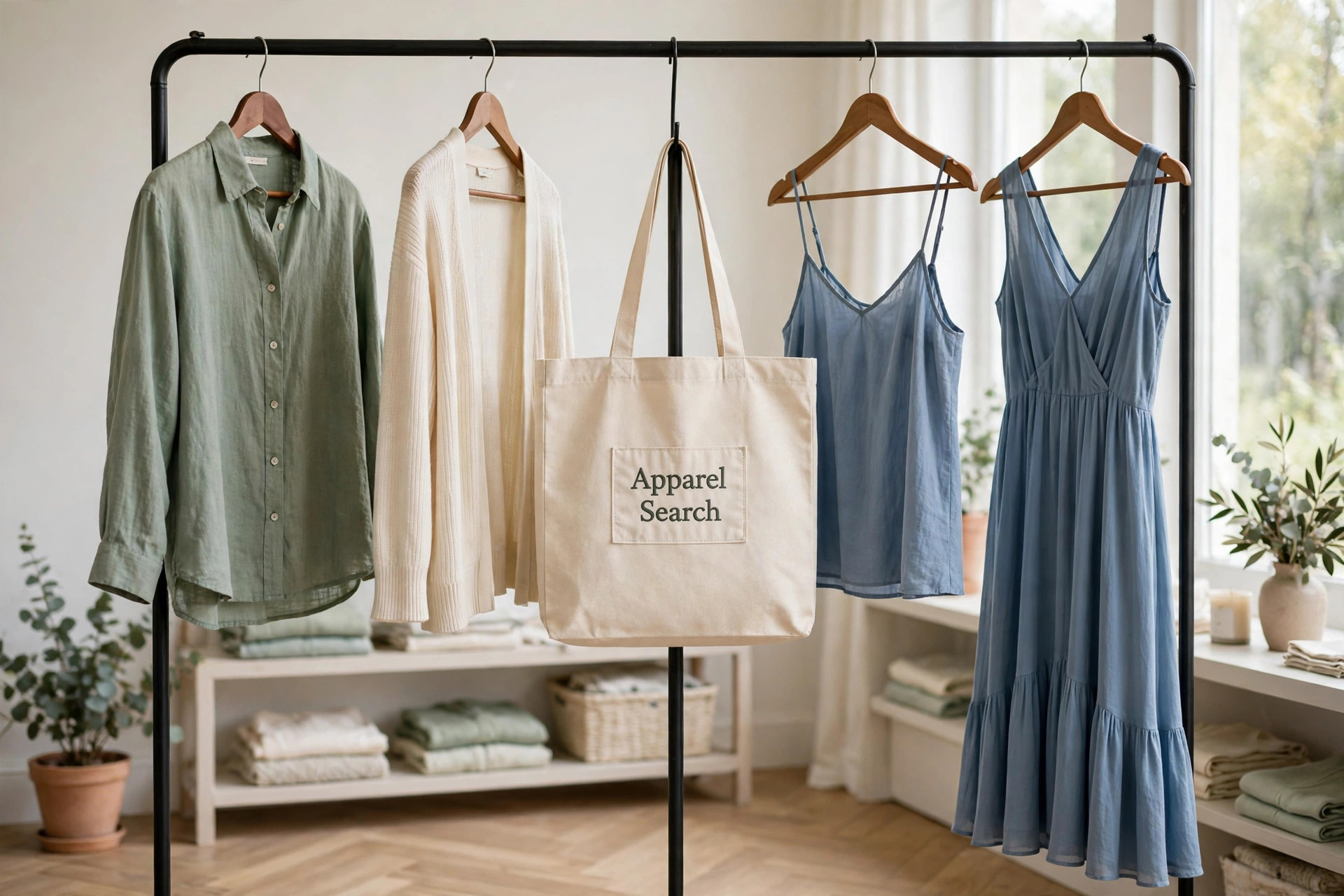
The On-Off Layer System
The core strategy is to dress in layers designed to be removed — which is a different thing from simply wearing more clothes. Build every outfit in three parts:
- A base that looks finished alone. A breathable top or dress in a fabric and neckline you would happily be seen in by itself — because at some point in the day, you will be. If the base only works hidden under other layers, the system fails at the first warm moment.
- An open-front middle layer. A cardigan, an unbuttoned overshirt, a soft open jacket — garments that come off in one motion, without pulling anything over your head, and go back on just as easily. Open fronts also let air move while they are still on.
- A warmer layer within reach. Air conditioning, evening air and the chill that follows a warm spell are the other half of the day. A real sweater, a wrap or a light coat kept nearby — not worn, carried or hung close — closes the system.
Our comfortable, stylish clothing guide covers the same philosophy for everyday dressing generally — breathable fabrics, easy fits, layering that adapts — and the two pages are meant to be read together.
Fabric First
When temperature swings run your day, fiber content matters more than garment type. The fabrics that cope best share one behavior: they let heat and moisture escape.
- Cotton breathes and feels kind against the skin; it absorbs moisture rather than moving it, so it is best in loose weaves and as the layer you can change.
- Linen is the warm-weather champion — an open, airy weave that dries fast and feels cool even in a long sleeve. Its wrinkles are the price, and they are worth paying.
- Viscose and rayon (plant-based fibers, common in soft tops and sleepwear) drape coolly and breathe well — a frequent quiet hero in warm-weather dressing.
- Moisture-wicking synthetics, developed for sportswear and now common in sleepwear and base layers, pull moisture off the skin and release it — the most effective choice where sweating itself is the discomfort.
- What to wear less of, close to the skin: tightly woven fabrics that neither breathe nor wick. They hold warmth in while you are hot and hold damp against you while you cool — the worst of both directions. Save them for outer layers, where they sit away from the skin.
Necklines, Sleeves and Fit
Heat leaves the body fastest at the neck and upper chest, and that is exactly where clothing usually closes tightest. Open necklines — scoops, V-necks, split necks, open shirt collars — feel disproportionately cooler than the fabric they save, and they leave room for a necklace instead of a collar's rub. Sleeves follow the same logic: three-quarter and bracelet lengths bare the wrist's pulse points and push up easily; a sleeve you can push to the elbow is a small thermostat of its own. And fit should skim rather than cling — an air gap between fabric and skin is insulation you can use in both directions, while a tight garment is a wetsuit at the wrong moment. Waistbands deserve the same scrutiny: a soft, flat, flexible waistband stays comfortable through a long, changeable day in a way a rigid one does not.
Shop Breathable Layers & Sleepwear on Amazon
Ready to shop? Breathable tops, open cardigans and moisture-wicking sleepwear are collected on the Apparel Search shopping guide:
Shop Breathable Clothing on AmazonThis link opens the Apparel Search shopping guide for Amazon, where the product links are kept in one place.
Sleepwear
Night is when temperature swings are least escapable, so sleepwear earns real attention. Choose loose fits in cotton, linen or moisture-wicking sleep fabrics; separates over one-piece garments, because a top can be changed at 3 a.m. without a production; and keep a light robe or bed jacket by the bed for the cold side of the swing. Bedding is clothing's partner here — a lighter duvet plus a throw you can pull up or push off adjusts faster than one heavy blanket, and natural-fiber sheets breathe better than slick synthetics.
A Working Day, Dressed
Put the system together and a changeable day looks like this: a linen-blend top with an open neckline as the base; a soft cardigan over it for the morning; the cardigan off and over the chair by mid-morning; a scarf added for the over-cooled meeting room (a scarf is the fastest-adjusting layer you own — on, off, loose, wrapped, in seconds); the warmer layer for the walk home. Nothing in that day required a costume change, a special purchase, or an apology for being visibly uncomfortable. That is the whole goal: a wardrobe that adjusts as quietly as you do.
The Spare-Base Rule
If warm spells regularly leave you uncomfortable at work or out for the day, keep a spare base layer — one fresh top, folded small — in your desk, car or bag. Changing the layer against your skin does more for comfort than any amount of fanning, and it turns an episode from a day-defining event into a two-minute reset.
Common Questions
What fabrics are most comfortable when your temperature swings?
Breathable, moisture-moving ones. Cotton, linen and viscose (the plant-based rayon used in many soft tops and sleepwear) let heat and moisture escape instead of trapping them; modern moisture-wicking synthetics pull sweat off the skin and dry fast, which matters most for sleepwear and underlayers. What feels worst is the opposite construction — tightly woven, non-wicking fabric worn close to the body, which holds heat in and then holds the chill afterward. Read labels for fiber content, and when in doubt choose the fabric you would pick for a warm summer day.
How do I dress for the office when I am hot one hour and cold the next?
Build the outfit as a system of layers rather than a single garment: a breathable base that looks complete on its own, an open-front layer you can take off without ceremony, and a warmer layer within reach for air-conditioned rooms. Avoid outfits with one fixed level of coverage — a single heavy sweater is the hardest garment to be comfortable in all day. Keep a spare base layer at work if you can; changing the layer against your skin resets comfort faster than anything else.
What should I look for in sleepwear?
Loose fit, breathable fabric and nothing that binds. Cotton, linen and moisture-wicking sleepwear fabrics are the usual favorites; separates make it easier to adjust through the night than a one-piece nightgown, and a light robe or bed jacket nearby handles the cold swing without getting back into bed overheated. If duvet-sharing makes temperatures a two-person negotiation, separate lighter blankets on each side solve more problems than any single compromise duvet.
Are there necklines that really feel cooler?
Yes — the neck and upper chest are where the body sheds heat readily and where fabric is felt most. Open necklines (scoops, V-necks, open collars, split necks) feel noticeably airier than high, close ones like turtlenecks and tight crew necks, and they make the on-off layer system work: the base layer alone still looks finished. On cold days the same openness is easily closed with a scarf, which adjusts faster than any garment you have to change out of.