Fabric Thread Count
Thread count: adding warp and weft in a square inch
Thread count — threads per inch, or TPI — measures the fineness of a fabric by counting the threads in one square inch: the lengthwise warp threads plus the widthwise weft threads, added together. One hundred warp threads woven with one hundred weft threads make a thread count of 200. The number became famous on bed sheets, where standard cotton counts sit around 150, good-quality sheets start near 180, and 200 or higher is considered percale. This page explains how thread count is counted, what the typical ranges mean, and why extremely high counts — often over 500 — deserve skepticism.
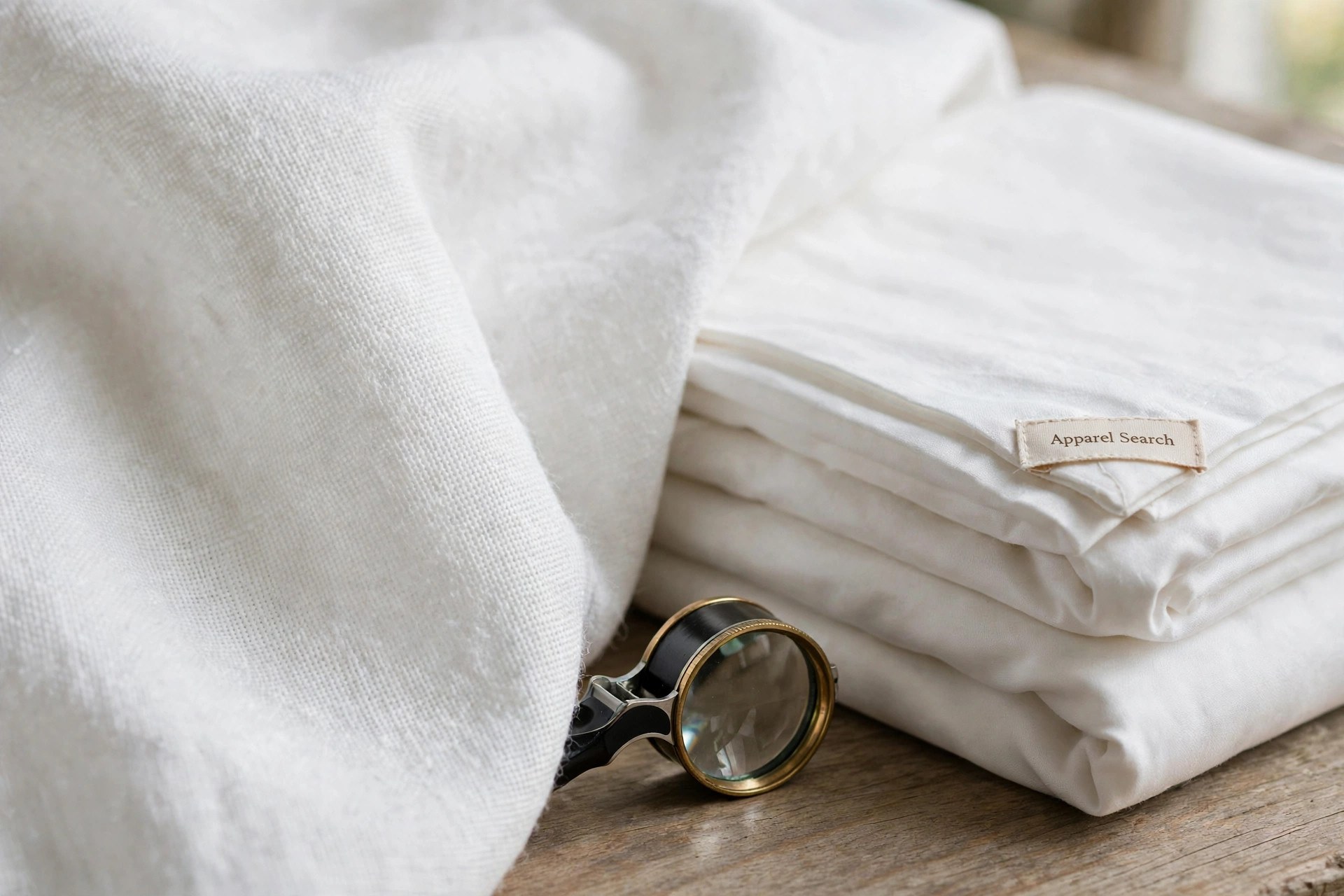
Thread count or threads per inch (TPI) is a measure of the coarseness or fineness of fabric. It is measured by counting the number of threads contained in one square inch of fabric including both the length (warp) and width (weft) threads.
The fabric thread count is the number of threads counted along two sides (up and across) of the square inch, added together. An example is that if 100 lengthwise threads are woven with 100 widthwise threads that would produce a thread count of 200.
Thread count is often used as a measure of fabric quality, so that "standard" cotton thread counts are around 150 while good-quality sheets start at 180 and a count of 200 or higher is considered percale. Some, but not all, of the extremely high thread counts (typically over 500) tend to be misleading as they usually count the individual threads in "plied" yarns (a yarn that is made by twisting together multiple finer threads). For marketing purposes, a fabric with 250 two-ply yarns in both the vertical and horizontal direction could have the component threads counted to a 1000 thread count although "according to the National Textile Association (NTA), which cites the international standards group ASTM, accepted industry practice is to count each thread as one, even threads spun as two- or three-ply yarn. The Federal Trade Commission in an August 2005 letter to NTA agreed that consumers 'could be deceived or misled' by inflated thread counts. In 2002, ASTM proposed a definition for "thread count" that has been called "the industry's first formal definition for thread count". A minority on the ASTM committee argued for the higher yarn count number obtained by counting each single yarn in a plied yarn and cited as authority the provision relating to woven fabric in the Harmonized Tariff Schedule of the United States, which states each ply should be counted as one using the "average yarn number."
Standard Test
Method for Warp (End) and Filling (Pick) Count of Woven fabrics This
test method covers the measurement of warp end count and filling pick
count and is applicable to all types of woven fabrics.
Thread count terminology is often used especially in regard to cotton
linens such as bed sheets, and has been known to be used in the
classification of towels. It is also used to describe dress shirt
fabrics and other fabrics.
Why Very High Counts Can Mislead
A yarn can be plied — made by twisting several finer strands together — and some extremely high thread counts quietly count each strand inside a plied yarn as if it were a separate thread. The arithmetic inflates the number without adding the fineness, smoothness or durability the shopper imagines they are buying, which is why regulators and standards bodies have pushed back on the practice and why counts far above the honest weaving capacity of cotton should be read with suspicion. A well-made sheet at a truthful 300 will out-sleep and out-last a gamed 1,000, because fiber quality, yarn quality and finishing do the real work.
Thread Count Is One Clue, Not the Whole Cloth
Thread count says nothing directly about the staple length of the cotton, the weave's feel, or the finishes applied — a percale and a sateen at the same count wear and feel differently, and long-staple fibers make smoother, stronger yarn at any count. Used sensibly, thread count is a quick comparison between similar fabrics from the same maker: within one line, the step from 180 to 300 is usually real. Across brands and fiber types, treat it as the start of the conversation — the definitions of warp and weft linked from this page explain the two thread directions being counted.
Common Questions
How is thread count calculated?
Count the warp (lengthwise) and weft (widthwise) threads in one square inch of fabric and add them together — 100 warp plus 100 weft threads gives a thread count of 200.
What thread count is considered good quality for cotton sheets?
Standard cotton counts are around 150, good-quality sheets start at about 180, and a count of 200 or higher is considered percale.
Why can very high thread counts be misleading?
Counts typically over 500 often count the individual strands inside plied yarns as separate threads, inflating the number without a matching improvement in the fabric.