Worsted Count
Spinning count: how many 560-yard hanks a pound of wool yields
Worsted count, also called spinning count, is an indirect measure of fineness for worsted wool yarn: the number of 560-yard (512 m) lengths — hanks — that one pound (0.45 kg) of wool yields. The finer the wool, the more yarn can be spun from the pound, and the higher the count; in theory, a pound of 62s wool could produce 34,720 yards of yarn. Developed in England, the count is a measure of fiber fineness and distribution, and it has been largely replaced by direct measures such as fiber diameter in micrometres. This page explains the system and links to wool grade standards.
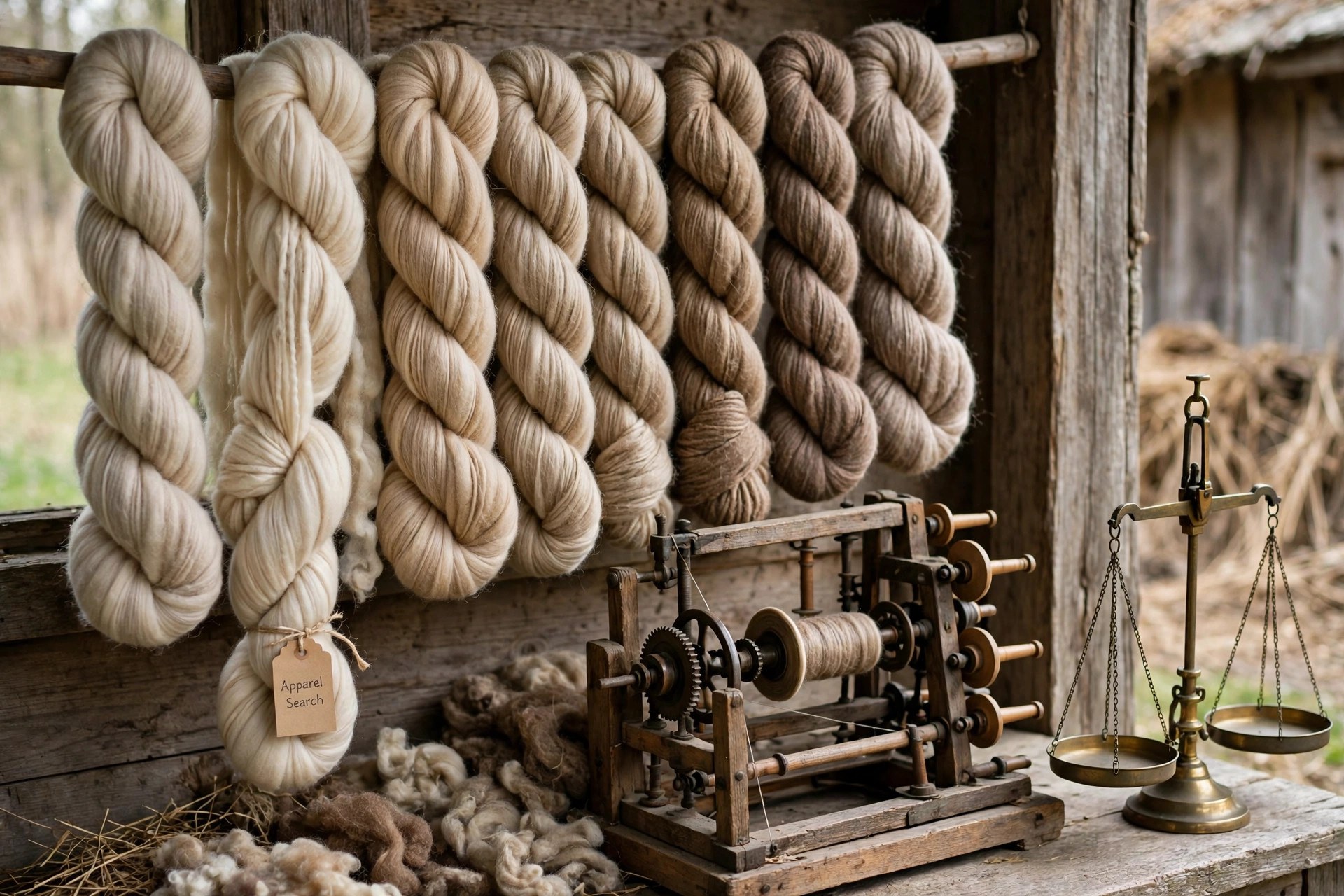
Worsted count (or spinning count) is an indirect measure of the fineness of the fiber in a worsted wool yarn expressed as the number of 560-yard (512 m) lengths (hanks) of worsted yarn that a pound (0.45 kg) of wool yields. The finer the wool, the more yarn and the higher the count. It has been largely replaced by direct measures.
Spinning count is a measure of fiber fineness and distribution developed by the English. It is defined as the number of hanks of yarn that can be spun from a pound of wool.
- In the textile industry, a hank is to a unit of yarn or twine that is in a coiled or wrapped form (as opposed to other forms such as a ball or a cone or a bobbin or a spool).
A hank of wool is 560 yards long (560 yd/lb = 1.129 km/kg). In theory a pound of 62s wool could produce 34720 yards of yarn.[1] As it is now a relatively simple matter to measure the average fiber diameter and distribution, spinning count is being replaced with the specification of average fiber diameter in micrometers and fiber distribution in standard deviations.
You may also want to review the Wool Grades & Standard Measurements.
Thank you for using the Apparel Search website.
Indirect Counts Reward Fineness
Worsted count inverts the logic of tex: instead of fixing length and weighing it, it fixes the weight — one pound — and counts how much length the spinner can draw from it. Fine fibers spin long, so high counts mean fine yarn; coarse fibers run out of length quickly. The system made practical sense at the mill, where wool was bought by the pound and yarn sold by the hank, and its numbers still appear in wool trading and older specifications. Its weakness is equally practical: the count infers fineness from spinnable length, blending fiber diameter with fiber length, strength and spinning skill, so two wools of the same count could still differ in the yarn they made.
Why Micrometer Measures Took Over
Once instruments could measure average fiber diameter and its distribution directly, quickly and repeatably, the inference built into spinning count lost its purpose. A specification in micrometres describes the wool itself, whoever spins it, and modern wool trading and the super S scale both rest on diameter measurement. Worsted count survives as heritage vocabulary — in breed and grade descriptions, vintage specifications and the wool standards linked from this page — and anyone reading older textile records still needs it, the way a tailor still needs to know what a 62s meant when the record was written.
Common Questions
What is worsted count?
Worsted count (spinning count) is the number of 560-yard hanks of worsted yarn that one pound of wool yields — an indirect measure of the fiber's fineness.
What does a higher worsted count mean?
A higher count means finer wool: finer fibers spin into more length per pound, so the hank count rises with fineness.
Why has worsted count been replaced?
It has been largely replaced by direct measures — above all average fiber diameter in micrometres — which can now be measured simply and precisely, along with the diameter's distribution.