Sudaglass
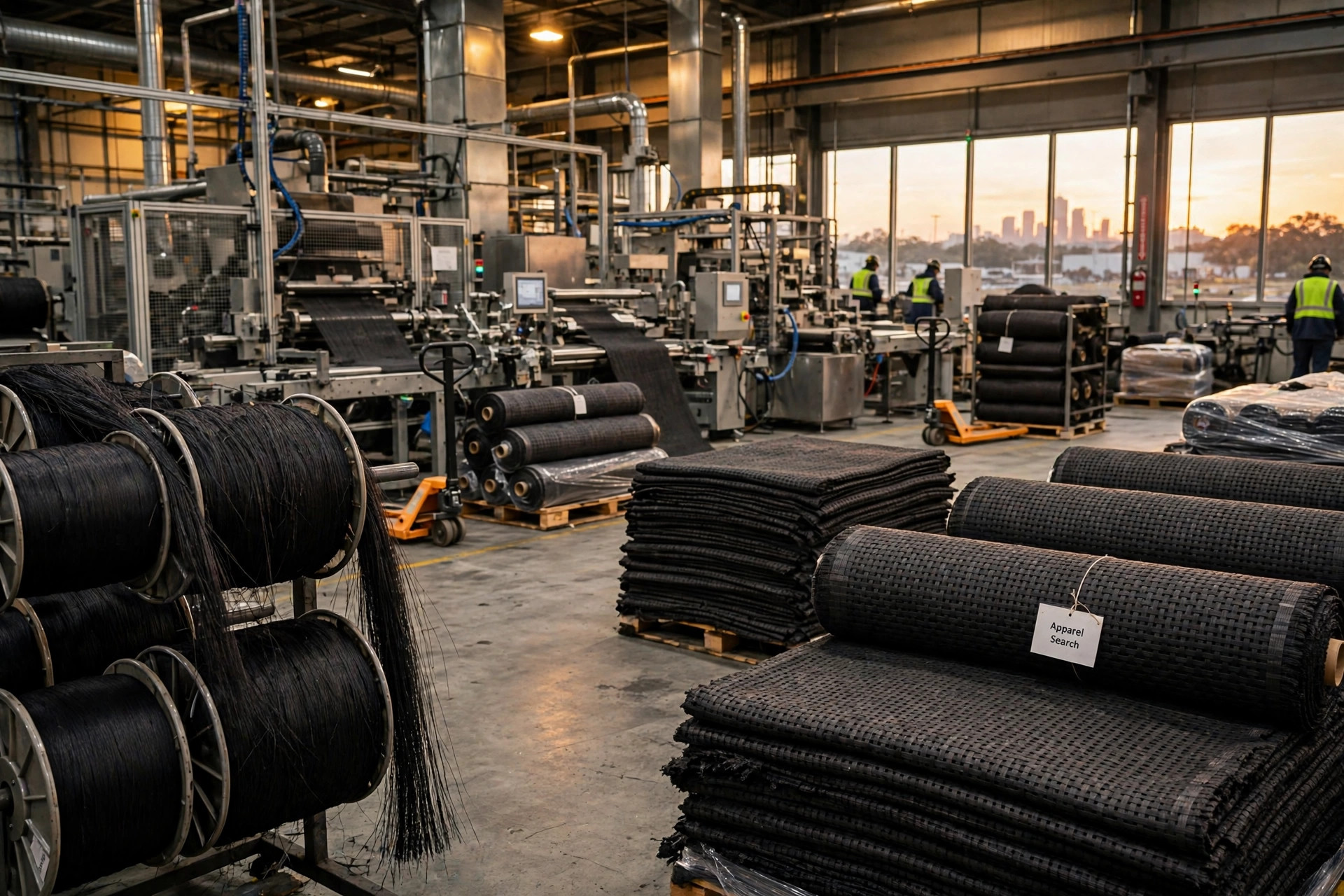
Sudaglass Fiber Technology, Inc., of Houston, Texas, owns and operates its own fibre manufacturing facilities, making fabrics woven from continuous-filament basalt yarns and chopped basalt fibre. With a thermal range from -260°C to +982°C and a melt point of 1450°C, its fibres are aimed at fire protection and insulation work.
Company Snapshot
- Location
- Houston, Texas, United States
- Fabrics & Products
- Basalt fibre and fabrics — continuous-filament basalt woven fabrics and chopped basalt fibre for fire protection, insulation and reinforcement
Company Profile
Basalt fibre is drawn from volcanic rock, and the record's claims follow from that origin: 100% natural and inert, tested non-carcinogenic and non-toxic, stronger and more stable than alternative mineral and glass fibres. Fabrics are made to varying thickness, weight, weave pattern and weaving technique by end use, while chopped fibre is cut to predetermined lengths and coated with sizing or binder for compatibility with the host material — concrete mix is the record's example. Owning the fibre plants is presented as the basis for reliable supply at predictable prices.
Technical textiles are bought on performance data, not on appearance, and Sudaglass's field — 'Basalt fibre and fabrics — continuous-filament basalt woven' — is no exception. The professional approach is to start from the standard the end product must meet, work backwards to the material properties that decide it, and ask the maker for test evidence on the exact product variant being bought. Documentation is part of the product in this family: batch traceability, test reports and application guidance are what a buyer is really paying for alongside the material itself, because the material disappears inside a larger product whose safety or function may depend on it.
Sourcing and Working With Sudaglass
Basalt is specified by application first: state the temperature exposure, the host material for chopped fibre, and the sizing compatibility you need, because the coating is chosen for the matrix it will join. For fabrics, fix thickness, weight and weave against the end use. The record lists 14714 Perthshire, Suite A, Houston, TX 77079 and phone (281) 496-5427; the company site is linked from this page for technical data.
Before placing volume, agree the inspection basis in writing: who inspects Sudaglass's cloth, against which defect standard, and what happens to a rejected lot. Then lock the commercial basics that cause most disputes in this trade — the unit of measure, the tolerance on weight and width, the shade band accepted between lots, and the packing form. A buyer who settles those five points at sampling stage rarely has a quality argument later, because both sides are measuring the same fabric against the same paper.
Understanding the Range
Technical ranges like Sudaglass's are organised by function rather than by fabric name, and they should be read that way. Each family in the list answers a specific failure — heat, static, water, abrasion, radiation, odour — and is normally validated by a test standard rather than by appearance or handle. That changes the buying conversation: samples are evaluated in a laboratory as much as on a table, lead times include testing, and the paperwork that accompanies a delivery is part of what is being bought. Buyers who build those steps into their schedule get the performance they specified; buyers who skip them get a fabric that merely looks similar.
Directory Record
Sudaglass : They own and operate our fiber manufacturing facilities, ensuring customers reliable, consistent supply of fiber products at predictable prices. Woven from yarns made from continuous-filament basalt, these fabrics are manufactured to varying thickness, weight, weave pattern and weaving technique according to end-use requirements. Basalt chopped fiber is continuous filament cut to predetermined lengths to suit a particular application. They are usually coated with a sizing/binder to make them compatible with other materials and elements with which it has to coexist the primary end product (concrete mix, for instance).With a thermal range of -260 C to +982 C (1800 F) and melt point of 1450 C, Sudaglass fibers are ideal for fire protection and insulative applications. Sudaglass fibers are 100% natural and inert. They have been tested and proven to be non-carcinogenic and non-toxic. Manmade fibers with a diameter of six microns or less are considered an inhalant hazard. Sudaglass fibers and fabrics can take the heat and take a pounding. They're stronger and more stable than alternative mineral and glass fibers, with tenacity that exceeds steel fibers many times over. Address: Sudaglass Fiber Technology, Inc. 14714 Perthshire, Suite A Houston, TX 77079 USA Tel: (001) 281.496.5427 Basalt Fiber Basalt Fabric
The details above are the company's directory record as listed with Apparel Search, including its address, contact details and product classification. Details can change — for the most current information, check with the company directly.
Common Questions
What does Sudaglass make?
Fabrics woven from continuous-filament basalt yarns, and chopped basalt fibre cut to length and sized for use in materials such as concrete, for fire protection, insulation and reinforcement.
What temperatures does the record state?
A thermal range of -260°C to +982°C (1800°F), with a melt point of 1450°C.
How can buyers contact Sudaglass?
The record lists Sudaglass Fiber Technology, Inc., 14714 Perthshire, Suite A, Houston, TX 77079, USA, phone (281) 496-5427.
More to Explore
- SGS Interknits
- Shahtex (Leicester) Limited
- Shamala Textiles
- Shanghai Best Linen Cotton Textile Factory
- Shanghai Sanmao Textile
- Shaoxing County Tiangong Knitting
- Shenghong Group
- Shijiazhuang Jihua Chemical Textile
- Nanchong Shuncheng Silk
- Spotex International
- Sri Jaisri Exports
- Srinidhi Silks
- Sriyansh Ispat Limited
- Supreme Textile Industries
- Tantra Tex
- TenCate
- Textiles Rio Lindo
- Thai Technical Nonwoven
- Tiantai South-West Filter Cloth Factory
- Toray Ultrasuede (America)
- Unimin India
- Unitex International
- Usman Enterprises
- Vardhman Fabrics
- Vrijesh Corporation
- Wazir Group
- West Coast Weaving Establishment
- Westex
- Wujiang Hengyu Textile
- Fabric Factory Directory
- Textile News Articles
- Fabric Mills
- Fabric Retailers
- Fabric Wholesalers
- Yarn
- Fibers
- Textile Machinery
- Clothing Manufacturer
- Textile Industry
- Fabric Definition
- Textile Books
- Textile Industry Events
- Fashion Industry
References & Further Reading
Looking for Fabric Mills and Suppliers?
The Fabric section hub lists every fabric category and mill directory on Apparel Search. Browse the Fabric Mills hub for fabric categories and mill directories, or the Fabric Manufacturers Directory for the wider directory of fabric manufacturers and suppliers.