Knit Fabric Mills Directory
Knit fabrics are created by interlooping yarns rather than weaving them, which gives knits their natural stretch, comfort and flexibility. This directory explains how knit fabric mills turn yarn into jersey, rib, interlock, fleece and the other knitted structures the apparel trade runs on, and how a buyer specifies knit fabric so a mill can quote it accurately.
Shop Knit Fabric Now
Shop Knit Fabric on Amazon Shop Knit Fabric on eBayThe Amazon and eBay links on this page are affiliate links. If you make a purchase through them, Apparel Search may earn a commission.
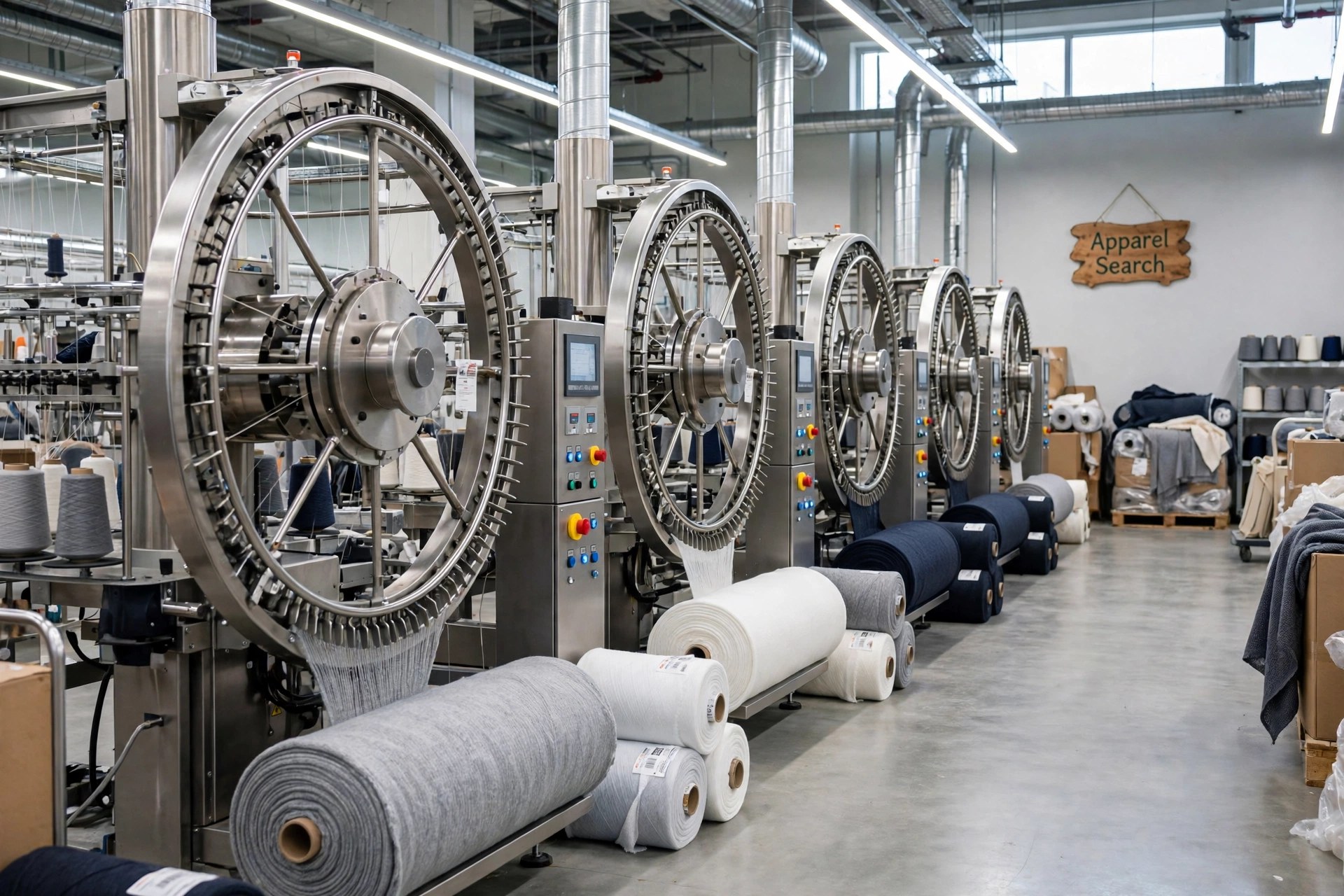
How Knitting Makes Fabric
A woven fabric is two sets of yarns crossing at right angles; a knit is a single yarn (or set of yarns) formed into loops, with each new row of loops drawn through the row before it. That loop structure explains everything about how knits behave: loops can change shape, so the fabric stretches and recovers; loops trap air, so knits feel warm and soft; and loops run, so a broken yarn can ladder if the structure is not secured. Knit fabric mills specialize in exactly these operations - knitting, then dyeing, finishing and quality control - transforming yarn into greige knit cloth and then into the finished fabric a garment factory cuts and sews.
Two machine families do the work. Circular knitting machines knit a tube of fabric on a ring of needles and produce most apparel knits: single jersey for T-shirts, rib for cuffs and neckbands, interlock for smooth double-faced cloth, and fleece constructions that are brushed inside for warmth. Warp knitting machines, where yarns travel lengthwise, produce stable, run-resistant fabrics such as tricot and raschel, used for linings, mesh, sportswear and lace-like structures. A mill's machine park therefore decides its range: ask which structures it knits regularly before asking for a price, because a jersey specialist and a warp-knit specialist are different suppliers. Gauge - the number of needles per inch - is the other machine fact worth knowing, because it sets how fine the fabric can be: coarse gauges knit chunky sweater yarns, fine gauges knit the smooth, light jerseys of premium T-shirts and underwear.
Knit Structures and Where Each Is Used
The structures named on this page cover most of the apparel wardrobe. Jersey, the plain single knit, serves T-shirts, dresses and underwear. Rib adds deep lengthwise ridges and strong crosswise stretch, so it finishes edges and bodies whole garments in sweaters and rib tops. Interlock is a double knit, smooth on both faces, thicker and more opaque than jersey, used for polos, quality tees and baby clothing. Pique, with its textured honeycomb face, is the classic polo-shirt cloth. French terry loops its back for absorbency and light warmth in sweatshirts and loungewear, while brushed fleece raises that looped back into the soft pile of hoodies and winter basics.
Fibre and finish then tune the structure. Cotton knits are soft, breathable and absorbent; polyester knits are strong, quick-drying and colourfast for sportswear; viscose and modal knits drape fluidly for dresses; and a few percent of elastane gives any structure the recovery that keeps knees, elbows and waistbands in shape. Finishing is half the mill's craft: pre-shrinking protects fit, anti-pilling treatments protect appearance, moisture-management finishes serve active garments, and dyeing and printing must be matched to the fibre. A complete specification names structure, fibre, weight in grams per square metre, width, colour and the finishes the end use needs.
Using This Directory
This page is the general guide to knit fabric and knit mills. For the named global companies Apparel Search carries, see the companion Knit Fabric Mills - Global Companies page, which lists mills in Bangladesh, the United States, Sri Lanka, Pakistan and China with links to each company. For single structures in depth, the section offers Jersey Knit Fabric and Interlock Knit Fabric, and the section also offers a dedicated Knit Fabric Search. The wider Fabric Mill Directory covers wovens as well as knits. Thank you for using the Apparel Search Fabric Mill Directory.
Common Questions
What is knit fabric?
Fabric made by interlooping yarns - forming a yarn into loops and drawing new loops through them - rather than weaving two yarn sets at right angles. The loop structure gives knits natural stretch, softness and flexibility, which is why they suit T-shirts, jerseys, sweaters, activewear and technical textiles.
What is the difference between circular knitting and warp knitting?
Circular machines knit a tube of fabric on a ring of needles and make most apparel knits - jersey, rib, interlock and fleece. Warp knitting runs yarns lengthwise to make stable, run-resistant fabrics such as tricot and raschel for linings, mesh, sportswear and lace-like structures.
What should a knit fabric specification include?
The structure (jersey, rib, interlock, pique, terry or fleece), the fibre and blend, the weight in grams per square metre, the usable width, the colour or print, and the finishes the end use needs - pre-shrunk, anti-pilling or moisture management, for example.
More to Explore - The Full Fabric Directory A-Z
Looking for Fabric Mills and Suppliers?
Return to the Fabric Directory hub for the full fabric section, or browse the Fabric Manufacturers Directory page for the wider mill trade.