Velour Fabric: Soft Knit Pile with a Velvet Look
Velour is a knitted fabric with a cut pile that mimics velvet's plush surface while adding stretch and easy care. This page explains what velour is, how it differs from velvet, and how to choose and use it.
Shop Velour Fabric Now
Shop Velour Fabric on Amazon Shop Velour Fabric on eBayThese links open the Apparel Search shopping guides for Amazon and eBay, where the product links are kept in one place.
What Is Velour?
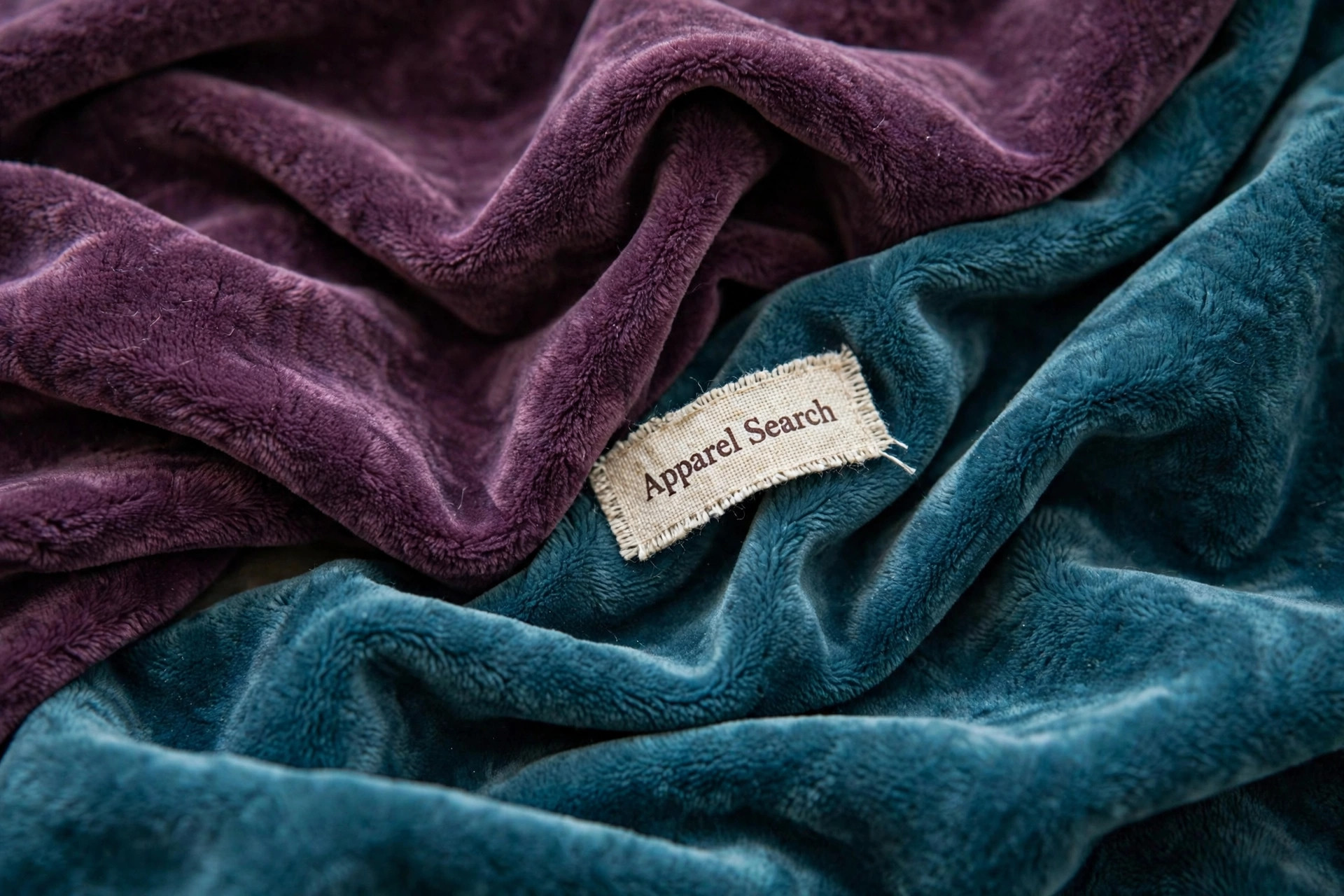
Velour is a plush, knitted fabric with a cut pile — a surface of short, dense, upright fibers that catches the light softly and feels smooth and warm to the hand. The essential fact about velour is its construction: velour's pile is created within a knit, most often from cotton, polyester, or blends of the two, sometimes with a touch of elastane. Because the base is knitted rather than woven, velour stretches, recovers, and drapes in fluid folds, which is why it became the fabric of tracksuits, loungewear, dance and skating costumes, and any garment that should feel like being hugged while still looking dressed up.
The pile is what gives velour its character. Those tiny cut fibers stand in one general direction, so the fabric shows subtle shading as it folds — lighter where the pile leans toward the light, deeper where it leans away. That living surface makes even a simple garment look rich, and it makes velour forgiving to wear: the texture disguises minor wrinkles and the knit underneath moves with the body. Modern velours range from fine, short-pile qualities that read almost like velvet to casual brushed versions, in weights from light tops to substantial upholstery and drapery grades.
Velour vs. Velvet: The Key Difference
The key distinction is crisp: velvet is a woven backed fabric with the cut pile, no stretch; velour is a knit fabric with the cut pile, stretchy. Velvet's pile is woven into a firm ground, giving it structure, a shorter and denser nap, and a formal character suited to evening wear and tailored upholstery — but little give. Velour trades a measure of that formality for comfort and versatility: it stretches, it is generally easier to sew and to care for, and it is usually less expensive, which is why it took over the casual and performance roles velvet once filled.
In practice, choose between them by the garment's job. A structured evening jacket or a formal chair argues for velvet's crispness. A tracksuit, a child's dress, a dance costume, a casual top, or a relaxed drape argues for velour's softness and movement. The two fabrics are cousins, not rivals, and confusing their names is harmless at a party but costly on a purchase order — a mill, wholesaler, or store will supply exactly what the name specifies, so use the two names precisely. The velvet and velour definitions are linked below.
Uses, Care, and Buying Velour
Velour's uses follow from its nature. In apparel it serves loungewear, tracksuits, hoodies, dresses, skirts, children's clothing, and costumes for dance, skating, and theater, where its stretch and light-catching surface perform beautifully under stage lighting. At home it appears in cushions, throws, drapery, and upholstery where a plush touch is wanted without velvet's price or formality. The theater connection runs deep: velour's matte, light-absorbing pile has long made it a practical stage curtain fabric, proof that the cloth works as hard in interiors as it does in wardrobes.
Care is refreshingly simple for most modern velours, especially polyester qualities: follow the maker's instructions, wash cool and gentle for apparel velour, and avoid crushing the pile with heavy folding or a hot iron — steam from the reverse side if pressing is unavoidable. When buying, check the pile direction and buy all pieces for one garment from the same length, because shading differs subtly between lots and directions; sewers call this laying patterns with the nap, and it applies to velour just as to velvet and corduroy. For sourcing, this section's mills, wholesalers, and stores pages lead onward from this introduction to the businesses that make and sell the fabric.
Common Questions
What is velour made of?
Velour is most often knitted from cotton, polyester, or blends of the two, sometimes with a little elastane for extra stretch. Its defining feature is the cut pile surface knitted into the fabric, which gives it a plush, velvet-like look and feel.
What is the difference between velour and velvet?
Velvet is a woven backed fabric with the cut pile and no stretch, while velour is a knit fabric with the cut pile and is stretchy. Velvet is more formal and structured; velour is softer, more casual, and easier to care for.
Is velour hard to sew and care for?
Velour is generally easier than velvet. Sew with the pile direction consistent across pattern pieces, and care for it gently — cool washing for most apparel velours, no hot iron directly on the pile, and steam from the reverse side if needed.
More to Explore
References & Further Reading
Looking for Fabric Mills and Suppliers?
Browse related fabrics in the Fabric Search hub and the full Apparel Search fabric directory.