Velour Fabric Mills
Producing a good pile fabric is specialized work, whether the pile is knitted into velour or woven into velvet. This guide explains what pile-fabric mills do and lists a specialist velvet mill below.
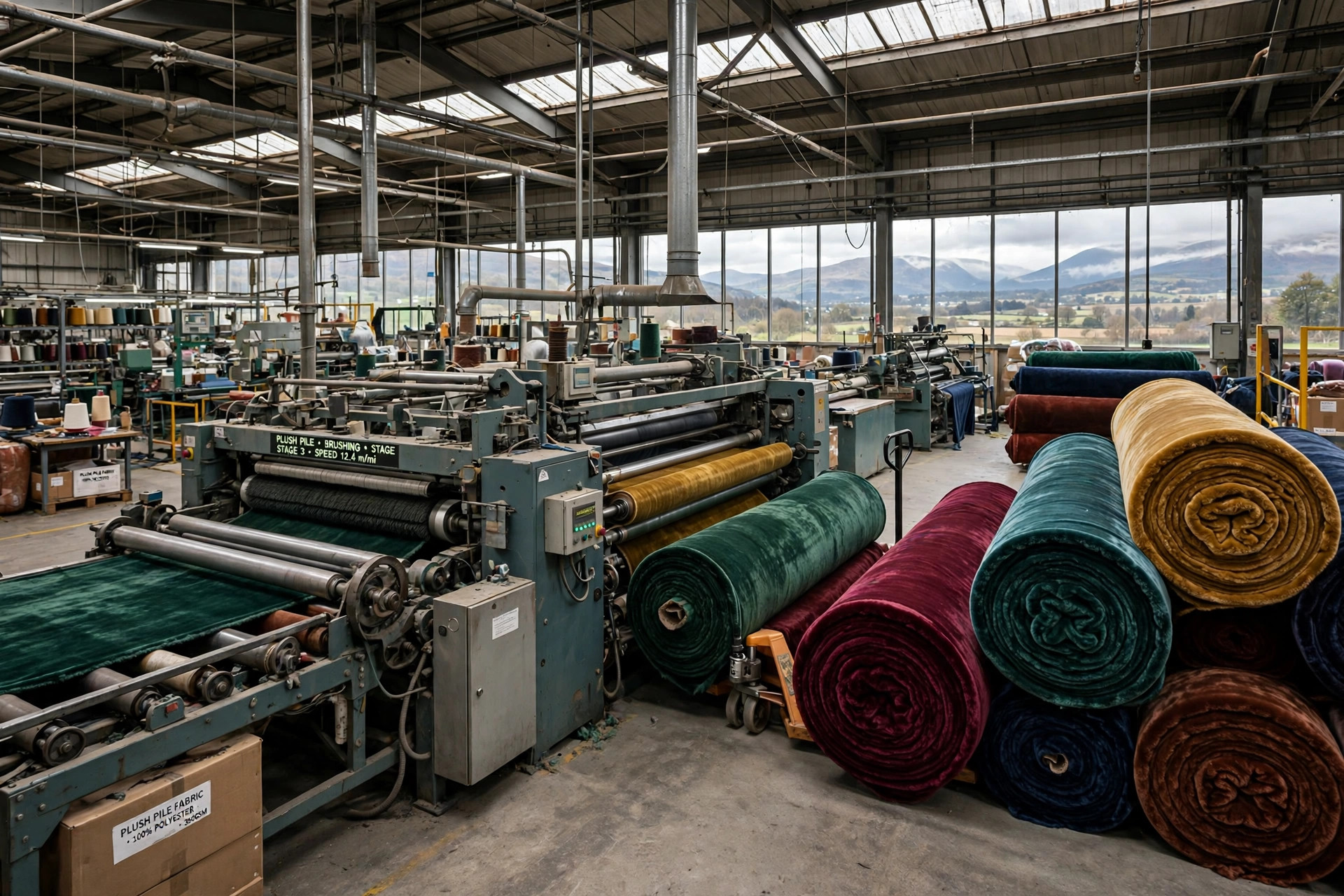
How Pile Fabrics Are Made at the Mill
A mill that makes velour or velvet is in the pile business, and pile changes everything about production. Velour begins as a knit: the mill knits a base fabric with extra yarn that forms loops or floats, then cuts and shears those yarns to a uniform height and brushes the surface so the fibers stand as a dense, even nap. Velvet, velour's woven cousin, builds its pile directly into the weaving — historically by weaving two layers face to face and slicing them apart, or by weaving pile yarns over wires that are withdrawn or cut to leave the tufts standing. In both cases the mill's real craft lies in consistency: pile height, density, and direction must hold steady across thousands of yards, or the finished cloth shades unevenly and betrays every variation in the light.
Finishing decides the final character. Shearing gives a crisp, velvet-like surface or a softer casual one depending on height and uniformity; dyeing must penetrate the pile without crushing it; and treatments can add stain resistance for upholstery grades or softness for apparel. Because pile fabrics shade differently with direction, mills also manage cutting and packing so that a buyer's whole order comes from compatible production. When you deal with a pile-fabric mill, you are buying that control — the assurance that the first roll and the fiftieth will read as the same fabric on a garment rail or a showroom floor.
The Listed Mill: British Velvets
British Velvets, listed below, was founded in 1932 and is the leading UK weaver of velvets for the soft furnishings, upholstery, and contract markets, with more than seventy years of experience in velvet production and a comprehensive range of velvet fabrics. Velvet is similar to velour but not the same fabric. A velvet weaver belongs in a velour mills guide because buyers researching pile fabrics routinely need both — woven velvet for structured upholstery and contract work, knitted velour for apparel and softer applications — and because mills with deep pile expertise are the natural advisers on which construction suits a given job.
Two other kinds of resource appear under References below, not as mill listings: a directory of velour manufacturers on a major marketplace portal, and cotton and polyester price references that buyers use to gauge raw material costs before negotiating. The directory itself is short — one specialist pile mill with a documented history — and the sections above give a buyer the questions to approach it, or any pile mill, with.
Specifying Velour and Velvet to a Mill
Start with construction and end use, stated plainly: knitted velour or woven velvet, for apparel, upholstery, drapery, or contract use. Then specify fiber — cotton pile has a matte, natural hand, polyester pile offers durability, easy care, and light-absorbing depth suited to stage and cinema drapery — along with pile height, fabric weight, and finished width. For upholstery and contract orders, state the performance requirements up front, such as abrasion ratings and flame-retardant standards, because they determine the construction the mill will quote. For apparel velour, ask about stretch and recovery, and whether elastane is included, since a dance costume and a cushion cover ask very different things of the same-looking cloth.
Approve samples under the lighting where the fabric will live; pile fabrics are notorious for reading one shade in a warehouse and another in a showroom, precisely because the nap interacts with light direction. Confirm that all yardage for one project will be cut from one production lot and packed pile-protected, and agree how the mill marks pile direction on the roll. Finally, use the wider mill directory linked below to compare specialists: pile fabric is a niche where a mill's decades of focus, like the history behind the listing here, are a genuine quality signal rather than a marketing line.
Velour Fabric Mills Directory
One specialist mill is listed below. Marketplace and price-portal references (Alibaba, cotton price resources) appear under References, not as mills.
British Velvets
Founded in 1932, the leading UK weaver of velvets for soft furnishings, upholstery, and contract markets, with more than 70 years of velvet production experience. Velvet is similar to velour but not the same fabric.
Common Questions
Are velour and velvet made the same way?
No. Velour's pile is created in a knitted fabric that is cut and sheared, giving it stretch, while velvet's pile is woven into a firm ground, giving it structure without stretch. Mills often specialize in one construction or the other.
What should I specify when ordering pile fabric from a mill?
State construction (knit velour or woven velvet), fiber, pile height, weight, width, and end use, plus performance needs such as flame retardancy for contract work. Approve samples under your final lighting and keep one lot per project.
Why does pile direction matter?
Pile leans one way, so fabric shades lighter or darker depending on viewing direction. Garments and upholstery pieces must be cut with the pile running consistently, and yardage for one project should come from a single production lot.
More to Explore
References & Further Reading
Looking for Fabric Mills and Suppliers?
Find more mills in the Apparel Search fabric directory and return to the Fabric Search hub for other fabric guides.