Velour Fabric Wholesalers and Distributors
When a retailer, costume department or small manufacturer needs velour in quantity rather than by the single yard, the purchase moves from the fabric store to the wholesaler. This guide explains how velour distribution works and lists the wholesale sources in this directory.
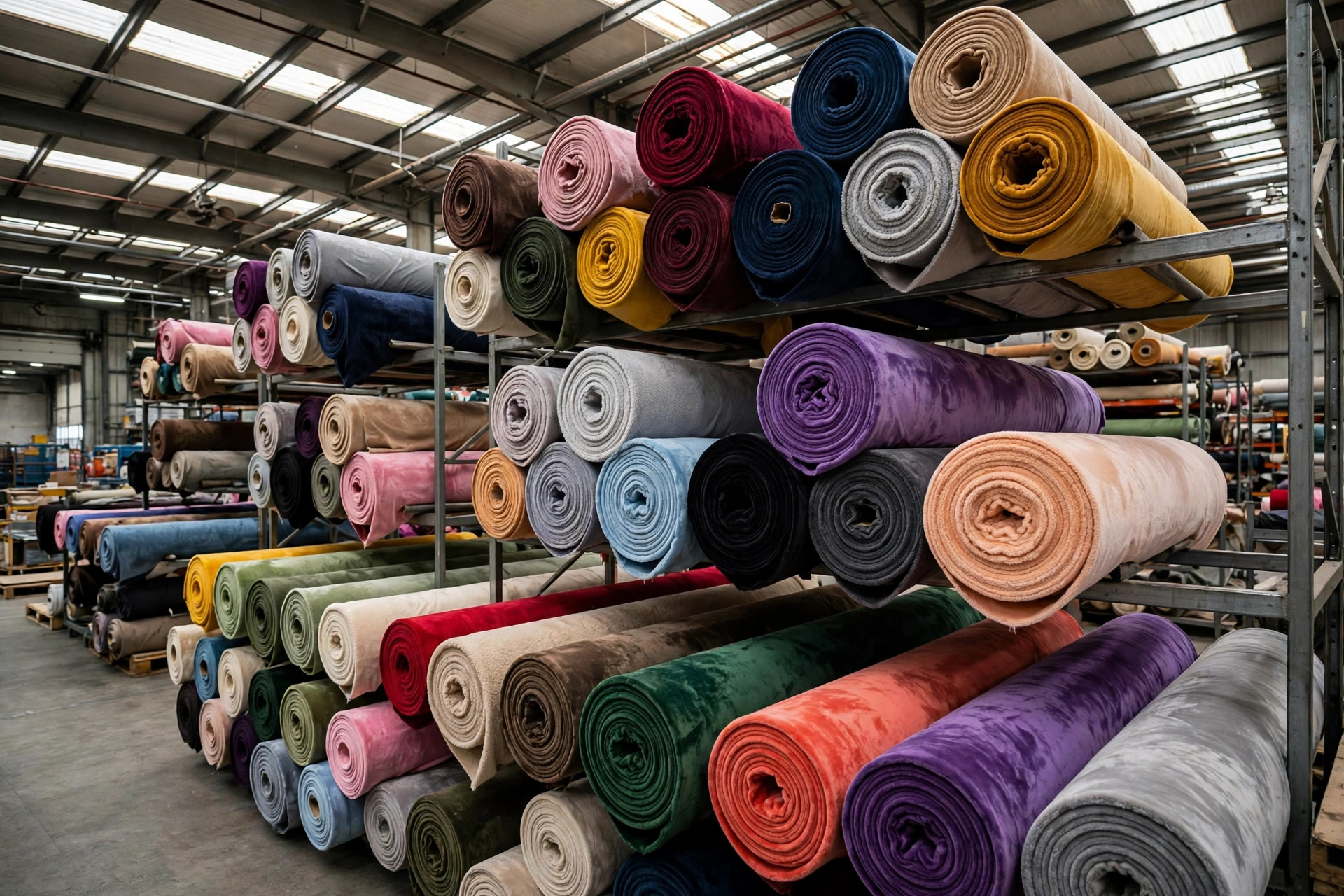
How Wholesale Velour Supply Works
Wholesalers and distributors sit between the mills that knit velour and the retailers and makers who sell or sew it. A distributor buys production in bulk, holds it in a warehouse, and breaks it into the roll and case quantities that smaller businesses can handle. That stocking role is what makes wholesale useful: instead of committing to a mill's full production run in a single colour, a shop can order across a colour card, reorder the shades that sell, and let the distributor carry the risk on the rest.
Velour reaches the wholesale market in several distinct forms, and it helps to know which one you are pricing. Plush velour fleece is knitted and finished so one or both faces have a soft velour surface over a warm fleece body, sold in weights described in grams per square metre and used for blankets, robes and cold-weather apparel. Craft velour is a lighter, lower-pile cloth sold to the costume and craft trades. Upholstery and drapery velours are heavier, wider and often treated for the contract market.
Trade buyers should expect account formalities that retail shoppers never see. Wholesalers commonly ask for a resale certificate or business licence, set a minimum opening order, and sell by the full roll or by cut yardage at different price breaks. Freight is usually charged on top of the fabric price, and rolls of wide plush fabric are bulky, so shipping can be a meaningful part of the landed cost.
Velour Fleece and Craft Velour at Wholesale
The performance end of the wholesale velour trade is dominated by velour-finish fleece. Anti-pill fleece with a velour face gives exceptional softness together with warmth, insulation and breathability, and it is offered in a lighter single velour construction and a heavier double velour construction with pile on both sides. Prints and solids in the same base cloth let a retailer build a coordinated range for blankets, throws, loungewear and outdoor layers without mixing suppliers.
At the craft end, wholesale distributors built their businesses on costume and craft fabrics in quantity: craft velour, faux suede cloths and stretch solids in the bright, saturated colours that dance, Halloween, school and community theatre buyers need every season. Large stocked inventory is the selling point here, because costume demand is deadline driven and a distributor who can ship a full colour order at once saves the buyer from splitting it across several sources.
Some wholesale suppliers will also dye to order. If you need a specific team, school or brand colour that is not on the stock card, ask about custom dye lots early, because a special colour normally requires a larger minimum and a longer lead time than pulling rolls from the warehouse shelf. Always approve a lab dip or a cut from the actual dye lot before the balance ships.
Opening a Wholesale Account
Opening terms differ by supplier, but the arrangements typically work like this in practice: a minimum opening order, freight excluded, and sometimes a modest automatic credit limit for a new retail account as an introduction, after which orders are prepaid or paid by card until a trading history supports proper credit terms. Read those terms before you plan a season around a supplier, and do not be offended by a prepaid start; it is standard protection in a trade where fabric cannot easily be resold once cut.
Before placing a first order, request the current colour card and a set of swatches, confirm the roll width and average roll length, and ask how shortages and seconds are handled. Pile fabrics can shade from roll to roll, so for a large programme ask whether your quantity can come from a single dye lot, and keep a cutting from the accepted roll as your reference standard.
Finally, think about continuity. Velour colours are seasonal and a popular shade can be dropped when a range is refreshed. If a colour becomes a staple for your shop or your product line, negotiate reorder expectations up front and consider holding a buffer roll rather than discovering mid-season that the shade has been discontinued.
Velour Fabric Wholesale Distributors
The wholesale velour sources in this directory cover velour-finish fleece for retailers and craft velour distribution.
Baum Textile
Wholesaler whose velour-finish WinterFleece fabrics are described as soft, anti-pill fleece in roughly 400 gram single velour and 450 gram double velour weights, in prints and solids, with stated opening-order and starter credit terms for retailers.
World Wide Trading
Wholesale distributor of craft and costume fabrics since 2001, stocking craft velour among its main lines, with a large inventory of fashion colours and custom dyeing available.
Common Questions
What is a typical wholesale minimum for velour?
It varies by supplier. Some distributors set a minimum opening order value for retail accounts and then sell by the roll or cut yardage; always confirm the current minimum, freight terms and payment terms before ordering.
What is the difference between single and double velour fleece?
Single velour fleece has a plush velour face on one side over a fleece body, while double velour has a velour finish on both sides and is usually heavier and warmer. The heavier cloth suits premium blankets and outer layers.
Can a wholesaler dye velour to a custom colour?
Some can. Custom dyeing normally needs a larger minimum quantity and more lead time than stock colours, and you should approve a sample from the dye lot before the full order ships.
More to Explore
References & Further Reading
Looking for Fabric Mills and Suppliers?
For the broader trade picture, see the Apparel Search fabric directory and start further searches from the Fabric Search hub.