Polyester Prices — Poly Pricing
Why the price of polyester follows oil, feedstocks and plant capacity — and the market resources buyers use to follow polyester pricing.
Polyester prices are important to the textile and apparel industries for a simple reason: not all clothing is made with polyester, but very often clothing is — and the fiber price flows straight into yarn, fabric and garment costs. This page explains what drives polyester pricing and gathers the resources buyers follow. No current price is printed here, because polyester is priced continuously off feedstock markets and a printed figure would be wrong on arrival.
Important: the Apparel Search Company does not guarantee the accuracy or timeliness of information listed on its websites or on the websites linked from them. Anyone using these pricing resources does so at their own risk, and should verify figures with the publishers and with suppliers before committing to an order.
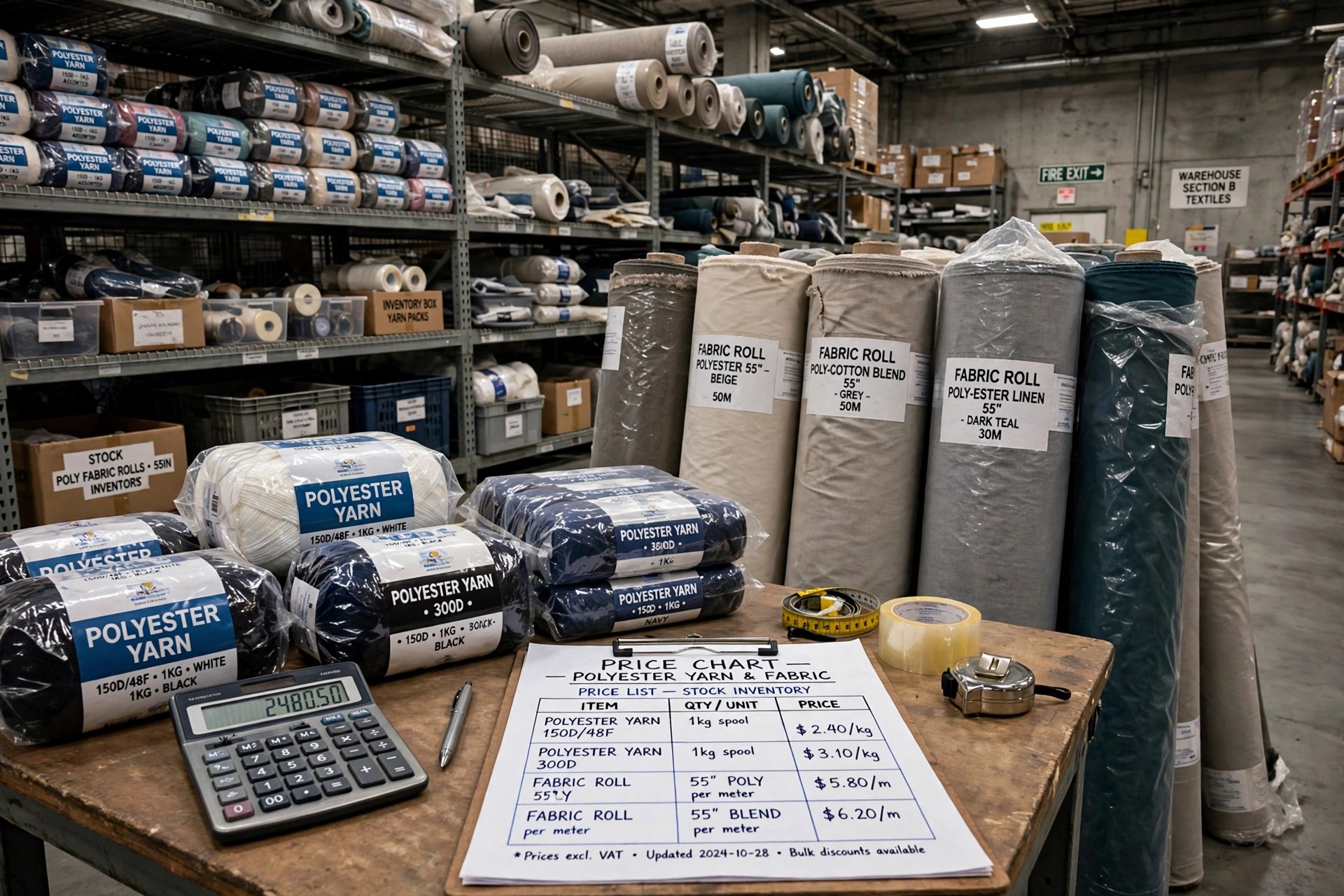
Polyester Pricing Resources
The Feedstock Chain Sets the Floor
Polyester begins as crude oil and natural gas derivatives. The two chemical building blocks of PET — purified terephthalic acid (PTA) and monoethylene glycol (MEG) — are traded commodities whose prices move with energy markets, refinery and chemical plant capacity, and regional supply disruptions. Polymer producers add their conversion cost and margin, and fiber producers add spinning costs, so a polyester fiber quotation is really a stack: feedstock, polymerization, spinning, and the logistics of getting yarn or staple fiber to a mill.
That chain explains the character of polyester pricing. It does not swing with harvest weather the way cotton does — there is no polyester growing season and no bumper crop — but it steps up and down with oil price movements and with chemical plant outages and capacity additions, especially in Asia, where most world capacity sits. Contract buyers therefore index many polyester agreements to published feedstock or fiber price assessments rather than fixing a number for a year.
Following Polyester Prices
The pricing resources linked below are the kinds of sources the trade actually uses: chemical market reporting services such as ICIS, which assess polyester fiber and filament markets; textile price reporting such as EmergingTextiles, which follows polyester pricing news in the fiber and yarn markets; and marketplace price listings such as Alibaba, which show asking prices for polyester fiber lots — useful as a sentiment check, but asking prices are not transaction prices and vary with specification, volume and terms.
Seasonality in polyester is industrial, not agricultural, but it still exists. Fiber prices respond to apparel order cycles, to holiday shutdowns at Asian plants, to new capacity starting up, and to freight rates on long shipping routes. A buyer comparing a quotation from six months ago with one today should separate those effects from the feedstock movement, because a delivered price can rise on freight alone while the fiber assessment itself stands still.
Whatever the source, compare like with like: filament or staple, virgin or recycled, denier and luster, delivered or ex-works, and the date of the assessment. A recycled polyester premium over virgin, a textured yarn premium over flat filament, and regional delivered-price differences can each be larger than the market movement a buyer is trying to track. Research the benefits and behavior of polyester fabrics on the fiber page linked above before negotiating on price alone — the cheapest polyester form is often not the one a garment specification needs.
References & Further Reading
More to Explore
Common Questions
Why do polyester prices follow oil prices?
Polyester is built from petrochemical feedstocks — PTA and MEG — whose prices move with crude oil and energy markets. When feedstock costs rise, polymer and fiber prices follow, with conversion and spinning costs added at each step.
Why is no polyester price quoted on this page?
Polyester is priced continuously and differs by form, specification, region and terms. A printed number would be stale and misleading, so this page explains the pricing structure and links the reporting services buyers use.
Are marketplace asking prices reliable for polyester fiber?
They are a rough sentiment check only. Asking prices vary with specification, volume and delivery terms and are not confirmed transaction prices, so buyers verify against reporting services and direct supplier quotations.