Woven Polyester Tape Manufacturers
Woven — not knitted — polyester tapes: firm, strong and colorfast narrow fabrics.
A woven polyester tape is exactly what its two-part name states: a tape formed by weaving — warp and weft yarns interlaced on a narrow loom — from polyester yarn. Both halves of the name carry information a buyer needs. Polyester sets the fiber behaviour: strength, abrasion resistance, colorfastness and indifference to moisture. Woven sets the structure: a firm, stable strip with finished selvedges that holds its width under sewing and load, in contrast to a knitted polyester tape, which is looped, softer and more yielding. Confusing the two structures is one of the commonest tape ordering errors, because fiber and width can match while behaviour in the garment does not.
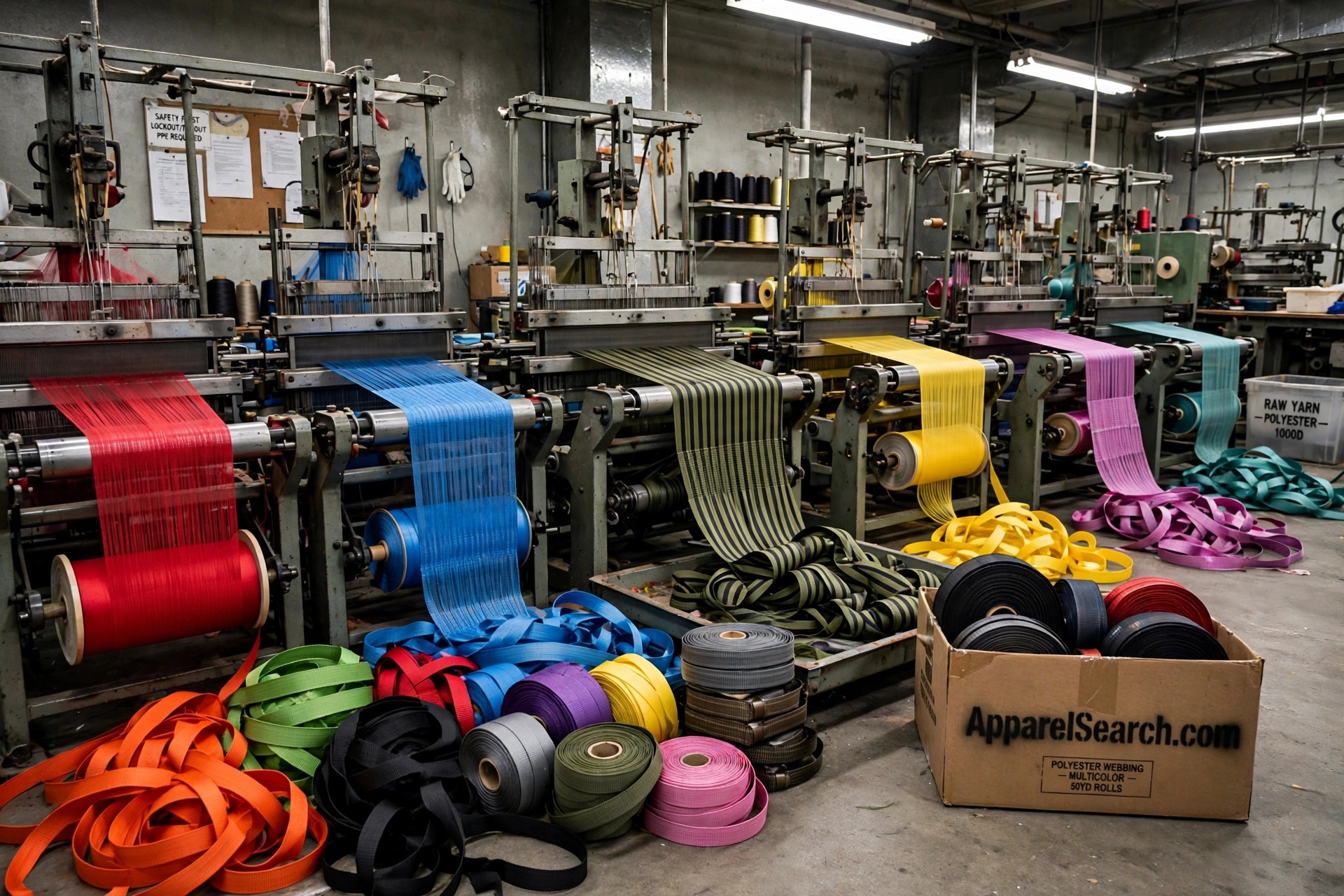
This page explains woven polyester tapes in their own right: how the woven structure and the polyester fiber combine, where the tapes are used across garment and industrial production, and what to specify. The listing below is an engineered narrow-fabrics mill producing woven polyester tapes among its specialty woven structures for medical, military, safety, industrial, aerospace and commercial applications, and the wider polyester tape category is covered in the Polyester Tapes guide linked among the tape guides at the bottom of the page.
Tape & Trim Resources
Woven, Not Knitted: Why the Distinction Matters
Weaving interlaces two yarn systems at right angles, locking the tape into a stable grid. A woven tape resists stretching along its length, keeps its nominal width when pulled and sewn, presents clean selvedges that do not unravel in handling, and cuts to a tidy end. Knitting loops one yarn system, so a knitted tape is softer and stretchier, conforms around curves, and can ladder or narrow when tensioned. Neither structure is better in the abstract — they answer different briefs — but they are not substitutes on a sewing line set up for one of them.
The distinction shows up in service. A woven polyester tape specified as a stay, strap or binding will hold garment dimensions through wear and laundering; the same tape in a knitted construction would allow the seam or edge to grow. Conversely, an edge that must flex with a moving body may fail or pucker if a firm woven tape is sewn where a knitted tape was designed. Specifications and purchase orders should therefore always carry both words — fiber and structure — and samples should be checked for structure, not just measured and matched for color.
What Polyester Brings to a Woven Tape
Polyester is a strong synthetic fiber with high abrasion resistance, good resistance to stretching and shrinking, and excellent colorfastness: solution- and package-dyed polyester yarns hold color through sunlight, washing and industrial laundering that would fade natural fibers. It absorbs very little water, so a polyester tape does not weaken, swell or mildew when wet, dries quickly, and keeps its dimensions in humid and outdoor service. Woven firmly, it produces tapes and light webbings with a high strength-to-weight ratio for straps, ties and bindings.
The trade-offs are equally definite. Polyester feels smoother and less absorbent against skin than cotton, melts rather than chars at high temperature, and can build static. For next-to-skin ties and natural-fiber garments, cotton tape remains the kinder choice; for uniforms, outdoor garments, safety and industrial products and anything laundered hard and often, polyester woven tape is usually the longer-lived and more economical specification over the garment life.
Where Woven Polyester Tapes Are Used
In garments, woven polyester tapes serve as binding and stay tapes on uniforms and workwear, straps and adjusters on sportswear and outdoor clothing, drawstring and casing tapes, hanger loops, and reinforcement inside seams that face industrial laundering. Their colorfastness makes them the standard tape where a colored trim must match a polyester shell fabric wash after wash, and their moisture resistance suits swim, rain and marine garments where a cotton tape would stay wet and degrade.
The same woven structures scale into technical and industrial work: engineered narrow-fabric mills weave polyester tapes and webbings for medical, military, safety, aerospace and commercial products, alongside tapes in nylon, Kevlar, Nomex and other specialty fibers. At that end of the market the tape is a certified component with tested breaking strength and controlled construction, which is why buyers in those fields order by specification and test data rather than by appearance.
Specifying Woven Polyester Tape
Specify both structure and fiber (woven polyester), the weave and weight, the width and thickness, the color and how it is dyed and matched, any finish — soft hand for garment use, firmer finishes for straps and industrial work — and the breaking strength where the tape carries load. State the end use and laundering regime, and whether the tape must match a polyester shell fabric, since tape and shell in the same fiber family age and fade together most predictably.
Check samples structurally and in service: confirm the tape is woven rather than knitted by its stability and selvedges, sew it into the actual seam or strap, load it if it will carry load, and launder or expose it under the conditions the garment will meet, checking width stability, colorfastness and edge behaviour. For repeat production, keep a sealed reference sample, because a later delivery in a knitted construction or a different weight can pass a casual inspection and fail in the garment.
Woven Polyester Tape Manufacturers
Engineered narrow-fabric manufacturers producing woven polyester tapes and related woven structures.
Bally Ribbon Mills
Producing quality narrow woven fabrics since 1923, Bally Ribbon Mills has used innovation in design and manufacturing to become a highly respected leader in the woven narrow fabrics industry. Bally Ribbon, located in Bally, Pennsylvania, specializes in engineered woven narrow fabrics, specialty broadcloth and woven structures for medical, military, safety, industrial, aerospace, and commercial applications. Manufacturing capabilities include tapes, webbing, tubulars, broadcloth, multi-dimensional woven shapes, nylon, Nomex, Kevlar, polyester, Teflon, graphite, fiberglass, ceramic, Spectra, PBI/kevlar, rayon and acrylic fiber groups.
Ribbon Manufacturer · Teflon Tapes · Polyester Tapes · Woven Polyester Tape
More Industry Resources
More Tape Guides
- Bias Binding Tape
- Cotton Tape
- Curing & Wrapping Tape
- Elastic Tapes
- Gripper Tapes
- Hook & Eye Tapes
- Hook & Loop Tapes
- Jacquard Tapes
- Kevlar Tapes
- Knitted Tape
- Leather Suede Tapes
- Multi Color Tape
- Name Tapes
- Nylon Tapes
- Organza Tape
- Packing Tapes
- Piping Tapes
- Plain Tapes
- Polyester Tapes
- Rayon Tapes
- Reflective Tapes
- Ribbon Tapes
- Rubber Tape
- Satin Tapes
- Seam Tapes
- Teflon Tapes
- TPU Elastic Reverie Tape
- Twill Tape
- Velvet Tapes
Common Questions
What is the difference between woven and knitted polyester tape?
Woven polyester tape is interlaced warp and weft: firm, stable, width-holding, with clean selvedges, suited to stays, straps and bindings. Knitted polyester tape is looped: softer and stretchier, conforming to curves, but able to narrow or ladder under tension. Fiber and width can match while garment behaviour differs completely.
Why choose polyester for a woven tape?
Polyester brings strength, abrasion resistance, excellent colorfastness and very low moisture absorption, so the tape keeps its dimensions and color through hard laundering, humidity and outdoor use and does not mildew. It suits uniforms, workwear, outdoor, safety and industrial garments.
What should a woven polyester tape specification include?
Both structure and fiber, weave and weight, width and thickness, color and dye method, any finish, breaking strength where the tape carries load, and the end use and laundering regime. Keep a sealed reference sample so later deliveries can be checked against it.