Nylon Tapes
Strong nylon webbing and tapes for straps, bags, outdoor gear and garment construction.
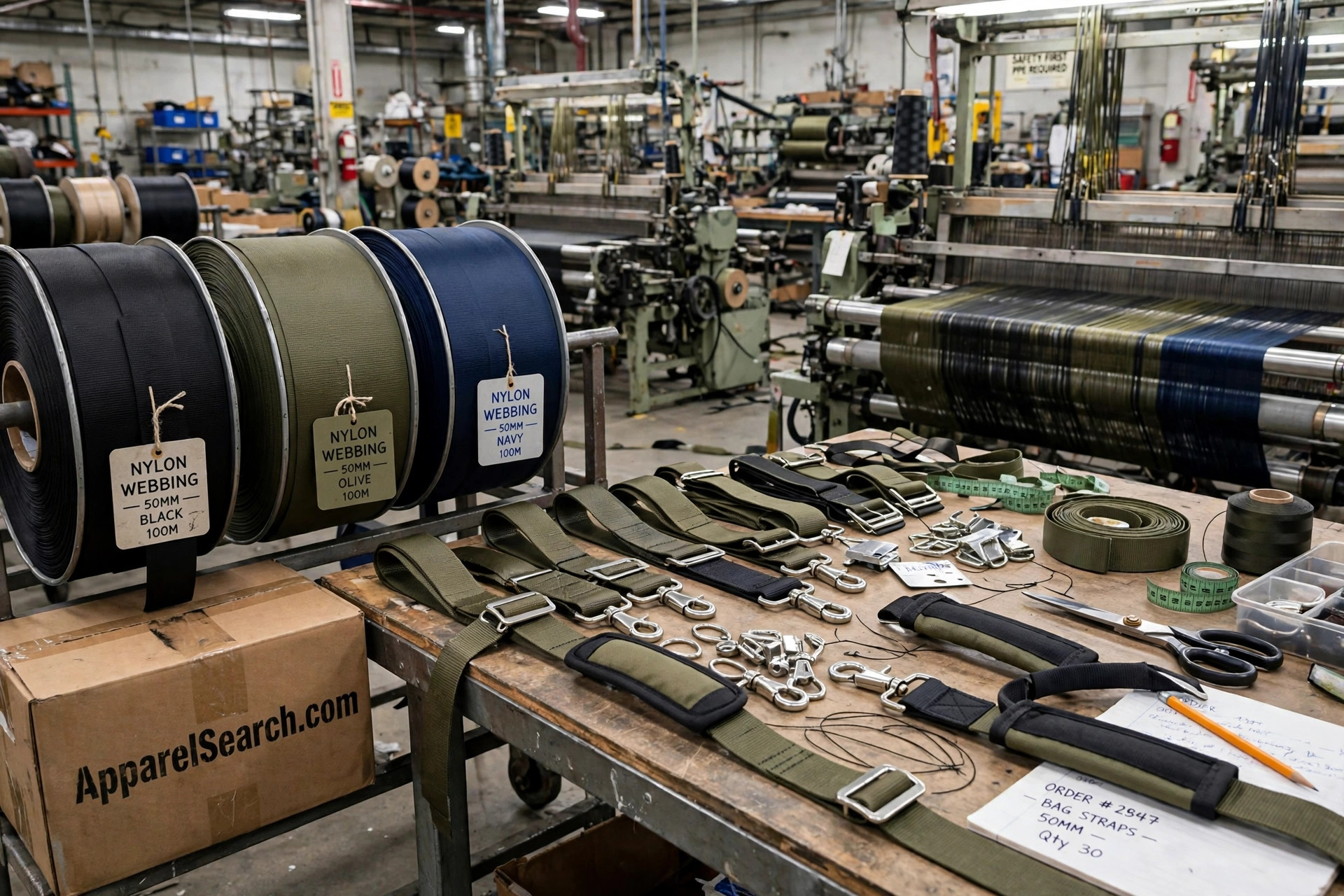
Nylon tapes are woven narrow fabrics made from nylon yarn, valued for a combination no natural fiber matches at the price: high tensile strength, excellent abrasion resistance, and enough flexibility to be sewn, folded and hardware-fitted into straps and webbing. In heavier weights the same product is sold as nylon webbing — the flat strap material of bag handles, belts, pet leads, luggage straps and outdoor equipment — while lighter nylon tapes serve inside garments as reinforcement and binding.
This page is a sourcing guide for nylon tape and webbing. It explains how the tapes are woven and finished, where garment, bag and outdoor manufacturers use them, how nylon honestly compares with polyester tape for outdoor work, and what to specify when ordering. The manufacturer listed below produces nylon tapes and ribbons among its industrial tape range.
Nylon Tape & Narrow Fabric Resources
How Nylon Tape and Webbing Are Woven
Nylon tape is woven on narrow-fabric looms from continuous nylon filament yarn. Light tapes use a plain weave and fine yarns for a smooth, flexible strip; webbing uses heavier yarns and tighter, sometimes tubular or double-layer weaves to reach the thickness and breaking strength a strap needs. Edges are woven in as part of the structure, which is why a good nylon webbing does not fray along its sides the way a strip cut from wide fabric would.
Finishing decides the hand and the behavior. Nylon tape can be supplied soft for garment use or resin-finished for a firmer strap, dyed to color, or heat-set for stability. Cut ends are normally melted or sealed in production, because nylon's thermoplastic nature lets a hot cut fuse the filaments and stop fraying — one of the practical conveniences that made nylon webbing the default strap material across so many industries.
Where Nylon Tapes Are Used
Straps are the headline use: shoulder straps and handles on bags and luggage, belts, pet collars and leads, tie-down and lashing straps, and the webbing assemblies of backpacks and outdoor equipment. In garments, nylon tape reinforces stress points, binds edges in outerwear and workwear, forms drawcord casings and hanging loops, and provides the strong flat base that hook-and-loop closures and hardware are mounted on.
Industrial buyers use the same tapes for seam reinforcement, gripping and wrapping applications, and light load handling where a metal or rope solution would be heavier or harder on the product. Ribbon and tape producers also weave nylon into satin and velvet ribbons for the garment trade, so nylon appears both as the hard-working webbing on a bag and as a decorative ribbon on a dress — the fiber serves both ends of the market.
Nylon Tape Compared With Polyester Tape
Buyers choosing between nylon and polyester tape should know the genuine trade-offs. Nylon is slightly stronger and more abrasion-resistant at the same weight and has a softer hand, which is why it dominates straps that touch skin and gear that takes hard wear. It also absorbs more water and loses a little strength when wet, and it degrades faster than polyester under prolonged ultraviolet exposure.
Polyester tape is therefore often the better specification for permanently outdoor, sun-exposed or marine uses, while nylon remains the better specification for strength, abrasion and comfort. Neither answer is universal: the right choice follows the product's actual conditions, and a supplier who asks about end use before quoting is giving a useful signal about their competence.
Specifying and Buying Nylon Tape
Specify width, thickness or weight, weave type, color, finish (soft or firm), and — for webbing — the required breaking strength, since straps are bought against a load requirement rather than by appearance. State the hardware the webbing must pass through, because buckle and adjuster fit is decided by the combination of width and thickness, and ask for cut-length or roll supply to suit your production.
Confirm dye lot consistency for colored webbing used across a product range, and test-sew or test-assemble with your own thread and hardware before bulk commitment. The manufacturer listed below produces seam tapes and industrial tapes as well as ribbons in nylon and other fibers for the garment industries, which suits buyers sourcing several tape types together.
Nylon Tape Manufacturers
Producers of nylon tapes, webbing and related industrial tapes and ribbons.
Euro (India)
The company manufactures a variety of industrial tapes such as Seam tapes, PTFE tapes which are used for packing, wrapping, and gripping.
Ribbons made of cotton, rayon, nylon, polyester, staple fibre, terelene, satin, velvets, zari etc. find wide application in garment industries.
References & Further Reading
More Tape Guides
- Bias Binding Tape
- Cotton Tape
- Curing & Wrapping Tape
- Elastic Tapes
- Gripper Tapes
- Hook & Eye Tapes
- Hook & Loop Tapes
- Jacquard Tapes
- Kevlar Tapes
- Knitted Tape
- Leather Suede Tapes
- Multi Color Tape
- Name Tapes
- Organza Tape
- Packing Tapes
- Piping Tapes
- Plain Tapes
- Polyester Tapes
- Rayon Tapes
- Reflective Tapes
- Ribbon Tapes
- Rubber Tape
- Satin Tapes
- Seam Tapes
- Teflon Tapes
- TPU Elastic Reverie Tape
- Twill Tape
- Velvet Tapes
- Woven Polyester Tapes
Common Questions
What is nylon tape used for?
Nylon tape and webbing make straps and handles for bags and luggage, belts, pet collars and leads, backpack and outdoor webbing, and inside garments they reinforce stress points, bind edges and form casings and hanging loops.
Is nylon tape stronger than polyester tape?
At the same weight, nylon is slightly stronger and more abrasion-resistant with a softer hand. Polyester resists ultraviolet degradation and water absorption better, so polyester is often preferred for permanently outdoor or marine use.
Does nylon webbing fray?
The woven edges of nylon webbing resist fraying along the sides, and cut ends are normally heat-sealed in production — nylon melts, so a hot cut fuses the filaments and stops the end unravelling.