Organza Tape Manufacturers
Sheer, crisp tape that holds a bow, catches the light and finishes delicate edges.
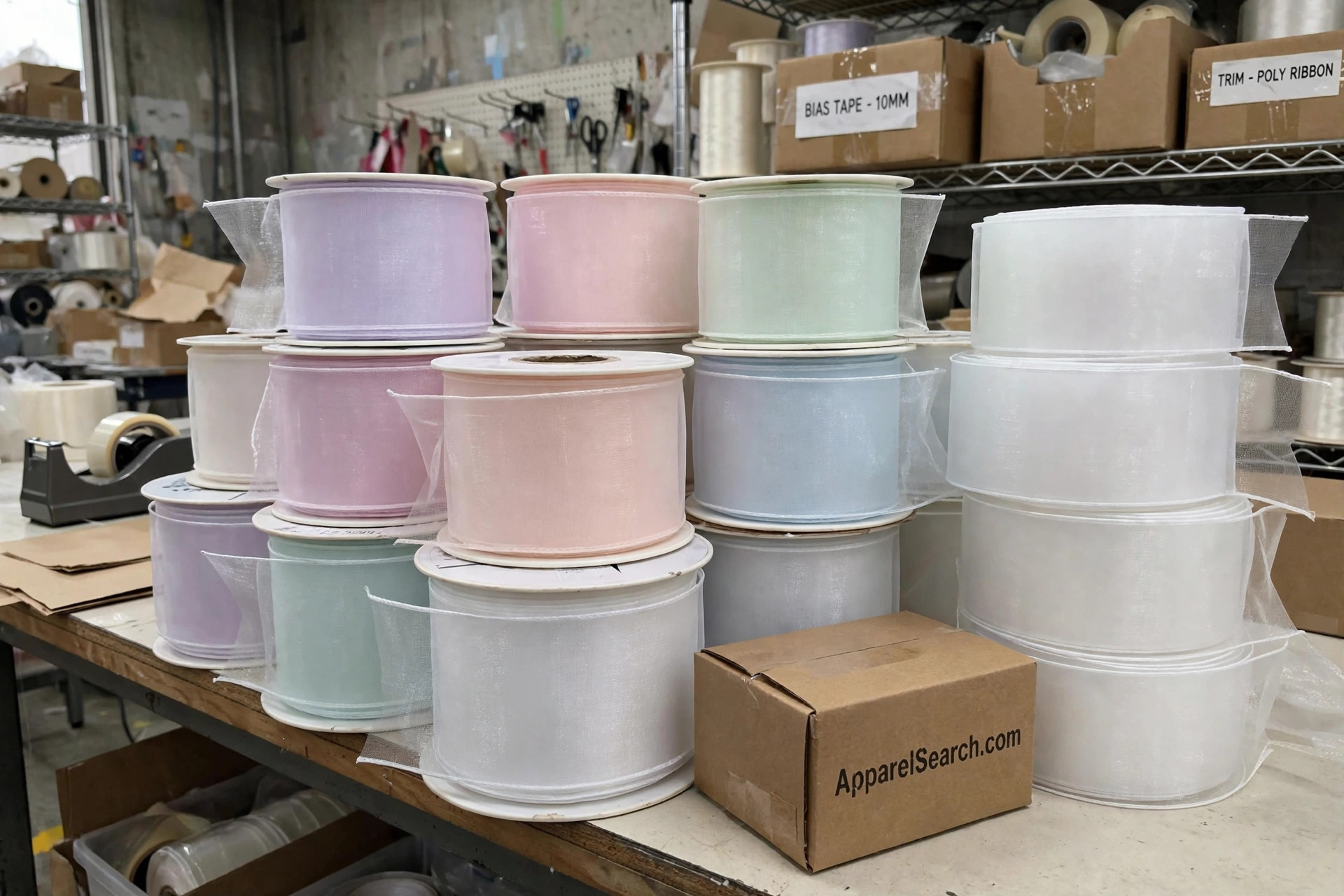
Organza tape is a narrow tape woven from organza — a sheer, plain-weave fabric with a crisp hand and a light, glassy transparency. Where most garment tapes are chosen to disappear inside a seam, organza tape is chosen to be seen, but only just: it adds a translucent layer of color, a stiff edge that holds its shape, and a soft shimmer without the weight or opacity of a ribbon. Tied into bows it keeps the loops standing instead of wilting, which is why it is a staple trim for bridal, occasion and gift work.
This page is a guide to organza tape for garment and trim buyers: what gives the tape its stiffness and sheerness, where it is used on garments and accessories, the widths and edge finishes it is sold in, and how to specify color and put-up. The manufacturer listing below supplies organza tape within a wider narrow-fabric range, and the tape guides at the bottom of the page cover the rest of the tapes family, from satin and ribbon tapes to cotton and twill tapes.
Tape & Trim Resources
Sheer, Crisp and Light: What Organza Tape Is
Organza is woven with fine, tightly twisted yarns in an open plain weave, and that construction explains both of the tape's useful properties. The open weave makes it transparent, so a layer of organza tape tints whatever lies beneath it rather than covering it. The twisted yarns and a stiff finish make it springy and shape-holding, so loops, ruffles and gathered edges made from the tape stand up on their own — behaviour no soft satin or cotton tape can match at the same weight.
Organza tapes are woven or cut in synthetic organza — polyester is the common modern form, valued for consistent stiffness, colorfastness and a clean heat-cut edge that does not fray — and in silk organza for premium bridal and couture work. Some versions carry a wired edge so a bow or sculpted trim can be shaped by hand and will hold the shape; unwired versions gather, ruffle and layer more softly. The choice between wired and unwired is a design decision that should be settled before sampling anything else.
Where Organza Tape Is Used
On garments, organza tape appears wherever decoration must stay weightless: bows and sashes on bridesmaid and flower-girl dresses, sheer overlays and flounces on eveningwear, delicate edge finishes on veils and wraps, ribbon straps and ties, and trims on christening and communion outfits. Its transparency lets a designer add a second color over a dress fabric — a blush layer over ivory, for example — without a visible hard edge, and its stiffness lets small decorative shapes survive a day of wear.
Beyond the garment itself, the same tape is used across the trade that surrounds occasion clothing: hat and fascinator trims, corsage and bouquet bindings, gift wrapping and favour bags for weddings, and retail presentation for lingerie and accessories. Factories buying organza tape are usually buying an effect — airiness with structure — so sampling should always be done on the actual garment or package, in the lighting it will be seen in, because sheerness reads very differently against dark and light grounds.
Widths, Edges and Colors
Organza tape is sold in narrow widths for ties, edging and small bows, and in wider widths for sashes, overlays and large statement bows. Edge quality matters more with a sheer fabric than with an opaque one, because every irregularity shows: look for even, straight edges that do not wave, and on heat-cut synthetic tape a sealed edge that will not shed filaments. Wired-edge versions should be checked for wire that stays centred and does not poke through at cut ends.
Color in a sheer tape is a layer, not a surface: the same roll looks pale over white and saturated over a matching lining. Iridescent and two-tone organzas, woven with different warp and weft colors, shift color as they move and are popular for bows and overlays. For dyed-to-match work, approve the tape layered over the actual shell fabric, never against a paper standard, and keep a layered reference sample with the order so bulk can be judged the same way.
Specifying and Ordering Organza Tape
A complete order states the fiber (polyester or silk organza), the width, whether the edge is wired or unwired, the color as a layered standard over the garment fabric, and the put-up — rolls or spools in the lengths the workroom uses. State the end use plainly: a maker told the tape will be tied into bows for a bridal range can advise on stiffness and wire; a maker told it will finish veil edges will point to a softer, narrower tape.
Handle and test a sample the way production will: tie the bow, gather the ruffle, cut the tape and check the ends, then press a test piece at the garment's pressing temperature — synthetic organza can glaze or melt under a hot iron, so pressing instructions belong in the specification, not in a complaint after the first ruined batch. Confirm minimums per color, since fashion colors in sheer tape commonly carry higher minimums than stock white, ivory and black.
Organza Tape Manufacturers
Narrow-fabric manufacturers offering organza tape as part of their garment tape and trimming ranges.
Shivam Narrow fabrics
Located in India, Shivam Narrow fabrics is an upcoming company that prides itself on producing superior products with faultless deliveries. They have made a distinctive mark for themselves by producing export quality products that are at par with international standards.
Cotton Tape · Elastic Tape · Jacquard Tape / Jacquard Name Tape · Multi Color Tape · Satin Tapes · Curing & Wrapping Tape · Reflective Tape · Knitted Tape · Organza Tape · Narrow fabric
More Tape Guides
- Bias Binding Tape
- Cotton Tape
- Curing & Wrapping Tape
- Elastic Tapes
- Gripper Tapes
- Hook & Eye Tapes
- Hook & Loop Tapes
- Jacquard Tapes
- Kevlar Tapes
- Knitted Tape
- Leather Suede Tapes
- Multi Color Tape
- Name Tapes
- Nylon Tapes
- Packing Tapes
- Piping Tapes
- Plain Tapes
- Polyester Tapes
- Rayon Tapes
- Reflective Tapes
- Ribbon Tapes
- Rubber Tape
- Satin Tapes
- Seam Tapes
- Teflon Tapes
- TPU Elastic Reverie Tape
- Twill Tape
- Velvet Tapes
- Woven Polyester Tapes
Common Questions
What is organza tape used for?
For sheer, shape-holding decoration: bows and sashes on bridal and occasion dresses, veil and wrap edging, overlays and flounces on eveningwear, hat trims, and wedding gift and favour wrapping. Its transparency adds color without weight, and its crispness keeps loops and ruffles standing.
What is the difference between wired and unwired organza tape?
Wired-edge tape has a fine wire in each edge so bows and sculpted trims can be shaped by hand and hold their shape. Unwired tape gathers, ruffles and layers more softly and is used for edging, ties and overlays where no fixed shape is needed.
How should organza tape color be approved?
Layered over the actual garment fabric, not against a paper standard. A sheer tape tints what lies beneath it, so the same roll reads pale over white and saturated over a matching lining; keep a layered reference sample with the order.