Leather & Suede Tapes
Leather and suede trim strips for binding, edging and fashion detailing on garments and accessories.
Leather and suede tapes are narrow strips of hide — or of imitation leather made to look and handle like it — sold as a ready-made trim. Where most tapes in this family are woven from yarn, these are cut from sheet material, which gives them a completely different character: a smooth grained face on leather, a soft napped face on suede, solid color through the strip, and an edge that reads as a deliberate design detail rather than a textile binding.
This page is a sourcing guide for leather and suede tape in the garment and accessories trades. It covers how the strips are produced, the binding and detailing work they do on jackets, knitwear, bags and footwear, the genuine-versus-imitation decision, and what to specify when ordering. The supplier listed below exports fashion accessories and garment detailing components.
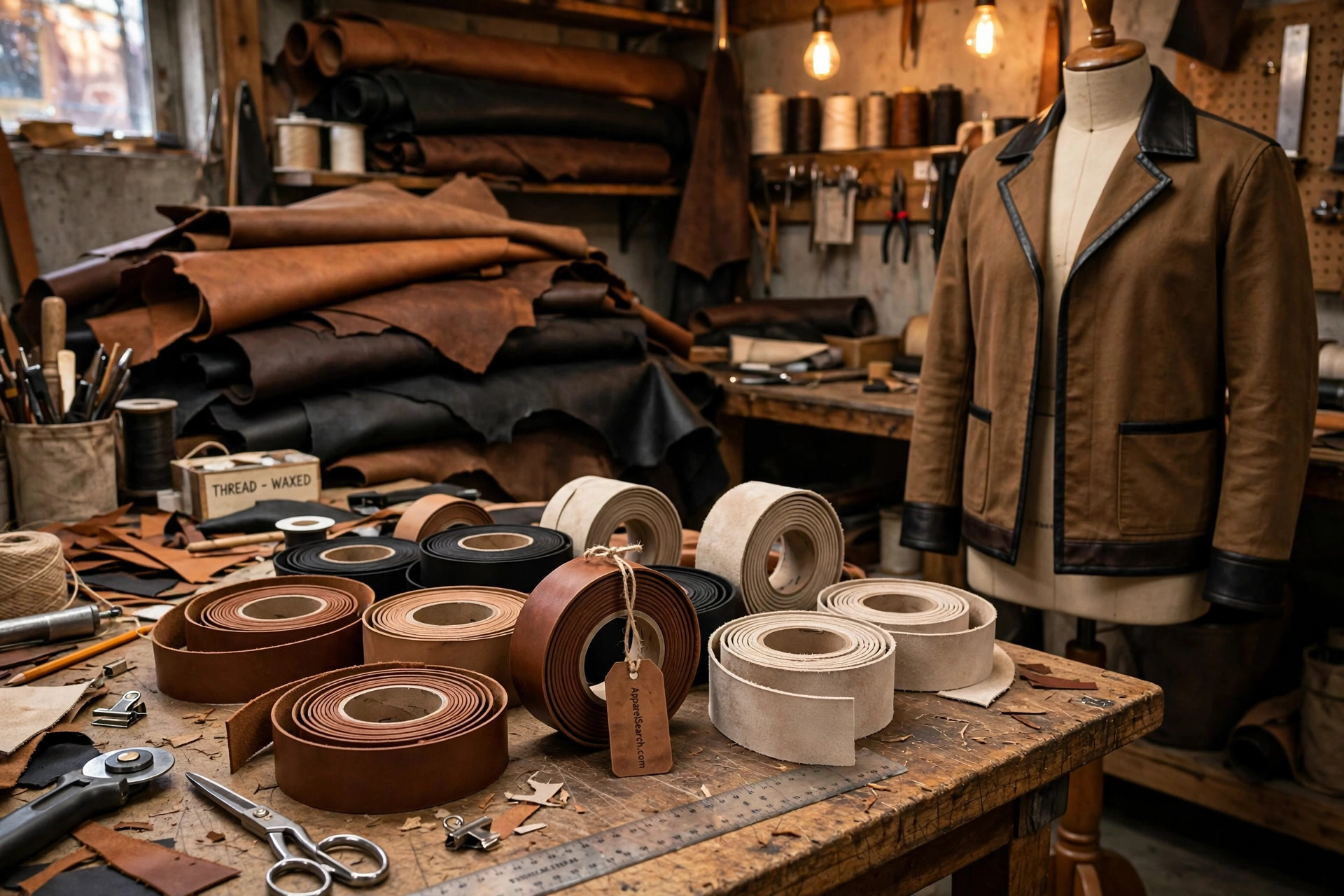
Leather & Suede Tape Resources
How Leather and Suede Strips Are Made
Genuine leather tape begins as a finished hide, split or selected to a consistent thickness and cut into continuous narrow strips. Suede tape is cut from the flesh side of the hide or from suede splits, giving the strip its soft, velvety nap on both faces. Because a hide is not a roll of fabric, strip length, thickness consistency and color matching between hides are real production variables, and good suppliers grade and match strips so a garment production run does not show band-to-band shade differences.
Imitation leather and suede tapes are cut from coated fabric or microfiber sheet, which trades the character of real hide for uniformity: consistent thickness, long continuous lengths, washable behavior and a lower price. Both genuine and imitation strips are sold plain, folded as binding, or with an adhesive backing for applications where the strip is applied rather than sewn.
Where Leather and Suede Tapes Are Used
On garments, these tapes work as binding and edging: finishing the neckline, front edges, cuffs and pocket mouths of jackets, coats and knitwear with a strip that contrasts in texture against the shell fabric. A suede strip down a front placket or around a collar is a classic detailing move, and leather tape trims everything from western and heritage styling to premium casual wear.
Accessories use even more of it. Leather and suede tapes edge bags and belts, form pulls, loops and lacing, bind hats and footwear components, and finish the raw edges of leather goods themselves. In interiors and crafts the same strips serve for upholstery edging and decorative tying, but the garment and accessories trades remain the core market this directory serves.
Sewing and Applying Leather Trim Strips
Leather tape sews differently from textile tape. It needs a needle that cuts rather than wedges — a leather point in production — a longer stitch length so the perforations do not tear out like a stamp edge, and often a walking-foot or roller-feed machine so the strip feeds evenly without stretching. Suede is more forgiving but marks easily, so factories avoid pins in visible areas and use clips or tape to position strips before sewing.
Care behavior has to be designed in. A genuine leather or suede trim on a washable garment creates a care mismatch that must be resolved at the design stage — either the whole garment is specified for specialist cleaning, or an imitation strip with matching wash behavior is substituted. Deciding that after sampling is how trim programs go wrong, so the care label and the trim choice belong in the same conversation.
Specifying and Buying Leather & Suede Tape
Specify material first (genuine leather, genuine suede, or imitation, and which), then width, thickness, color and finish, the form of supply (flat strip, folded binding or adhesive-backed), and the length continuity your production needs. For genuine hide, ask how strips are matched for shade and thickness across an order, and request production-representative samples rather than a single showroom swatch.
Also state the end product and its care requirements. A supplier of garment accessories and detailing components can then steer the choice between genuine and imitation material before sampling money is spent. The company listed below exports fashion accessories internationally and supports garment detailing programs through its overseas sales centers.
Leather & Suede Tape Suppliers
Exporters of leather and suede trim and garment accessories.
Ningbo Hi-Ana International
They export fashion accessories, articles for daily use, stationery and metal fittings. Through their sales centers in the Middle East and North America, they better understand your international market needs. They build on that awareness with equally knowledgeable support staff.
Their engineers, all textile graduates of top schools, know how to produce designs suited to your region. And they have three lace fabric consultants to ensure your garments' detailing is a hit with consumers.
References & Further Reading
More Tape Guides
- Bias Binding Tape
- Cotton Tape
- Curing & Wrapping Tape
- Elastic Tapes
- Gripper Tapes
- Hook & Eye Tapes
- Hook & Loop Tapes
- Jacquard Tapes
- Kevlar Tapes
- Knitted Tape
- Multi Color Tape
- Name Tapes
- Nylon Tapes
- Organza Tape
- Packing Tapes
- Piping Tapes
- Plain Tapes
- Polyester Tapes
- Rayon Tapes
- Reflective Tapes
- Ribbon Tapes
- Rubber Tape
- Satin Tapes
- Seam Tapes
- Teflon Tapes
- TPU Elastic Reverie Tape
- Twill Tape
- Velvet Tapes
- Woven Polyester Tapes
Common Questions
What are leather and suede tapes used for?
They are narrow trim strips used to bind and edge garments and accessories: necklines, fronts, cuffs and pockets on jackets, coats and knitwear, and edging, pulls and loops on bags, belts, hats and footwear.
Are leather tapes made from real leather?
They can be genuine leather or suede cut from hide, or imitation leather and suede cut from coated fabric or microfiber sheet. Imitation strips offer uniform thickness, long continuous lengths and washable behavior at a lower price, so the material should always be stated when ordering.
Can a garment with leather tape trim be washed?
Only if the whole garment is designed for it. Genuine leather and suede trims usually require specialist cleaning, so washable garments either need an imitation trim with matching wash behavior or a care label that covers the trim.