Velvet Tape Manufacturers
Plush pile tapes that add a soft, light-catching decorative edge to garments.
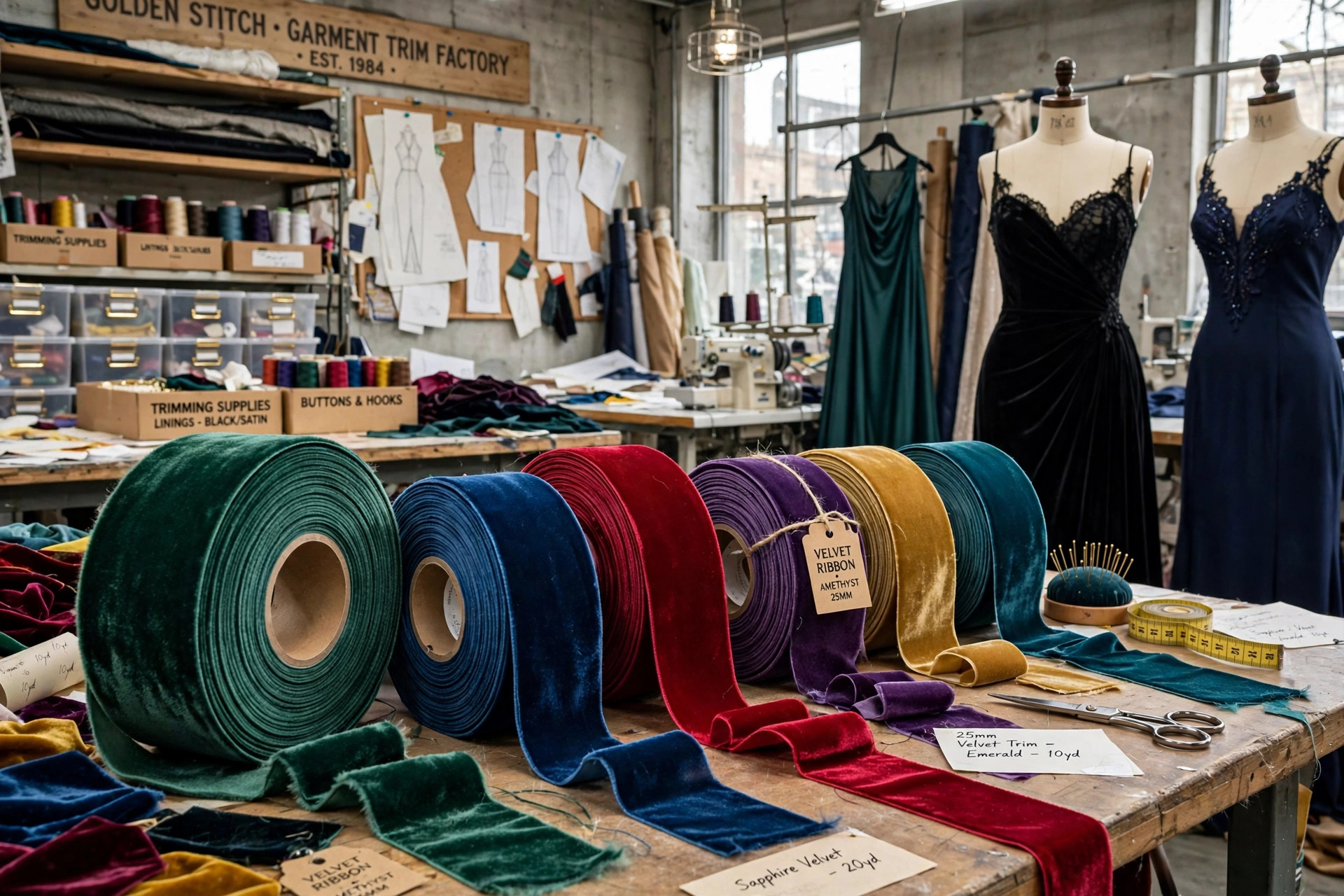
Velvet tape is a narrow tape with a velvet face: a woven backing carrying a dense, short pile that catches light, deepens color and feels unmistakably plush between the fingers. Where most tapes in this directory are bought to work, velvet tape is bought to be seen and touched. It edges necklines, cuffs and hems, forms straps, ties, button loops and chokers, trims millinery and eveningwear, and gives a garment a note of luxury that a flat ribbon of the same color cannot match — the pile itself is the decoration.
This page explains velvet tapes for garment factories: how the pile face is made, the difference between stretch and non-stretch constructions, where the tape is used, and how to order and sew it without crushing what makes it valuable. The listings below include two large tape and ribbon manufacturers whose ranges include velvet tapes and ribbons in garment colors, and a ribbon manufactory offering velvet ribbon among its decorative ribbons.
Tape & Trim Resources
A Pile Face on a Narrow Tape
Velvet is a pile fabric: extra yarns stand upright from a woven ground and are cut to an even height, forming the dense soft surface. Velvet tape applies that structure at tape width — the ground weave gives the strip its strength and sewability, and the pile gives it depth of color, because the cut fiber ends absorb and scatter light differently as the tape moves. The back of the tape is flat and plain, which is the face that sits against the garment and takes the stitching.
That two-face character drives how the tape is handled. The pile can be crushed by hard pressure, sharp folding or careless storage, and crushed pile shows as pale, shiny marks that do not always recover. Rolls should be stored without weight pressing the pile, samples should be judged under the lighting the garment will be seen in, and color approval should be made on the pile face, since the same dye reads deeper on velvet than on the flat satin or grosgrain it may be matched against.
Stretch and Non-Stretch Velvet Tapes
Non-stretch velvet tape is the classic form: a firm woven ground that holds its width and line, used wherever the trim must follow the garment construction exactly — straight edges, bound seams, straps that carry a set length and decorative bands. It sews like a ribbon and is the default for dresses, jackets, millinery and home-fashion trims.
Stretch velvet tape adds elastic recovery, so the plush edge can move with a knitted or fitted garment: necklines and cuffs that must pass over a head or hand, dance and performance wear, fitted evening and lingerie trims, and any edge that a firm tape would restrict. Large accessory makers list velvet tapes in both stretch and non-stretch forms within the same range, and the two are not substitutes — a stretch tape used where a firm line was designed will creep, and a firm tape on a stretch edge will pucker or tear the seam. The specification should state which construction the garment needs.
Where Velvet Tape Is Used
Eveningwear and occasion dresses are the tape home ground: edging necklines and sleeves, outlining bodices, forming thin straps and ties, and trimming wraps and jackets where a plush line marks the design. The same tape trims blouses, skirts and childrenswear party garments, makes button loops and frog-style accents, and serves millinery as hat bands and trims that benefit from the pile grip and finish.
Beyond the garment itself, velvet tape appears on lingerie and loungewear as a soft decorative strap and edge, on dance and costume wear for rich color under stage light, and on accessories and gift and retail presentation where a velvet tie or band signals quality. In every use the working principle is contrast: a narrow band of deep, light-drinking pile set against a smoother, lighter-reflecting garment fabric.
Specifying, Sewing and Caring for Velvet Tape
Specify the construction (stretch or non-stretch), the width, the color approved on the pile face, the backing and edge finish, and the put-up. State the garment fabric and placement, and for stretch tape the stretch ratio it must work at. Because velvet color shifts with pile direction, confirm with the maker which direction the pile will run on the roll, and cut and sew all pieces of a garment with the pile running the same way, or panels of the same dress will read as two colors.
On the sewing line, stitch through the ground at the tape edges rather than across the pile where the design allows, avoid pressing the pile face with a hot iron — steam and press from the back if pressing is unavoidable — and check a made-up sample for pile crushing at seams and folds. Care follows the garment: velvet trims are a reason many garments are dry-clean or gentle-wash items, and the tape fiber and dye should be confirmed against the care method the finished garment will carry.
Velvet Tape Manufacturers
Tape and ribbon manufacturers offering velvet tapes and velvet ribbons within their garment trimming ranges.
Elastix Australasia Pty Ltd
Head Office is located in Australia and their factory is in China. The company was established in 1948 and currently employs over 3,000 people. They design and produce over 15,000 accessories, with narrow fabrics their primary focus and specialty, including elastics, laces, tapes and webbings. Their products are predominantly produced on Swiss, German and Italian machinery, and they are ISO 9001 Certified.
They sell to manufacturers and distributors worldwide, and a large part of their sales are to the domestic market in Mainland China, where they are based for manufacturing. With Western, European and Chinese management, they seek new distributors in many markets; interested agents or distributors should forward full details, experience and an expression of interest directly to the General Manager, Mr Jeremy Quittner.
Narrow fabrics · TPU Elastic Reverie Tapes · Lanyards · Elastics / Webbings · Cords · Ribbons · Tapes — cotton tape, satin tape, twill tape, velvet tape, gripper tape, polyester tape
Euro
The company manufactures a variety of industrial tapes such as seam tapes and PTFE tapes, which are used for packing, wrapping, and gripping. Ribbons made of cotton, rayon, nylon, polyester, staple fibre, terelene, satin, velvets, zari etc. find wide application in garment industries.
Seam Tapes · Cotton Tapes · Rayon Tapes · Nylon Tapes · Polyester Tapes · Satin Tapes · Velvet Tapes · Gripping Tapes / Gripper
Ningbo XWZ Ribbon Manufacturer
Ningbo XWZ Ribbon Manufactory, established in 1998, is a manufacturer of all kinds of bias tape, silk ribbon, zigzag, curtain tape, Christmas ribbon, UU lace, Samosa lace, elastic tape, satin ribbon, trimming and many kinds of decorative ribbons. They also supply many kinds of threads and other related items. Presently, they employ just over 200 skilled and diligent workers at their factory.
Bias tape · Velvet ribbon · Satin ribbon
More Industry Resources
More Tape Guides
- Bias Binding Tape
- Cotton Tape
- Curing & Wrapping Tape
- Elastic Tapes
- Gripper Tapes
- Hook & Eye Tapes
- Hook & Loop Tapes
- Jacquard Tapes
- Kevlar Tapes
- Knitted Tape
- Leather Suede Tapes
- Multi Color Tape
- Name Tapes
- Nylon Tapes
- Organza Tape
- Packing Tapes
- Piping Tapes
- Plain Tapes
- Polyester Tapes
- Rayon Tapes
- Reflective Tapes
- Ribbon Tapes
- Rubber Tape
- Satin Tapes
- Seam Tapes
- Teflon Tapes
- TPU Elastic Reverie Tape
- Twill Tape
- Woven Polyester Tapes
Common Questions
What is velvet tape?
A narrow tape with a velvet face: a woven backing carrying a dense, short cut pile that deepens color and feels plush, with a flat plain back that sits against the garment and takes the stitching. It is used as a decorative trim on dresses, eveningwear, millinery and accessories.
What is the difference between stretch and non-stretch velvet tape?
Non-stretch velvet tape has a firm woven ground that holds its width and line for straight edges, straps and bands. Stretch velvet tape adds elastic recovery so the trim can move with fitted and knitted garments at necklines, cuffs and stretch edges. The two constructions are not interchangeable.
How should velvet tape be sewn and pressed?
Cut and sew all pieces with the pile running the same direction, stitch through the ground at the edges, store rolls without crushing the pile, and avoid pressing the pile face — steam or press from the back only when necessary, since crushed pile leaves pale shiny marks.