Kevlar Tapes
Aramid tapes and webbing for protective clothing and high-performance industrial applications.
Kevlar tapes are narrow fabrics woven from aramid fiber, the class of high-performance synthetic fiber best known for combining high tensile strength with resistance to heat and abrasion. In tape and webbing form, aramid fiber becomes a flat, sewable or bondable strip that can carry load, reinforce an edge or protect a seam in places where an ordinary cotton or polyester tape would melt, char or wear through. That is why Kevlar tapes sit apart from the decorative end of the tape family: they are bought for performance first and appearance second.
This page is a sourcing guide for aramid tapes in the clothing and industrial trades. It explains how the tapes are constructed, where protective and industrial buyers actually use them, how they behave in sewing and finishing, and what to put in a specification when ordering. The manufacturers listed below supply Kevlar tape, aramid narrow fabrics and related composite materials.
Kevlar Tape & Narrow Fabric Resources
How Kevlar Tape Is Made
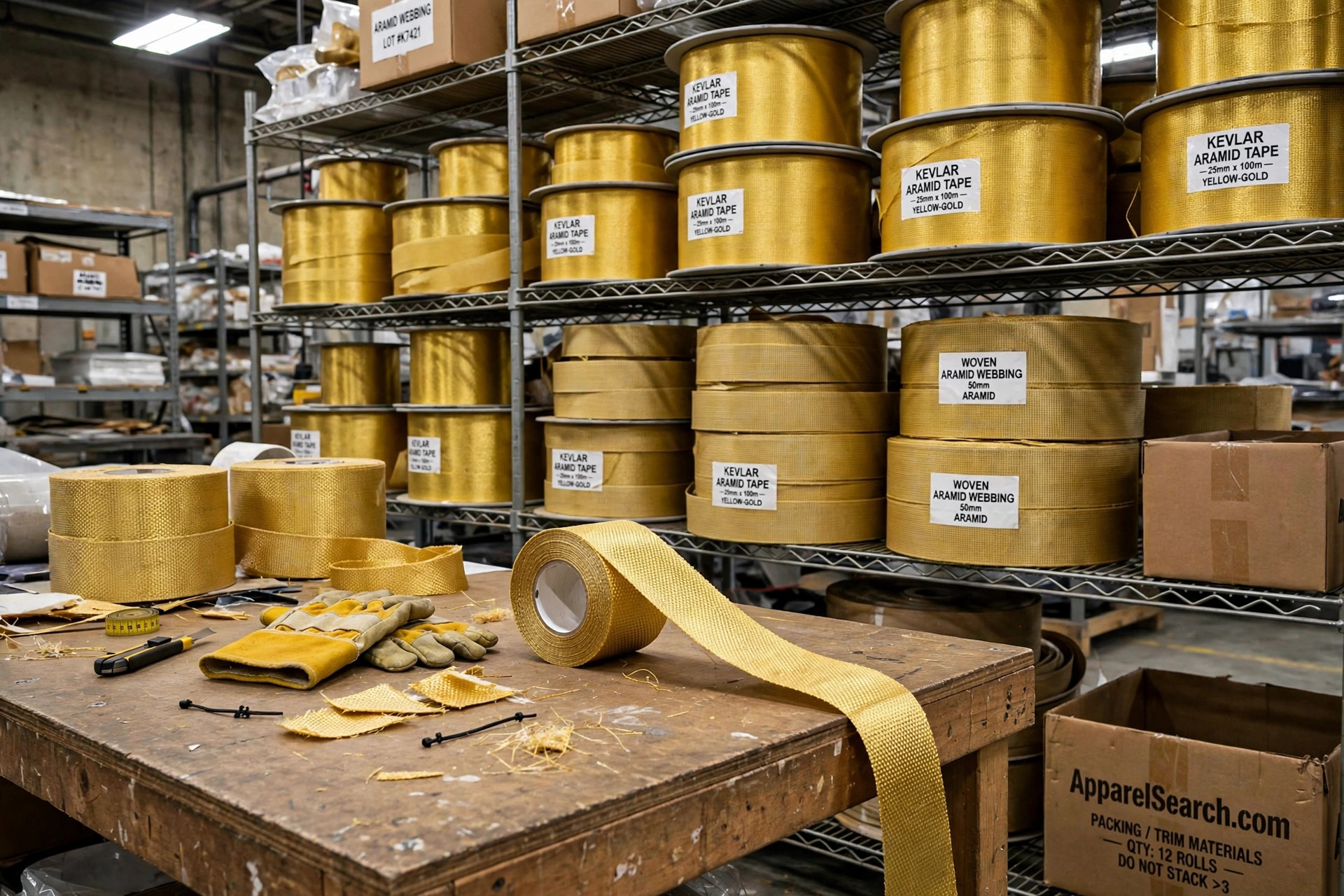
Kevlar tape starts as continuous aramid filament yarn, woven on narrow-fabric looms into a flat tape or a heavier webbing. Plain weave is common for lighter tapes that need to lie flat and sew cleanly, while tighter and heavier weaves are used for webbing that will carry straps, harnesses and other load-bearing parts. The natural color of aramid fiber is a distinctive yellow-gold, and most Kevlar tape is supplied in that natural color because aramid is difficult to dye with conventional methods.
Because the value of the tape is in the fiber, construction details matter: yarn size, weave density and edge construction decide how the tape handles, how it resists fraying when cut, and how well it holds stitching. Suppliers of high-performance narrow fabrics engineer tapes to a stated end use, adjusting width, thickness and weave so the tape meets the standard the finished product has to pass, rather than selling a single generic aramid strip for every job.
Where Kevlar Tapes Are Used
The largest garment uses are in protective clothing. Firefighting and industrial workwear use aramid tapes for reinforcement, closures and trim in garments that must keep working near heat and flame, and safety equipment uses aramid webbing in fall protection and restraint applications where a failed strap is not an option. Aerospace, medical and clean-room products also use engineered aramid narrow fabrics, as do outdoor products that need strength combined with resistance to ultraviolet exposure and weathering.
Outside clothing, Kevlar tape is used to reinforce composites, wrap and protect cables and hoses, and add cut and abrasion resistance to industrial products. In every case the buying logic is the same: the tape is specified where the combination of strength, light weight and heat resistance justifies a fiber that costs considerably more than polyester or nylon. For ordinary garment trim, buyers stay with the cotton, polyester and nylon tapes linked below; aramid is reserved for the jobs those fibers cannot do.
Working With Aramid Tape in Production
Aramid tape can be sewn, but it is harder on equipment than ordinary trim. It is tough on cutting blades and needles, so factories plan for more frequent blade and needle changes, use cutting methods that seal or cleanly shear the edge to limit fraying, and choose thread that suits the end use — often an aramid or other high-performance thread in protective garments, so the stitching is not the weak point of the assembly.
Heat is the other production consideration. Aramid fiber does not melt the way polyester or nylon does, which is an advantage in service but means edges cannot be heat-sealed the way synthetic tapes often are. Designers also allow for the fiber's sensitivity to prolonged ultraviolet exposure in outdoor products, either by covering the tape, limiting its exposure, or accepting it in the product's service-life planning.
Specifying and Buying Kevlar Tape
A useful specification names the width, the weave and approximate thickness or weight, the required breaking strength for webbing, and the standard the finished product must meet, if any. Many of the markets for aramid tape — fire fighting, safety, aerospace, medical — have stringent industry standards, and serious suppliers certify their products to meet those requirements; ask for the certification basis rather than accepting a general claim of high performance.
Also confirm the form of supply: continuous rolls for factory use, cut lengths, or finished webbing assemblies. State the end use plainly when enquiring. A supplier who knows the tape is going into protective clothing, a harness or a composite lay-up can recommend the right construction and warn against a mismatch before money is spent, which matters more with a premium fiber than with commodity trim.
Kevlar Tape Manufacturers
Suppliers of Kevlar tape, aramid narrow fabrics and related composite materials.
Fibre Glast Developments Corporation
Since 1957, they have specialized only in fiberglass and composite materials. They offer unequalled technical support and will be glad to assist you in selecting materials. They provide Kevlar Tape and kevlar fabrics.
Offray Specialty Narrow fabrics
Offray Specialty Narrow fabrics (OSNF) engineers and manufactures innovative tapes and webbing for high performance applications. For high temperature resistance, fall protection, static protection, personal area networking, UV durability or biomedical compatibility; they can design narrow fabrics to meet your unique requirements.
Markets they serve include fire fighting, safety, aerospace, medical, clean room and outdoor acrylic products. Many of these markets have stringent industry standards, and they certify their products to meet those requirements.
More Tape Guides
- Bias Binding Tape
- Cotton Tape
- Curing & Wrapping Tape
- Elastic Tapes
- Gripper Tapes
- Hook & Eye Tapes
- Hook & Loop Tapes
- Jacquard Tapes
- Knitted Tape
- Leather Suede Tapes
- Multi Color Tape
- Name Tapes
- Nylon Tapes
- Organza Tape
- Packing Tapes
- Piping Tapes
- Plain Tapes
- Polyester Tapes
- Rayon Tapes
- Reflective Tapes
- Ribbon Tapes
- Rubber Tape
- Satin Tapes
- Seam Tapes
- Teflon Tapes
- TPU Elastic Reverie Tape
- Twill Tape
- Velvet Tapes
- Woven Polyester Tapes
Common Questions
What is Kevlar tape used for?
Kevlar tape is a narrow fabric woven from aramid fiber, used where high strength and heat resistance are needed: reinforcement and trim in protective clothing, webbing for safety and fall-protection equipment, and industrial uses such as composite reinforcement and cable and hose protection.
Can Kevlar tape be sewn?
Yes. Aramid tape is sewn in garment and equipment factories, but it is hard on needles and cutting blades, so producers change them more often and often pair the tape with high-performance thread so the stitching matches the strength of the tape.
Why is Kevlar tape yellow?
Yellow-gold is the natural color of aramid fiber. Because aramid is difficult to dye with conventional methods, most Kevlar tape and webbing is supplied in its natural color.