Teflon Tape Manufacturers
PTFE tapes for non-stick, heat-resistant, insulating and release work in factories.
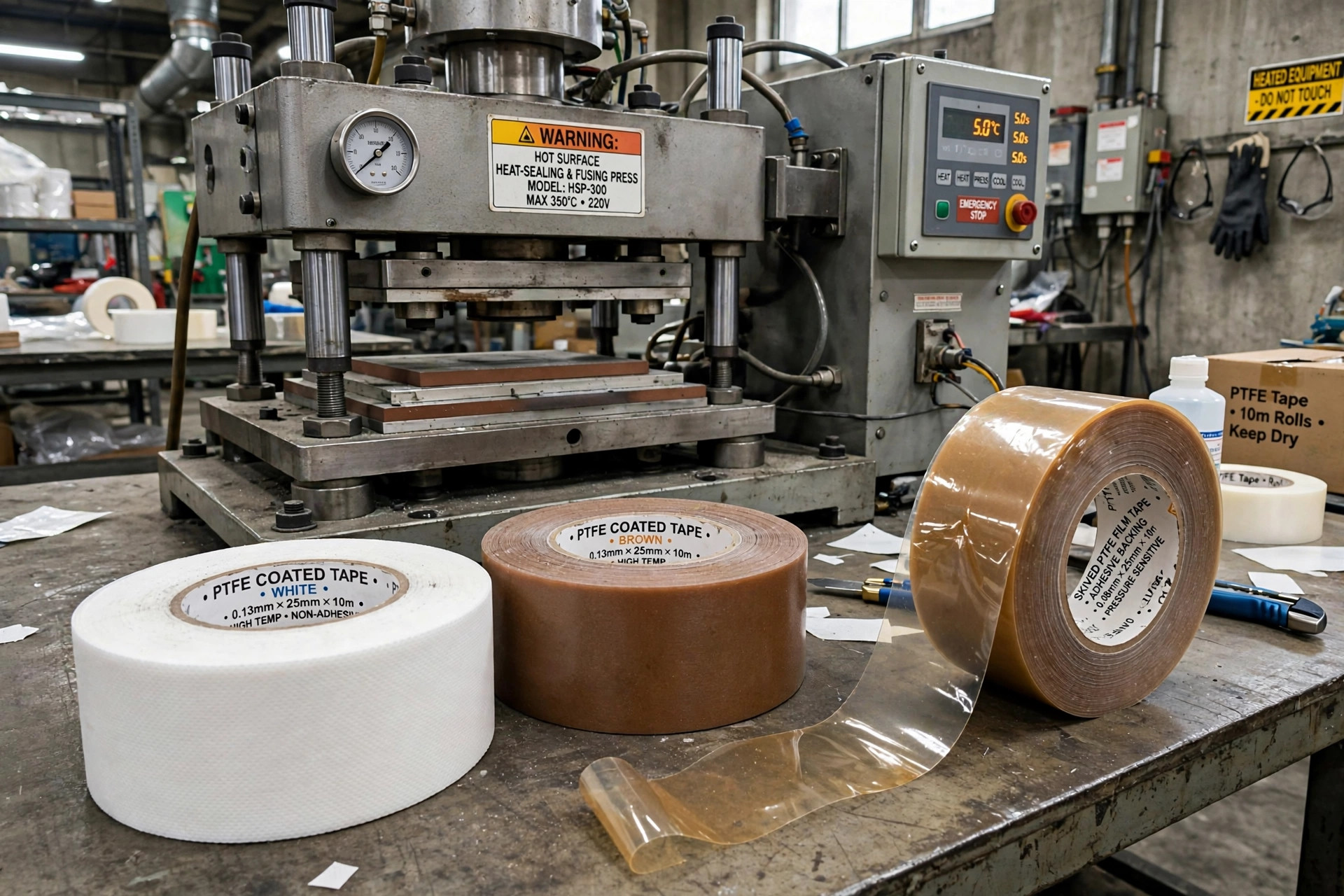
Teflon tape is tape made from or coated with PTFE — polytetrafluoroethylene, the fluoropolymer sold under the Teflon name — and it belongs to the industrial end of the tapes family rather than the sewing table. PTFE is non-stick, flexible, resistant to high temperature, chemicals, heat and moisture, and an excellent electrical insulator, so a tape built on it works where ordinary fabric or adhesive tapes fail: on hot sealing surfaces, around fusing equipment, as an anti-friction release layer, and as insulation and masking in demanding production environments.
This page explains the forms of Teflon tape a factory buyer will meet — pure skived PTFE film tape, woven PTFE tapes and PTFE-coated fabric tapes — and where each is used in and around garment production. The listings below include a woven narrow-fabric mill that weaves Teflon among its engineered fiber tapes, a specialist maker of skived PTFE tape, and a manufacturer supplying Teflon tapes and tubes to the electronics and industrial trades.
Tape & Trim Resources
What PTFE Brings to a Tape
PTFE has the lowest friction of any common tape material: almost nothing sticks to it, and things that must slide over it slide freely. It stays flexible and functional across a wide temperature range, shrugs off solvents, acids and moisture, does not absorb water, and insulates electrically. Skived PTFE tape — shaved in a continuous film from a billet of PTFE — is conformable, non-porous and an excellent release, anti-friction, insulating and masking tape, supplied pure and non-reinforced or with a pressure-sensitive adhesive on one side so it can be fixed to the surface it protects.
Those properties decide where the tape earns its place. A sealing jaw, a fusing press or a heat tunnel destroys paper and cloth tapes and gums itself with melted adhesive; faced with PTFE tape, the hot surface keeps releasing cleanly. Chemical and moisture resistance suits the tape to masking and insulating work in wet and corrosive environments, and its insulating strength makes it a standard tape in electrical and electronics production as well.
Where Teflon Tape Works Around Garment Production
Garment factories meet PTFE most often around heat. Fusing machines bond interlinings to garment parts between heated surfaces, heat-sealing and steam pressing equipment finishes seams and waterproof coatings, and packaging and sealing machines close the poly bags garments ship in — every one of these hot, sticky contact points is a candidate for a PTFE tape or PTFE-coated fabric surface that releases the work instead of gripping it. Hotmelt seam-sealing work on rainwear and waterproof clothing takes place on the same class of heated equipment.
Beyond heat work, factories use PTFE tape as a slick anti-friction layer where fabric, film or product must glide — over guides, folders and chutes — and as a durable masking and insulating tape in maintenance. Woven PTFE tapes and PTFE fiber tapes serve the heavier industrial end: engineered woven structures for medical, military, safety, industrial and aerospace work, where the tape itself must carry load or survive conditions no film tape would.
Forms: Skived Film, Woven PTFE and Coated Fabric
Skived film tape is the precision form: a thin, smooth, conformable PTFE film, often adhesive-backed, sold in roll lengths such as economical short rolls and full production rolls. It suits masking, insulating, release liners and any job needing a thin non-stick skin that wraps a shape closely. PTFE-coated fabric tape starts from a woven glass or fabric base and coats it with PTFE, trading some conformability for toughness, dimensional stability and a long working life on machine surfaces.
Fully woven PTFE tape, woven from PTFE fiber itself on narrow looms, is the specialist form offered by engineered narrow-fabric mills alongside their other high-performance fiber tapes — Kevlar, Nomex, graphite, fiberglass and ceramic among them. Buyers choose between the forms by duty: film for thin release and insulation, coated fabric for machine surfaces that take abrasion, and woven PTFE where the tape is a structural component in its own right.
Specifying and Ordering PTFE Tape
Specify the form first — skived film, coated fabric or woven — then thickness, width and roll length, whether the tape is adhesive-backed and on which side, and the temperature and chemical exposure it must survive. For machine-surface work, state the surface it will cover and how it will be fixed, because edge lift under heat is the usual failure. For release work, confirm the tape leaves no residue on the product it contacts.
Judge samples in service, not in the hand: run the tape through the actual heat cycle, check release after repeated cycles rather than only the first, and inspect for edge curl, adhesive ooze and surface wear. PTFE tape is a consumable with a service life, so the useful buying figure is cost per production period on the machine it serves — a cheaper tape replaced twice as often is not the cheaper tape.
Teflon Tape Manufacturers
Manufacturers supplying PTFE and Teflon tapes, from woven engineered tapes to skived film and industrial tape ranges.
Bally Ribbon Mills
Producing quality narrow woven fabrics since 1923, Bally Ribbon Mills has used innovation in design and manufacturing to become a highly respected leader in the woven narrow fabrics industry. Bally Ribbon, located in Bally, Pennsylvania, specializes in engineered woven narrow fabrics, specialty broadcloth and woven structures for medical, military, safety, industrial, aerospace, and commercial applications. Manufacturing capabilities include tapes, webbing, tubulars, broadcloth, multi-dimensional woven shapes, nylon, Nomex, Kevlar, polyester, Teflon, graphite, fiberglass, ceramic, Spectra, PBI/kevlar, rayon and acrylic fiber groups.
Ribbon Manufacturer · Teflon Tapes · Polyester Tapes · Woven Polyester Tape
CS Hyde Company
TEFLON (PTFE) Tape: Pure Non-reinforced TEFLON (PTFE) Tape with pressure sensitive adhesive on one side. Skived TEFLON. Conformable. Superior insulating strength. Non-Stick. Flexible, High Temperature, Chemical, Heat & Moisture Resistant. Non-porous. Excellent Release, Anti-Friction, Insulating & Masking Tape. Available in 36-yard roll length or Economical 5-yard rolls.
Taiwan Golden Enterprises Co. Ltd.
Manufacturer of Self-fusing Butyl Rubber Tape. Their major products are heat-shrinkable tubes and heat-shrinkable tubes with modified polyamide adhesives (agent for Sumitube, Teflon Tube and Longwell), insulating tapes and packing tapes (agent for Chukoh, Teflon Tape, Nitto Denko and Fujikura), Flexible Flat Cable (agent for Fujikura), Japanese conductive fabric tapes and conductive sponge, and processing products applied in the Electronics Industry.
Rubber Tape · Teflon Tape
More Tape Guides
- Bias Binding Tape
- Cotton Tape
- Curing & Wrapping Tape
- Elastic Tapes
- Gripper Tapes
- Hook & Eye Tapes
- Hook & Loop Tapes
- Jacquard Tapes
- Kevlar Tapes
- Knitted Tape
- Leather Suede Tapes
- Multi Color Tape
- Name Tapes
- Nylon Tapes
- Organza Tape
- Packing Tapes
- Piping Tapes
- Plain Tapes
- Polyester Tapes
- Rayon Tapes
- Reflective Tapes
- Ribbon Tapes
- Rubber Tape
- Satin Tapes
- Seam Tapes
- TPU Elastic Reverie Tape
- Twill Tape
- Velvet Tapes
- Woven Polyester Tapes
Common Questions
What is Teflon tape made of?
PTFE — polytetrafluoroethylene, the fluoropolymer sold under the Teflon name. It is made as a skived film tape, as a PTFE coating on a woven fabric or glass base, or woven from PTFE fiber. PTFE is non-stick, flexible, heat, chemical and moisture resistant, and an excellent electrical insulator.
What is Teflon tape used for in a garment factory?
It provides non-stick release and anti-friction surfaces around heat work: fusing presses, heat-sealing and steam pressing equipment, seam-sealing machines and packaging sealers, plus masking, insulating and glide surfaces in production and maintenance.
What should be specified when ordering PTFE tape?
The form (skived film, coated fabric or woven), thickness, width and roll length, whether it is adhesive-backed and on which side, and the temperature and chemical exposure it must survive. Judge it by cost per production period in service, not by roll price alone.