Rayon Tape Manufacturers
Semi-synthetic tape with a silk-like sheen and a soft, fluid drape.
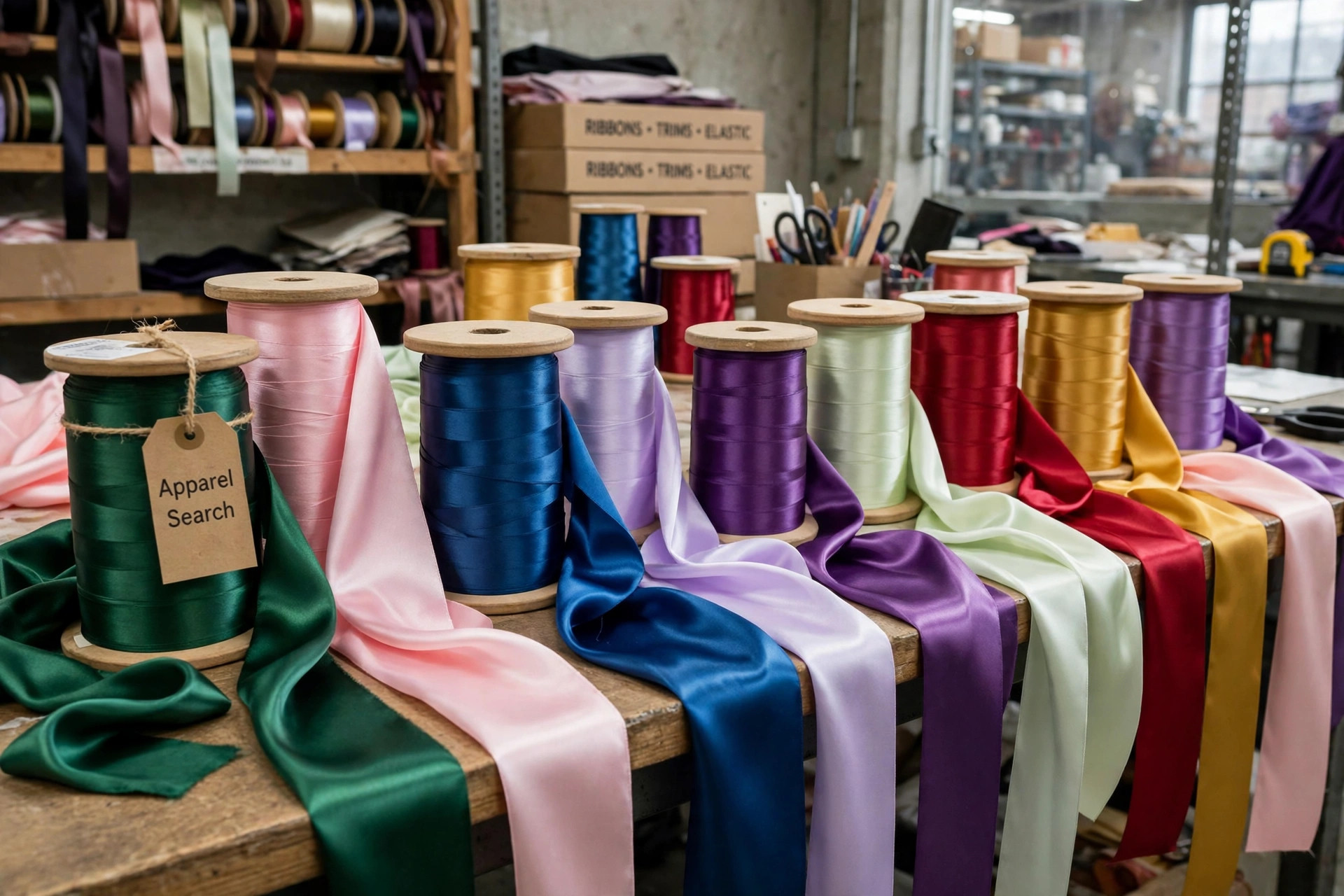
Rayon tape occupies a particular niche in the tapes family: it is the tape chosen when a trim must look and move like silk at a rayon price. Rayon is a semi-synthetic fiber — manufactured from regenerated cellulose, usually wood pulp — and woven into tape it gives a smooth, lustrous surface, rich dyed colors and a soft, fluid drape that polyester cannot imitate and cotton cannot match. Dress trimmings, decorative bindings, ribbon work and soft ties are its home ground, on garments where the tape is part of the design rather than hidden in the structure.
This page explains rayon tapes for garment manufacturers and trim buyers: what regenerated cellulose means for the tape's behaviour, where its sheen and drape are used to advantage, the washing and strength limits that must be specified around honestly, and how to order it. The manufacturer listing below supplies rayon tapes and ribbons within a wider garment tape range, and the guides at the bottom of the page cover the rest of the tapes family. For contrast, the polyester tape guide linked among the resources covers the fully synthetic alternative.
Tape & Trim Resources
A Semi-Synthetic Fiber: What Rayon Brings to a Tape
Rayon begins as cellulose — a natural polymer — dissolved and regenerated into filaments, which is why it behaves like a hybrid: it drapes, dyes and breathes more like a natural fiber than a true synthetic, while being manufactured with a synthetic's consistency of filament and color. Woven into tape, those filaments give a smooth face with a soft sheen, an affinity for dye that produces deep, rich fashion colors, and a cool, smooth hand that sits comfortably against skin in ties, bindings and dress trims.
The trade-offs are the other half of the fiber's character. Rayon is weaker than polyester, loses a notable share of its strength when wet, and can shrink or stretch if laundered carelessly — which is why rayon tape belongs in decorative and light-duty roles, on garments whose care regime it can survive, rather than in straps, reinforcement or industrial washing. A specification that respects those limits gets a beautiful trim; one that ignores them gets a complaint.
Where Rayon Tape Is Used
Dress and occasion wear is the core market: decorative edging and binding on blouses and dresses, soft ribbon tapes and bows, waist ties and sashes where the tape must drape rather than stand, and trims on lingerie and nightwear where smoothness against skin matters. Rayon's dye affinity makes it a favourite for dyed-to-match work — a tape that must disappear into a fashion color, carrying the same depth of shade as a silk or rayon shell fabric, is often easier to achieve in rayon than in a synthetic that dyes differently from the garment.
Makers supply rayon within broad ribbon and tape ranges — cotton, rayon, nylon, polyester, staple fibre and satin, velvet and metallic-effect ribbons serving the garment trade side by side — so a rayon tape is commonly bought as one line in a wider trimming programme from the same supplier. That is convenient for color coordination across a range, but each fiber line should still be sampled and care-tested on its own merits rather than approved as a family.
Sheen, Drape and Color in Practice
Rayon tape's appearance depends on its weave: a satin-woven rayon tape gives the highest gloss and is used like a ribbon, while plainer weaves give a softer, matte-lustre tape for binding and ties. Because the fiber takes dye deeply, rayon colors have a richness that reads well in evening and occasion lighting — and because it is a cellulose fiber, its dye behaviour tracks rayon and viscose garment fabrics, which simplifies matching a trim to a shell.
Handle the tape as the garment will be handled. Rayon creases can be reluctant, wet tape should not be pulled or stretched, and pressing needs a moderate iron — all points to confirm with the maker for the specific tape, and to pass on in the garment's care instructions. Where a design needs rayon's look on a garment that will be washed hard and often, the honest alternatives are a polyester satin tape that imitates the sheen with far better wash strength, or a construction that keeps the rayon trim removable or protected.
Specifying and Ordering Rayon Tape
Specify the weave and finish (satin or plain face), the width, the color as a dyed standard matched under the lighting the garment is sold in, and — most importantly — the care regime the tape must survive: dry clean, gentle wash, or hand wash. State the end use, decorative edging versus a tie that will be knotted daily, so the maker can advise on weight and edge construction. Confirm how cut ends should be finished, since rayon edges can fray and may need folding, binding or a sealed finish in the garment construction.
Approve rayon tape after a care test on the finished garment, not off the roll: apply the garment's full care process, then check shrinkage against the shell fabric, color bleed onto light grounds, sheen retention and edge behaviour. A rayon trim that shrinks more than the fabric it edges will pucker a neckline after its first clean, and that fault is entirely predictable — and preventable — at sampling stage.
Rayon Tape Manufacturers
Tape and ribbon manufacturers offering rayon tapes as part of their garment trimming ranges.
Euro
The company manufactures a variety of industrial tapes such as seam tapes and PTFE tapes, which are used for packing, wrapping, and gripping. Ribbons made of cotton, rayon, nylon, polyester, staple fibre, terelene, satin, velvets, zari etc. find wide application in garment industries.
Seam Tapes · Cotton Tapes · Rayon Tapes · Nylon Tapes · Polyester Tapes · Satin Tapes · Velvet Tapes · Gripping Tapes / Gripper
More Tape Guides
- Bias Binding Tape
- Cotton Tape
- Curing & Wrapping Tape
- Elastic Tapes
- Gripper Tapes
- Hook & Eye Tapes
- Hook & Loop Tapes
- Jacquard Tapes
- Kevlar Tapes
- Knitted Tape
- Leather Suede Tapes
- Multi Color Tape
- Name Tapes
- Nylon Tapes
- Organza Tape
- Packing Tapes
- Piping Tapes
- Plain Tapes
- Polyester Tapes
- Reflective Tapes
- Ribbon Tapes
- Rubber Tape
- Satin Tapes
- Seam Tapes
- Teflon Tapes
- TPU Elastic Reverie Tape
- Twill Tape
- Velvet Tapes
- Woven Polyester Tapes
Common Questions
What is rayon tape?
A narrow woven tape made from rayon, a semi-synthetic fiber manufactured from regenerated cellulose. It gives a smooth, lustrous surface, rich dyed colors and a soft fluid drape, and is used for decorative edging, ribbon work, ties and dress trimmings.
Is rayon tape strong enough for straps or reinforcement?
No — rayon is a decorative, light-duty fiber: it is weaker than polyester and loses strength when wet. Use it for edging, bows, ties and trims on garments with a gentle care regime, and choose polyester or cotton tape for straps, reinforcement and hard laundering.
How should rayon tape be cared for?
Gently, and exactly as the garment label directs: avoid pulling the tape when wet, press with a moderate iron, and wash-test the tape on the finished garment before bulk production to check shrinkage, color bleed and sheen retention.