Rubber Tape Manufacturers
Elastic rubber tape for waistbands and swimwear — and self-fusing rubber tape for industry.
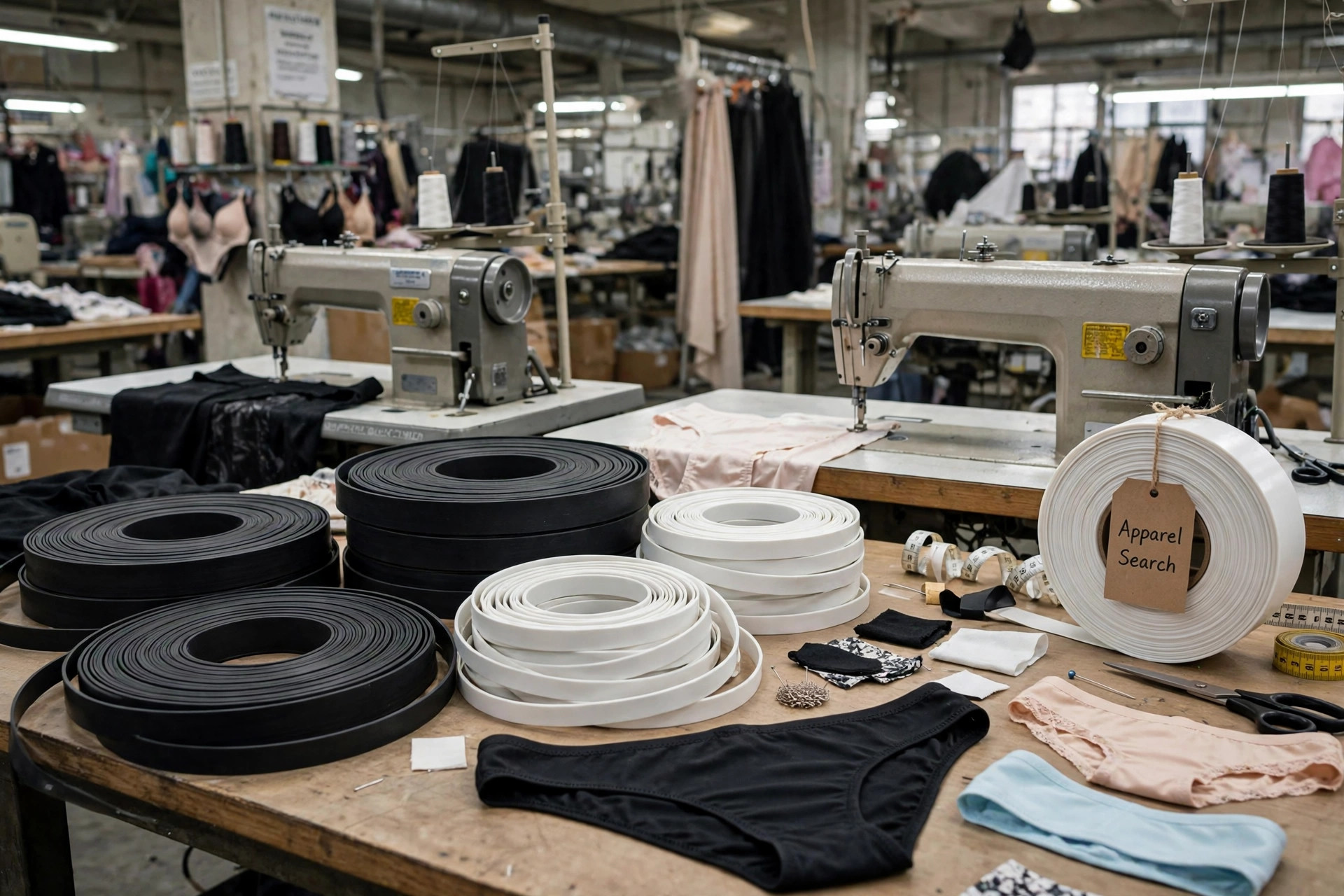
Rubber tape is the stretch engine hidden inside a garment. In its garment form it is a flat tape of natural rubber — often as bare rubber strip, and often as rubber thread or strip carried inside a braided or knitted covering — sewn into waistbands, leg openings, underwear and swimwear, where it supplies the elastic pull that holds the garment to the body and, just as importantly, the recovery that lets it spring back to size wear after wear. A waistband that bags out and a swimsuit leg that gaps are usually rubber tape failures, not fabric failures.
This page explains rubber tape for buyers and garment manufacturers: how elastic rubber tape works inside a garment, how it differs from woven elastic webbing, the care and chemical weaknesses that must be specified around, and the separate industrial family of self-fusing rubber tapes represented in the listing below. The tape guides at the bottom of the page cover the rest of the tapes family, and the Elastics guide in the tape guides below covers waistband elastic in its wider forms.
Tape & Trim Resources
Elastic Rubber Tape Inside a Garment
Garment rubber tape works by being stretched as it is sewn and then trying, permanently, to return to its resting length. Sewn into a casing or stitched directly to a waistband or leg opening under controlled tension, it gathers the fabric evenly and holds the opening against the body without a fastening. The factory controls the finished snugness through the stretch ratio applied at sewing — feed the tape at a greater stretch and the opening closes tighter — so tape quality is judged by how evenly it stretches and how completely it recovers, cycle after cycle.
Bare rubber strip gives the strongest, thinnest pull and is common inside swimwear and underwear, where bulk matters. Covered constructions wrap the rubber in braided or knitted yarn, which protects it from needle damage, gives the sewing thread something to grip, and makes the tape easier to handle at speed. Widths run from a few millimetres for leg elastics up to waistband widths, and thickness and rubber content set the power: a tape is chosen by the force it exerts at the garment's working stretch, not by appearance.
Rubber Tape vs. Woven Elastic
Woven and knitted elastics get their stretch mainly from rubber or elastane yarns woven into a fabric structure; rubber tape is substantially the rubber itself. The difference shows in use: rubber tape gives high power in a very thin, flat form that disappears inside a narrow casing or a turned edge, which is why swimwear legs, lingerie and underwear waistbands have relied on it for generations. Woven elastic gives a more substantial, sew-through body that suits exposed waistbands and heavier garments.
Cost and handling differ too. Rubber tape is economical per metre of pull, but it demands stretch-control equipment or skilled hands to apply evenly, and stitching must be planned so needle penetrations do not nick and weaken the strip. A buyer comparing the two should decide by the garment: thin and hidden inside a light garment points to rubber tape; structured, visible or heavy-duty points to woven elastic. Many factories stock both and let the product, not habit, choose.
Weaknesses to Specify Around: Heat, Chlorine, Oils
Natural rubber has known enemies, and garment specifications must face them directly. Chlorine — in pool water and in bleaching — attacks rubber, so swimwear tape should be ordered in a chlorine-resistant grade and the finished garment's care instructions written to match. Oils, solvents and some sunscreens degrade rubber; heat and age cause it to perish, losing recovery and eventually cracking. Elastane-based alternatives resist some of these better and rubber some others, which is why end use, not price, should drive the choice for swim and performance garments.
In production and storage, rubber tape should be kept cool, dark and away from ozone sources such as electric motors, used in rotation so old stock is not sewn into new garments, and tested for recovery after ageing as well as when fresh. Laundering tests on the finished garment — at the real care temperature, with the real detergent — reveal whether the chosen tape will hold the waistband through the garment's life or relax into the familiar complaint of a waistband that gave up first.
Self-Fusing Rubber Tape: The Industrial Cousin
The name rubber tape also covers an industrial product with a completely different job. Self-fusing butyl rubber tape is an insulating tape that bonds to itself: wrapped under tension around a cable, joint or fitting, its layers fuse into a single rubber mass that insulates and seals against moisture. It is a material of the electrical and electronics industries rather than the sewing room — the listing below is a manufacturer of self-fusing butyl rubber tape that also deals in heat-shrinkable tubes, insulating and packing tapes and related electronic materials.
Buyers should keep the two families separate in specifications and purchase orders: garment rubber tape is specified by width, stretch and recovery in a clothing component; self-fusing tape is specified by insulation and sealing duty in an electrical one. The shared words hide unrelated products, and a clear end-use statement in every enquiry — garment elastic or electrical insulation — prevents the most basic and most avoidable sourcing mistake in this category.
Rubber Tape Manufacturers
The listing below is a manufacturer of self-fusing butyl rubber tape and related insulating tapes, supplying the electrical and electronics industries.
Taiwan Golden Enterprises Co. Ltd.
Manufacturer of Self-fusing Butyl Rubber Tape. Taiwan Golden Enterprise in American Tyco Electronics which are Raychem & A.M.P., includes varied kinds of heat-shrinkable tubes and connectors. Their major products are heat-shrinkable tubes and heat-shrinkable tubes with modified polyamide adhesives (agent for Sumitube, Teflon Tube and Longwell), insulating tapes and packing tapes (agent for Chukoh, Teflon Tape, Nitto Denko and Fujikura), Flexible Flat Cable (agent for Fujikura), Japanese conductive fabric tapes and conductive sponge, and processing products which were applied in the electronics industry.
Self-fusing Butyl Rubber Tape · Heat-shrinkable Tubes · Insulating Tapes · Packing Tapes · Flexible Flat Cable · Conductive Fabric Tapes
References & Further Reading
More Tape Guides
- Bias Binding Tape
- Cotton Tape
- Curing & Wrapping Tape
- Elastic Tapes
- Gripper Tapes
- Hook & Eye Tapes
- Hook & Loop Tapes
- Jacquard Tapes
- Kevlar Tapes
- Knitted Tape
- Leather Suede Tapes
- Multi Color Tape
- Name Tapes
- Nylon Tapes
- Organza Tape
- Packing Tapes
- Piping Tapes
- Plain Tapes
- Polyester Tapes
- Rayon Tapes
- Reflective Tapes
- Ribbon Tapes
- Satin Tapes
- Seam Tapes
- Teflon Tapes
- TPU Elastic Reverie Tape
- Twill Tape
- Velvet Tapes
- Woven Polyester Tapes
Common Questions
What is rubber tape used for in clothing?
Flat elastic rubber tape is sewn into waistbands, leg openings, underwear and swimwear, stretched as it is applied so it gathers the fabric and holds the opening to the body. Its job is both pull and recovery: a good tape keeps springing back to size through repeated wear and washing.
How is rubber tape different from woven elastic?
Rubber tape is substantially the rubber itself, giving high power in a very thin, flat form that hides inside narrow casings and turned edges — the classic choice for swimwear and underwear. Woven elastic carries its rubber or elastane yarns in a fabric structure, giving a more substantial body suited to exposed waistbands and heavier garments.
What damages rubber tape in garments?
Chlorine from pools and bleaches, oils and solvents, heat and age all degrade natural rubber. Swimwear should use a chlorine-resistant grade, tape stock should be stored cool and dark and rotated, and recovery should be tested on the laundered finished garment, not only on fresh tape.