Tapes for Clothing Manufacturers
Woven, knitted, elastic and specialty tapes for garment construction, finishing and decoration.
In clothing components and garment construction, a tape is a narrow strip or ribbon of fabric or other material used in the making of clothing, footwear and fashion accessories. Tapes serve functional, decorative and structural roles at once: the same family of products that reinforces a seam on a waterproof jacket also binds the edge of a dress, steadies a waistband, closes a shoe and trims a hat. Because the word covers so many constructions, buyers source tapes by type — by how the tape is made, what it is made from, and what job it does in the garment.
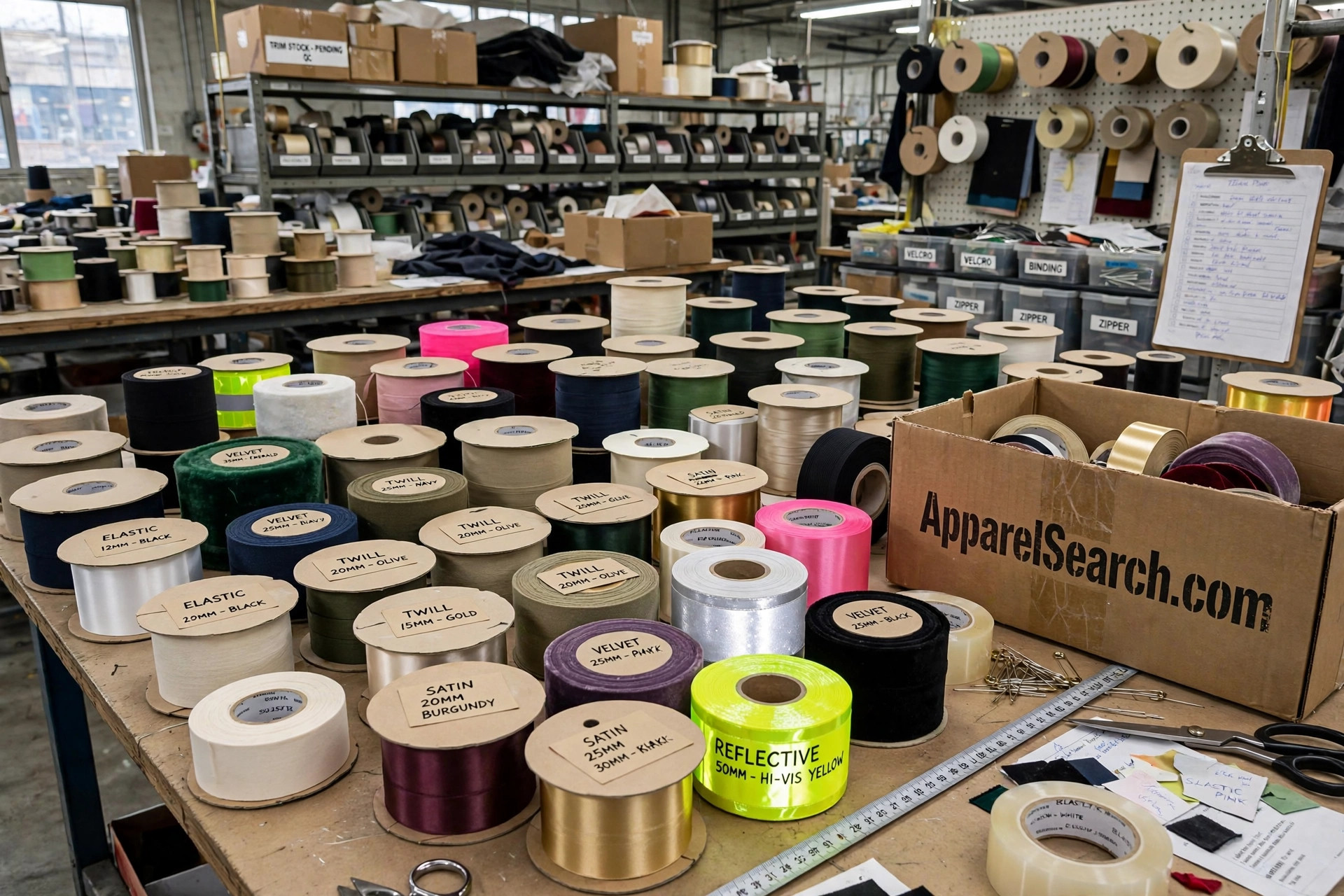
This hub organises the whole tapes family. The guides linked below cover every tape type in the directory, from cotton and twill tapes to seam tapes, ribbon and specialty tapes, and the sections that follow classify the family the way a factory buyer thinks about it: woven tapes, knitted tapes, elastic tapes, specialty tapes built for a technical job, and the decorative tapes and ribbons that finish a garment visibly. Factories listed across these guides manufacture tapes for the production of clothing, footwear and fashion accessories worldwide.
Tape & Trim Resources
Woven Tapes: The Largest Family
Most garment tapes are woven on narrow looms, with warp yarns running lengthwise and weft yarns crossing them to form a firm, stable strip with finished selvedges that do not fray in handling. Plain-weave tapes are the simple workhorses used for binding, tying and reinforcement. Twill tapes add a diagonal weave that drapes and knots better, and herringbone twill is the familiar pattern of apron ties and stay tapes. Cotton, polyester, nylon and rayon yarns each give the woven structure a different hand, strength and dye behaviour, which is why the woven family is organised by fiber as well as by weave — cotton tape, polyester tape, nylon tape and rayon tape are distinct buying categories, not interchangeable names.
Woven construction also carries the patterned end of the family. Jacquard tapes weave lettering, logos and motifs directly into the structure on jacquard looms, name tapes carry a wearer or brand name, and multi color tapes combine yarn colors in stripes and checks. Because a woven tape holds its width and shape under sewing, woven tapes are the default choice wherever a tape must be stitched in place and stay dimensionally honest through the life of the garment.
Knitted Tapes and Elastic Tapes
Knitted tapes are looped rather than woven, which gives them a softer, more yielding character. A knitted tape conforms to curves and moving parts of a garment more readily than a firm woven tape, and knitted constructions are used where a tape must flex with the body or ease around a shape without fighting it. The knitted-versus-woven distinction matters at the specification stage: two tapes of the same fiber and width can behave completely differently in a seam because of how they are formed.
Elastic tapes put stretch itself into the tape, using rubber or elastomeric elements so the tape extends and recovers. They provide elasticity and a snug fit in waistbands, cuffs and lingerie, sewn directly into the fabric or threaded into a casing made of fabric or ribbon. This elastic group includes waistband elastics, rubber tapes, gripper tapes whose grippy face keeps a shirt tucked, and clear film elastics such as TPU elastic tape, which stretches invisibly inside sheer and lightweight garments.
Specialty Tapes Built for a Technical Job
A second axis of the family is purpose rather than construction. Seam tape, often made of fabric or a thermoplastic material such as polyurethane, reinforces seams — particularly in waterproof or water-resistant garments, where it seals the stitching holes against water penetration while strengthening the join. Reflective tape carries reflective material that makes a wearer visible in low light, and it is standard on sportswear, activewear and safety gear. Hook-and-loop tape provides a two-part closure of hooks and loops that adhere when pressed together, used on jackets, shoes and children clothing.
The specialty group also includes tapes that work away from the sewing line entirely. Curing and wrapping tapes are wound under tension around rubber products while they vulcanize. Teflon (PTFE) tapes serve heat, release and insulation jobs around fusing and sealing equipment. Kevlar tapes bring heat and cut resistance, leather and suede tapes serve as premium bindings and trims, and fusible tapes bond fabrics together with heat — fusible hem tape, for example, secures and finishes a hem without sewing.
Decorative Tapes, Ribbons and Binding
Many tapes are bought to be seen. Satin tapes give a glossy face to edges and trims, velvet tapes add a plush pile surface, organza tape brings a sheer crisp edge, and grosgrain ribbon — a sturdy ribbed ribbon — is used for trim, bows and ties. Petersham ribbon, a stiff ribbed ribbon with a flexible edge that can be shaped to curves, stabilises waistbands and cuffs as well as decorating hats and garments. Printed and decorative tapes carry patterns, logos and branding, turning a functional strip into a design element.
Binding tapes sit between the decorative and the structural: bias tape and bias binding, cut at 45 degrees to the grain so they curve smoothly, encase raw edges to give a clean finished look on garments, lingerie, swimwear and quilts, and piping tapes build the corded edge that outlines seams and furnishings. Drawstrings, while not technically tapes, belong to the same buying conversation — narrow cords and tapes threaded through casings to cinch hoodies, pants and bags.
Choosing and Specifying a Tape
A workable tape specification works through the same questions in order: construction first (woven, knitted or film, and which weave), then fiber, then width and weight, then any functional element — stretch, grip, reflectivity, fusibility or heat resistance — then color and finish, and finally the put-up the factory floor expects. End use decides most of the answers: a tape that stays a shoulder seam, a tape that ties an apron and a tape that seals a waterproof seam are three different products even at the same width.
Sampling should match the job. Sew structural tapes into the actual seam and launder them with the garment; test elastic tapes for recovery after repeated stretching and washing; apply fusible and seam tapes with the actual equipment and temperatures of the production line. The guides below take each tape type in turn — its construction, its uses and its manufacturers — so a buyer can move from this overview to the specific tape a garment needs.
Photos

Related Trim & Components Categories
All Tape Guides
- Bias Binding Tape
- Cotton Tape
- Curing & Wrapping Tape
- Elastic Tapes
- Gripper Tapes
- Hook & Eye Tapes
- Hook & Loop Tapes
- Jacquard Tapes
- Kevlar Tapes
- Knitted Tape
- Leather Suede Tapes
- Multi Color Tape
- Name Tapes
- Nylon Tapes
- Organza Tape
- Packing Tapes
- Piping Tapes
- Plain Tapes
- Polyester Tapes
- Rayon Tapes
- Reflective Tapes
- Ribbon Tapes
- Rubber Tape
- Satin Tapes
- Seam Tapes
- Teflon Tapes
- TPU Elastic Reverie Tape
- Twill Tape
- Velvet Tapes
- Woven Polyester Tapes
Common Questions
What are tapes used for in clothing manufacturing?
Tapes are narrow strips of fabric or other material serving functional, decorative and structural roles: reinforcing and sealing seams, binding raw edges, stabilising waistbands, providing elastic fit, closing garments, and adding visible trim, pattern and branding.
What is the difference between woven and knitted tape?
Woven tape is formed by interlacing warp and weft yarns, giving a firm, stable strip that holds its width under sewing. Knitted tape is looped, making it softer and more yielding, so it conforms better to curves and moving parts of a garment.
How does a buyer choose the right tape?
Start from the job the tape must do — reinforcement, binding, stretch, closure, sealing, visibility or decoration — then settle construction, fiber, width and weight, any functional element, color and finish, and the put-up. Sample the tape in the real garment and care conditions before bulk ordering.