Curing & Wrapping Tape Manufacturers
Woven tapes that hold rubber and textile products in shape while they cure.
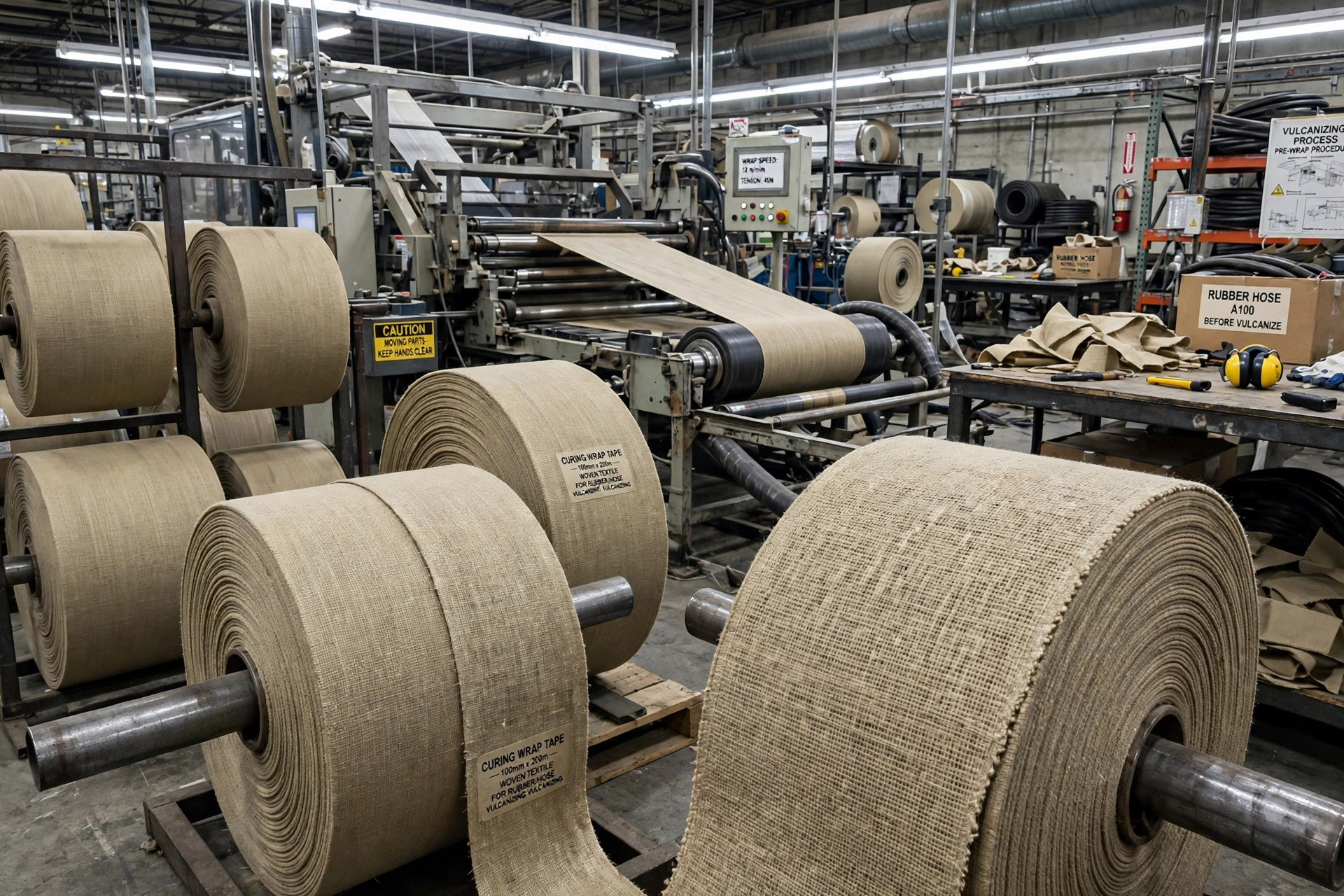
Curing and wrapping tape is an industrial woven tape with a job unlike any decorative trim: it is wrapped tightly, under tension, around an uncured product so the product holds its shape while heat does its work. Its best-known use is in rubber production, where lengths of tape are wound spirally around uncured hoses, tubes and other rubber goods before vulcanizing. The wrap restrains the rubber as it cures, presses it to a consistent diameter, and leaves the cured surface with the even, matte fabric impression that wrapped-cure products are recognised by. After curing, the tape is stripped off — and sound tape is cleaned and used again.
Because the tape works inside a hot, pressurised curing process rather than on a sewing line, it is specified like a process material: width, weave density, fiber heat tolerance, tensile strength and behaviour over repeated cure cycles matter more than color or hand feel. This page explains how curing and wrapping tapes are used, how they differ from garment tapes, and what a buyer should settle with a manufacturer. The listing below is a narrow-fabric manufacturer offering curing and wrapping tape within a wider garment-tape range, and the guides at the bottom of the page cover the rest of the tapes family.
Tape & Trim Resources
What the Wrap Does During a Cure
Uncured rubber is soft and dimensionally unstable: heated in a vulcanizing autoclave or steam tube, it would slump, expand unevenly and pick up defects without restraint. Wrapping tape supplies that restraint mechanically. Wound in overlapping spirals under controlled tension, the tape acts as a temporary mould skin — holding diameter, supporting unsupported lengths, and pressing the surface so the cured product comes out round, smooth-bodied and uniform, with a fine woven texture where the tape contacted it.
The same wrapping principle serves elsewhere in textile and rubber production: holding built-up products together through a heat or setting process, protecting surfaces during curing, and consolidating layers so they cure as one piece. In each case the tape is a tool of the process, not part of the finished product — it goes on before the cure, does its work under heat and pressure, and comes off afterwards.
Fibers and Construction for Heat Work
A wrapping tape must survive the cure it controls, repeatedly. Cotton wrapping tapes are traditional where moderate cure temperatures and a absorbent, conformable wrap are wanted; synthetic tapes — nylon is the classic choice for hose wrapping — bring higher strength, better heat endurance and longer reuse life. The weave is dense and firm-edged so the spiral wraps lie evenly without gaps or ridges that would print into the product, and the tape is woven to keep its width under tension rather than necking down as it is pulled around the work.
Width is a process variable, not a trim choice: wider tape wraps large diameters faster with fewer spirals, while narrower tape follows small diameters and tighter shapes. Buyers should discuss the diameter range, wrap tension and curing method with the maker, because a tape that performs on a small steam-cured hose may not suit a large autoclave-cured product — the fiber, weave density and edge construction all shift with the duty.
Removal, Reuse and Tape Life
After the cure, the wrap is unwound from the cooled product. Reuse is a central part of the economics: a good wrapping tape is expected to serve through many cure cycles, so its real cost is cost per cycle, not cost per roll. Tape life is spent by heat exposure, by contamination picked up from uncured compounds, and by edge damage during wrapping and stripping — which is why makers emphasise firm selvedges and even weaving, and why plants grade tape, retiring lengths from critical work as they age.
Handling decides how much of that potential life is realised. Tape should be stored dry and away from contamination, wound evenly for the next run, and inspected for damaged edges, weak spots and embedded debris before reuse, since anything on the tape's surface will print into the next product it wraps. When a supplier quotes tape, the useful questions cover expected cycles in the buyer's own cure conditions — temperature, steam or air, and cycle length — rather than a generic durability claim.
Specifying Curing and Wrapping Tape
A workable specification names the product being wrapped and its diameter range, the curing method and temperature, the tape width and fiber, the weave and strength required, and the put-up the wrapping equipment or operators expect. State whether the tape is for hand wrapping or machine wrapping, since feed and tension behaviour differ. If the finished product's surface appearance matters — and with wrapped-cure goods the tape impression is part of the product's identity — approve a trial wrap and cure, and judge the tape on the cured surface it leaves.
Buyers coming from the garment side should note how different this category is from the sewing tapes elsewhere in this section: there is no color card to approve and no stitching test that matters. The tests that matter are dimensional — does the cured product hold its specified diameter and roundness — and economic: how many clean cycles the tape delivers before its surface or edges begin to mark the work.
Curing & Wrapping Tape Manufacturers
Narrow-fabric manufacturers offering curing and wrapping tape alongside garment and industrial tape ranges.
Shivam Narrow fabrics
Located in India, Shivam Narrow fabrics is an upcoming company that prides itself on producing superior products with faultless deliveries. They have made a distinctive mark for themselves by producing export quality products that are at par with international standards.
Cotton Tape · Elastic Tape · Jacquard Tape / Jacquard Name Tape · Multi Color Tape · Satin Tapes · Curing & Wrapping Tape · Reflective Tape · Knitted Tape · Organza Tape · Narrow fabric
More Tape Guides
- Bias Binding Tape
- Cotton Tape
- Elastic Tapes
- Gripper Tapes
- Hook & Eye Tapes
- Hook & Loop Tapes
- Jacquard Tapes
- Kevlar Tapes
- Knitted Tape
- Leather Suede Tapes
- Multi Color Tape
- Name Tapes
- Nylon Tapes
- Organza Tape
- Packing Tapes
- Piping Tapes
- Plain Tapes
- Polyester Tapes
- Rayon Tapes
- Reflective Tapes
- Ribbon Tapes
- Rubber Tape
- Satin Tapes
- Seam Tapes
- Teflon Tapes
- TPU Elastic Reverie Tape
- Twill Tape
- Velvet Tapes
- Woven Polyester Tapes
Common Questions
What is curing and wrapping tape used for?
It is wrapped under tension around uncured rubber products such as hoses and tubes before vulcanizing. The wrap holds the product to shape and diameter during the cure and leaves an even fabric-impression finish; afterwards the tape is removed and, if sound, reused for further cycles.
Is curing tape part of the finished product?
No. It is a process material: it goes on before curing, works under heat and pressure during the cure, and is stripped off the finished product afterwards.
What matters most when buying wrapping tape?
Suitability for the cure: fiber heat tolerance, width for the product diameters being wrapped, a dense even weave that will not mark the surface, strength under wrapping tension, and how many cure cycles the tape delivers in the buyer’s own conditions.