Gymboree
Apparel industry financial guide — Retail Company Stocks.
Gymboree was a San Francisco children's apparel retailer whose name began with Gymboree Play & Music in 1976 and extended to clothing in 1986, growing into a group of four store brands: Gymboree, Gymboree Outlet, Janie and Jack and Crazy 8. Taken private by Bain Capital in 2010, the group filed for Chapter 11 in 2017 and again on January 16, 2019, announcing the closure of all Gymboree and Crazy 8 stores. The Children's Place bought the Gymboree and Crazy 8 brand rights for about $76 million and Gap Inc. bought Janie and Jack for $35 million; Gymboree trades today under The Children's Place, online and in shop-in-shop locations.
Company Snapshot
Status: Brand operating under The Children's Place — Gymboree Group filed for Chapter 11 in January 2019 and its brand rights were sold
Type: Private — brand of The Children's Place
Headquarters: Formerly San Francisco, California, United States
Founded: 1976, as Gymboree Play & Music; apparel followed in 1986
Visit the Official Gymboree Website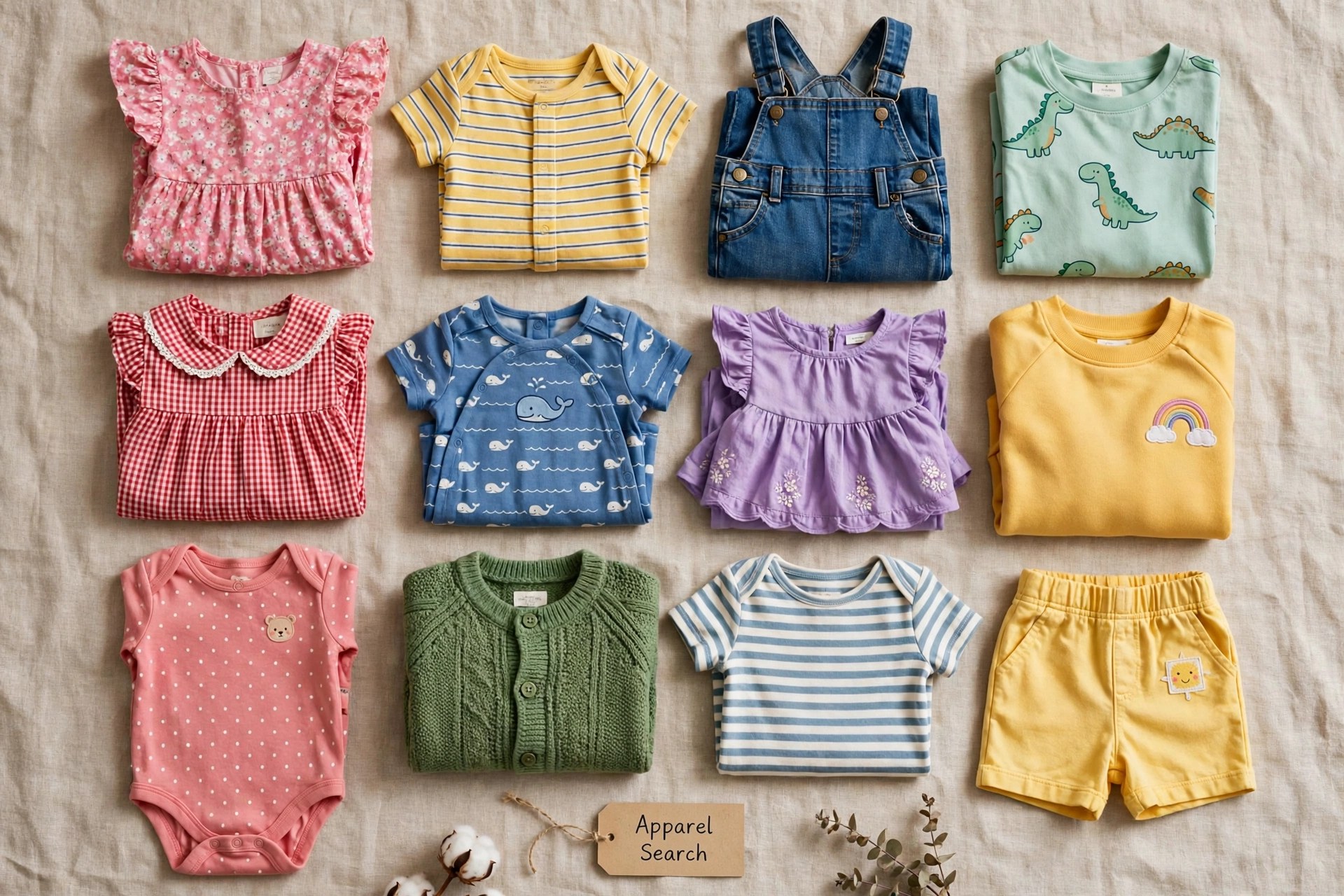
Company Profile
The October 2013 summary describes the listed-era corporation: a children's apparel specialty retailer in North America, designing and retailing coordinated collections for newborns through pre-teens, with the Play & Music centres as the brand's origin and feeder. A November 2013 note in the record confirms Bain Capital's completed acquisition of the company — the buyout whose debt framed the decade that followed.
The February 2019 summary is the end of the store era, in one paragraph: the January 2019 filing, the plan to close all Gymboree and Crazy 8 stores and the sale process for Janie and Jack. The brand sales that followed split the group exactly along its price ladder — value Crazy 8 and core Gymboree to the value children's specialist, premium Janie and Jack to Gap.
The range behind the name is coordinated children's apparel and accessories under Gymboree, Crazy 8 and Janie and Jack. Its customers are parents of newborns through pre-teens. That combination — what is sold, and to whom — is the simplest way to place Gymboree in the industry: it explains the company's costs, its competitors and the kind of news that moved its shares when it had them. A change in either half of the combination, a new product category or a new customer, is usually the first sign that the business described in the older summaries is turning into something different.
Scale should be read from the dated summaries with their dates attached. Store counts, sales descriptions and market positions quoted there were the company's own account of itself in that year, and they are the right basis for comparing Gymboree with the other companies in this section — a component supplier against a retailer, or a catalogue house against a mall chain — as long as each figure is compared with figures from roughly the same period.
For current dealings, the snapshot at the top of this page is the place to start: it gives the company's present status — Brand operating under The Children's Place — Gymboree Group filed for Chapter 11 in January 2019 and its brand rights were sold — and links to the official website, which is where current product ranges, store information and investor or corporate contacts are maintained. Anything in the dated summaries that conflicts with the snapshot should be read as the older position: summaries describe the year they are dated, and the snapshot describes the company as it stands now.
The stock record matters because Gymboree sat at a point where fashion meets the public markets: investors following the shares were really following parents' spending on coordinated children's clothing. The dated company summaries gathered in this section were written for that audience, recording store counts, sales descriptions and company statements as they stood at the time. Read together with the current status above, they show both halves of the story — the business as it presented itself in its listed years, and what became of it afterwards.
Gymboree History & Historical Profile →Common Questions
Who owns Gymboree now?
The Children's Place, which bought the Gymboree and Crazy 8 brand rights in 2019 for about $76 million after Gymboree Group's January 2019 Chapter 11 filing, and relaunched Gymboree in early 2020.
What happened to Janie and Jack?
Gap Inc. bought the Janie and Jack brand, website and store leases for $35 million in the same 2019 bankruptcy sales.
When did Gymboree file for bankruptcy?
Twice: in June 2017, and again on January 16, 2019, after which its stores closed and its brands were sold.
References & Further Reading
Company details such as leadership, ownership, store counts and web addresses can change. For the most current information, check the company's official website: https://www.gymboree.com/us/home.