S&K Famous Brands
Apparel industry financial guide — Retail Company Stocks.
S&K Famous Brands was the Richmond, Virginia menswear retailer founded in 1967 by I.J. 'Hip' Siegel and Abe Kaminsky, selling nationally recognised brands of tailored clothing, furnishings, sportswear, shoes and accessories at 20% to 40% below full-price department and specialty stores. The chain grew to about 200 stores across the South and Midwest, took the S&K Famous Brand Menswear name, and was delisted from Nasdaq in 2005 as its model faltered. In February 2009, with 136 stores left, S&K filed a voluntary Chapter 11 petition in the Eastern District of Virginia, and the business did not continue.
Company Snapshot
Status: Closed — filed for Chapter 11 in February 2009; the menswear chain did not continue
Type: Private — defunct (delisted from Nasdaq in 2005)
Headquarters: Formerly Richmond, Virginia, United States
Founded: 1967, in Richmond, Virginia
Company Profile
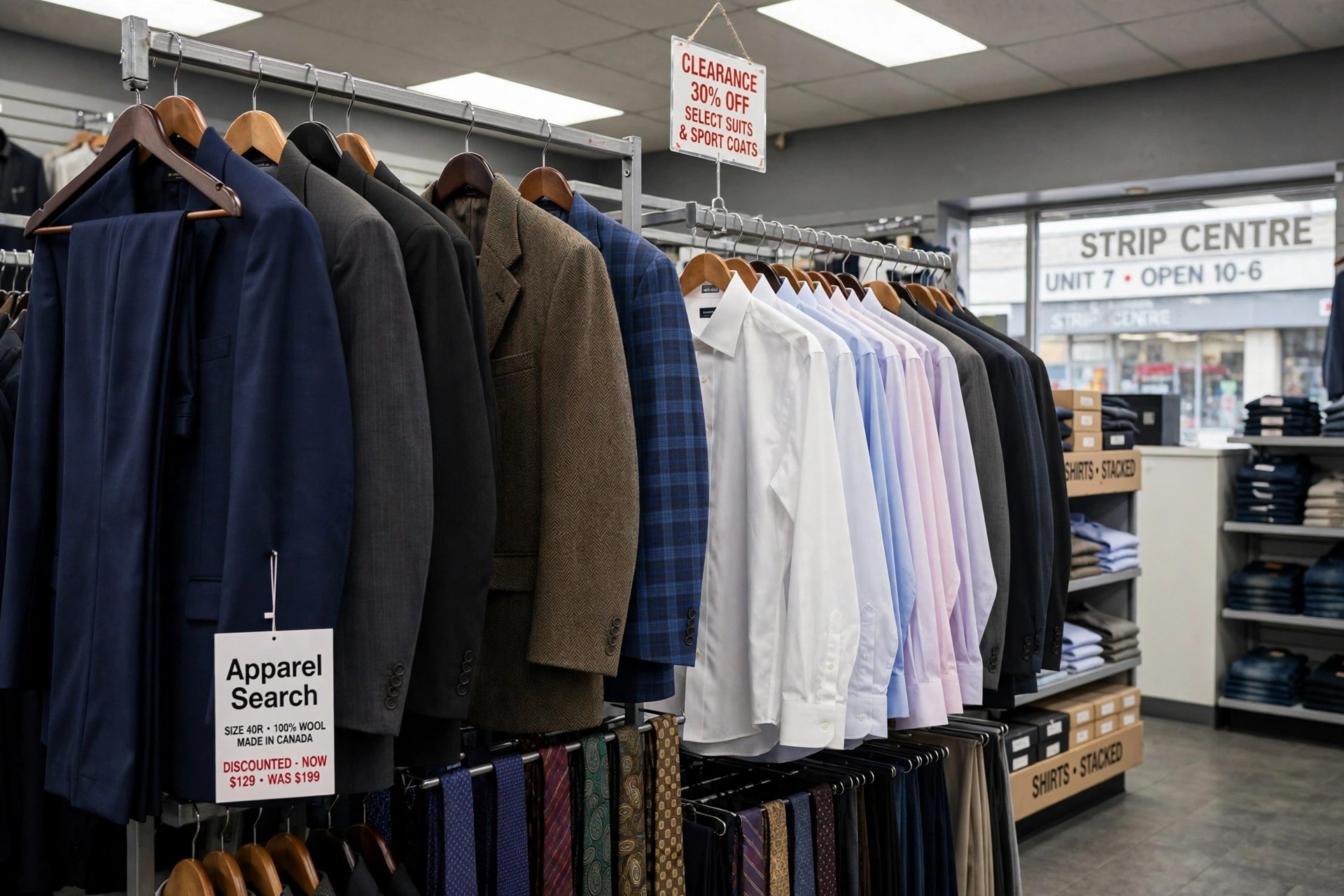
The record in this page is a single detailed description, and it is precise about the mix: tailored clothing — suits and sportcoats — accounted for 60% of merchandise sales in the fiscal year ended February 2, 2008, and no other category, from shirts and ties to outerwear, shoes and accessories, reached 10% of revenues. That concentration was the brand: a man who needed a suit at a bargain went to S&K, and the store opening it records — Eastern Hills Mall, Williamsville, on October 15, 2007 — was still expansion months before the end.
The founding story, kept in company histories, explains the off-price instinct: Siegel and Kaminsky began by buying overstocked merchandise from small haberdasheries and selling it from the trunk of a Cadillac, before a rented Richmond thrift shop became the first store. Four decades later the same instinct could not offset mall decline, tightened credit — its bank raised reserve requirements in 2008 — and the collapse of tailored-clothing demand in the financial crisis.
The range behind the name is men's tailored clothing, furnishings, sportswear, shoes and accessories at off prices. Its customers are men seeking brand-name suits and clothing at 20% to 40% below regular prices. That combination — what is sold, and to whom — is the simplest way to place S&K Famous Brands in the industry: it explains the company's costs, its competitors and the kind of news that moved its shares when it had them. A change in either half of the combination, a new product category or a new customer, is usually the first sign that the business described in the older summaries is turning into something different.
Scale should be read from the dated summaries with their dates attached. Store counts, sales descriptions and market positions quoted there were the company's own account of itself in that year, and they are the right basis for comparing S&K Famous Brands with the other companies in this section — a component supplier against a retailer, or a catalogue house against a mall chain — as long as each figure is compared with figures from roughly the same period.
Because S&K Famous Brands no longer operates independently, there is no current company website to link from the snapshot, and enquiries that would once have gone to its head office belong with the successor named in the status line — or, where the business closed entirely, the record here is the end of the trail. The dated summaries remain useful to researchers precisely because the company can no longer update its own account of itself.
The stock record matters because S&K Famous Brands sat at a point where fashion meets the public markets: investors following the shares were really following men's tailored clothing at off prices. The dated company summaries gathered in this section were written for that audience, recording store counts, sales descriptions and company statements as they stood at the time. Read together with the current status above, they show both halves of the story — the business as it presented itself in its listed years, and what became of it afterwards.
History in Brief
S&K's record is one detailed company description: a menswear mix led by tailored clothing at 60% of fiscal 2008 sales, a store opening in Williamsville in October 2007, and the February 2009 Chapter 11 filing in Richmond. All three are carried in the profile above.
Common Questions
When did S&K Famous Brands file for bankruptcy?
In February 2009, in the U.S. Bankruptcy Court for the Eastern District of Virginia in Richmond. The chain, then at 136 stores, did not continue.
What did S&K Famous Brands sell?
Men's clothing at off prices — suits and sportcoats were 60% of sales — plus furnishings, sportswear, shoes and accessories, at 20% to 40% below regular prices.
When was S&K founded?
In 1967, in Richmond, Virginia, by I.J. 'Hip' Siegel and Abe Kaminsky.
References & Further Reading
Company details such as leadership, ownership, store counts and web addresses can change. This company no longer operates independently, so there is no current official website to check; the information here is a historical record of the business as it was.