Sears Holdings Corporation
Apparel industry financial guide — Retail Company Stocks.
Sears Holdings Corporation was the Hoffman Estates, Illinois holding company formed in 2005 when Kmart, led by Edward Lampert's ESL Investments, bought Sears, Roebuck and Co. — combining two of America's oldest and largest retailers, with the Kenmore, Craftsman and DieHard brands, Lands' End, and vast real estate. The company traded on Nasdaq as SHLD. After a decade of falling sales, store closures and asset sales, Sears Holdings filed for Chapter 11 on October 15, 2018; in February 2019 ESL bought its surviving stores and brands for about $5.2 billion into a new company, Transformco, and the remaining Sears and Kmart stores dwindled to a handful in the years since.
Company Snapshot
Status: Defunct as a retailer — filed for Chapter 11 on October 15, 2018 and sold substantially all of its assets to ESL Investments' Transformco in February 2019 for about $5.2 billion
Type: Private — defunct (was Nasdaq: SHLD)
Headquarters: Formerly Hoffman Estates, Illinois, United States
Founded: 2005, by the merger of Kmart and Sears, Roebuck and Co.
Company Profile
The January 2019 summary in the record is the endgame in the company's own words: ESL Investments selected as winning bidder to acquire substantially all of its assets, including the go-forward stores, on a going-concern basis for approximately $5.2 billion, subject to bankruptcy court approval. The October 2018 summary, written just before the filing, still describes a leading integrated retailer connecting digital and physical shopping through Shop Your Way, at a scale the October 2013 summary fixes precisely: 2,172 full-line and 1,338 specialty stores in the United States through Kmart and Sears, plus 500 stores in Canada.
For apparel, Sears Holdings mattered on both sides of the market: Sears and Kmart together were among America's largest clothing sellers — Lands' End, Jaclyn Smith, Joe Boxer, Apostrophe and the Sears private labels reached customers no specialty chain touched — and their long decline redistributed that volume to Walmart, Target, TJX and Amazon. The summaries here preserve the integrated-retailer self-description of a company whose catalogue-era predecessor had once been the largest retailer on earth.
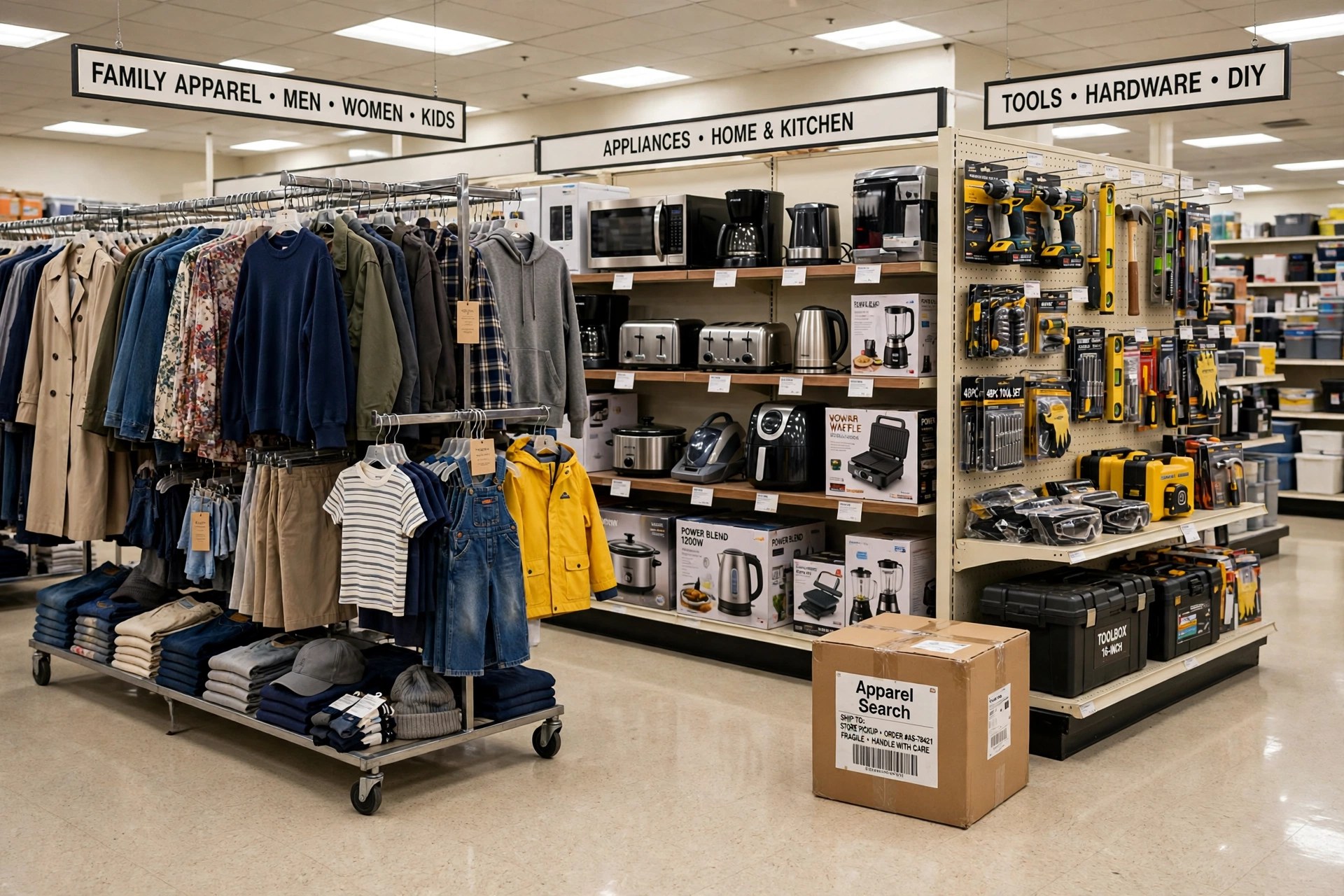
The range behind the name is apparel, appliances, tools and home goods under Sears and Kmart and brands such as Kenmore and Lands' End. Its customers are American households across the full income range, in stores and online. That combination — what is sold, and to whom — is the simplest way to place Sears Holdings Corporation in the industry: it explains the company's costs, its competitors and the kind of news that moved its shares when it had them. A change in either half of the combination, a new product category or a new customer, is usually the first sign that the business described in the older summaries is turning into something different.
Scale should be read from the dated summaries with their dates attached. Store counts, sales descriptions and market positions quoted there were the company's own account of itself in that year, and they are the right basis for comparing Sears Holdings Corporation with the other companies in this section — a component supplier against a retailer, or a catalogue house against a mall chain — as long as each figure is compared with figures from roughly the same period.
Because Sears Holdings Corporation no longer operates independently, there is no current company website to link from the snapshot, and enquiries that would once have gone to its head office belong with the successor named in the status line — or, where the business closed entirely, the record here is the end of the trail. The dated summaries remain useful to researchers precisely because the company can no longer update its own account of itself.
For anyone researching the fashion industry's public-company era, Sears Holdings Corporation is a useful case: the 2005 merger of two retail giants, unwound in a single bankruptcy sale. The summaries in this section were compiled while the story was still unfolding, which is exactly what makes them worth keeping — they preserve what the company said about itself at the time, before the outcome was known.
Sears Holdings Corporation History & Historical Profile →Common Questions
When did Sears Holdings file for bankruptcy?
On October 15, 2018. In February 2019 ESL Investments bought its surviving assets for about $5.2 billion into Transformco.
What was Sears Holdings' stock symbol?
SHLD, on Nasdaq. The company was formed in 2005 by Kmart's purchase of Sears, Roebuck and Co.
What brands did Sears Holdings own?
Sears and Kmart stores, plus Kenmore, DieHard and — until its 2017 sale — Craftsman, and Lands' End until its 2014 spin-off.
References & Further Reading
Company details such as leadership, ownership, store counts and web addresses can change. This company no longer operates independently, so there is no current official website to check; the information here is a historical record of the business as it was.