Apparel Search Consumer Guides
Gender-Neutral & Unisex Fashion Guide
What shared clothing actually is once you get past the label: how a pattern block is drafted, how to spot a relabeled range, and what one cut for every body gives and takes away.
"Gender-neutral" and "unisex" sound like marketing words, and sometimes they are. But underneath the label sits a concrete, checkable thing: a pattern block. Every garment starts as a flat pattern drafted for a particular body's proportions, and those patterns have come in two families — a men's block and a women's block — differing in shoulder, shaping and length scale. A genuinely gender-neutral garment is one drafted on a single shared block and sold in one size run to everyone. This guide covers how that block is built, which clothes carry the idea honestly, and what fit one pattern for every body gives and takes away.
The glossary version is shorter. Our fashion terms entry on unisex brands defines unisex as a product designed to be suitable for anyone — historically for both sexes — and traces the rise of the brands built on it. This guide picks up where the definition stops, on the fitting-room side of the question. People shop shared ranges for practical reasons: a straighter cut without waist shaping, a longer body, roomier shoulders, or one wardrobe two people can draw from. None of that requires a position on anything. It requires knowing how the clothes are cut — which is what follows.
Search Apparel Search
The Companion Guide
 How to Shop Across Departments
How a Shared Cut Is Drafted
Start with the two blocks a shared design replaces. A women's block typically builds in bust shaping (darts or seams that curve the cloth over the chest), waist suppression (the side seam pulls in at the natural waist), and a hip curve (the seam lets out again below it), all graded on a shorter length scale. A men's block carries a broader, squarer shoulder, little or no waist suppression, a straighter side seam, and longer body and sleeve lengths. Neither is a scaled copy of the other.
A shared block is usually built by taking the straighter architecture and removing shaping rather than adding it: no bust dart, a side seam that runs close to straight from armhole to hem, waist suppression taken out, and grading done by chest and waist measurement in even steps. The garment then hangs from the shoulder rather than fitting the torso. That single decision explains most of what shoppers notice about unisex clothes — the boxy, un-nipped silhouette is not a style whim laid over the garment; it is the direct result of the pattern it was cut from.
Where the "Unisex" Label Is Honest — and Where It Is Marketing
Because drafting a real shared block costs a brand a pattern room's time, the label gets borrowed by ranges that never did the work. The honest version is easy to recognize once you know what it requires: one size chart for the whole range, published in body measurements; one product line photographed on different bodies; a size run that starts genuinely small and ends genuinely large, graded in even measurement steps.
The marketing version is a men's range wearing a new tag. Its size chart is the men's chart unchanged; its smallest size is a men's small, which leaves smaller-framed shoppers with nothing; its proportions are the men's block's, unexamined. A related tell: the same garment also exists in a "women's version" with shaped seams. Two blocks under one label is not a shared design — it is two department ranges with a shared name. None of this makes a relabeled garment a bad garment. A men's overshirt is a fine overshirt whoever buys it, and our companion page on shopping across departments is largely about doing exactly that. But it is worth knowing whether the shared fit was engineered or merely announced, because the two fit differently.
Read a Shared Size Run in Three Checks
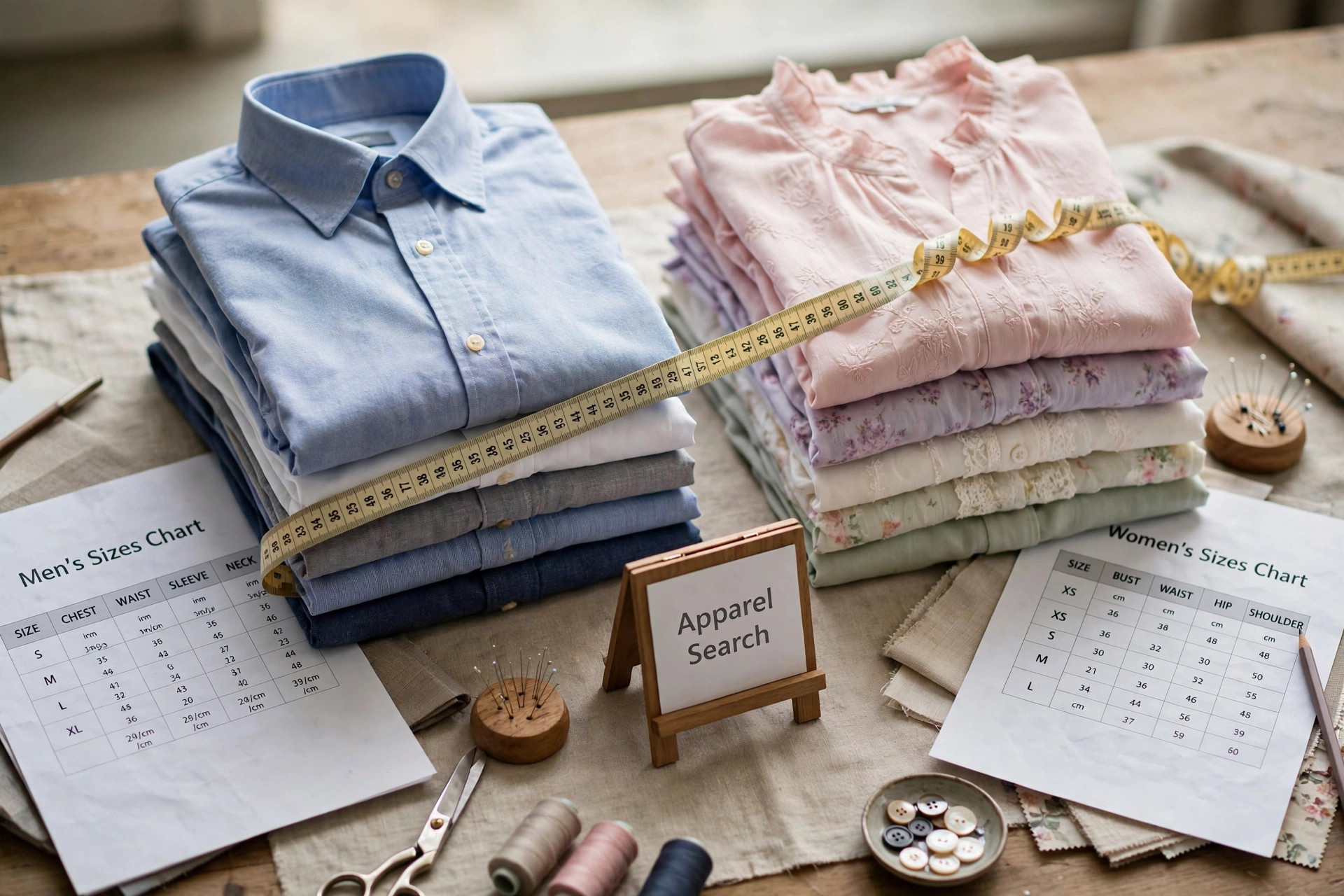
- Measurements, not letters. Find the size chart and read the chest and waist columns in inches or centimeters. Match your own measurements to the chart's body measurements. If the chart gives only letters, treat every size as an estimate and order accordingly.
- Check the bottom of the run. A genuinely shared range is graded from a small size upward. If the run stops at the equivalent of a men's small, smaller shoppers are being offered the men's range under a new name.
- Check the length columns. Shared blocks grade body and sleeve length on the taller scale. Compare the chart's lengths against a garment you own that fits: a size that matches your chest can still run two inches long in the body, which reads as relaxed on some frames and swamped on others.
Categories Where Shared Design Works Best
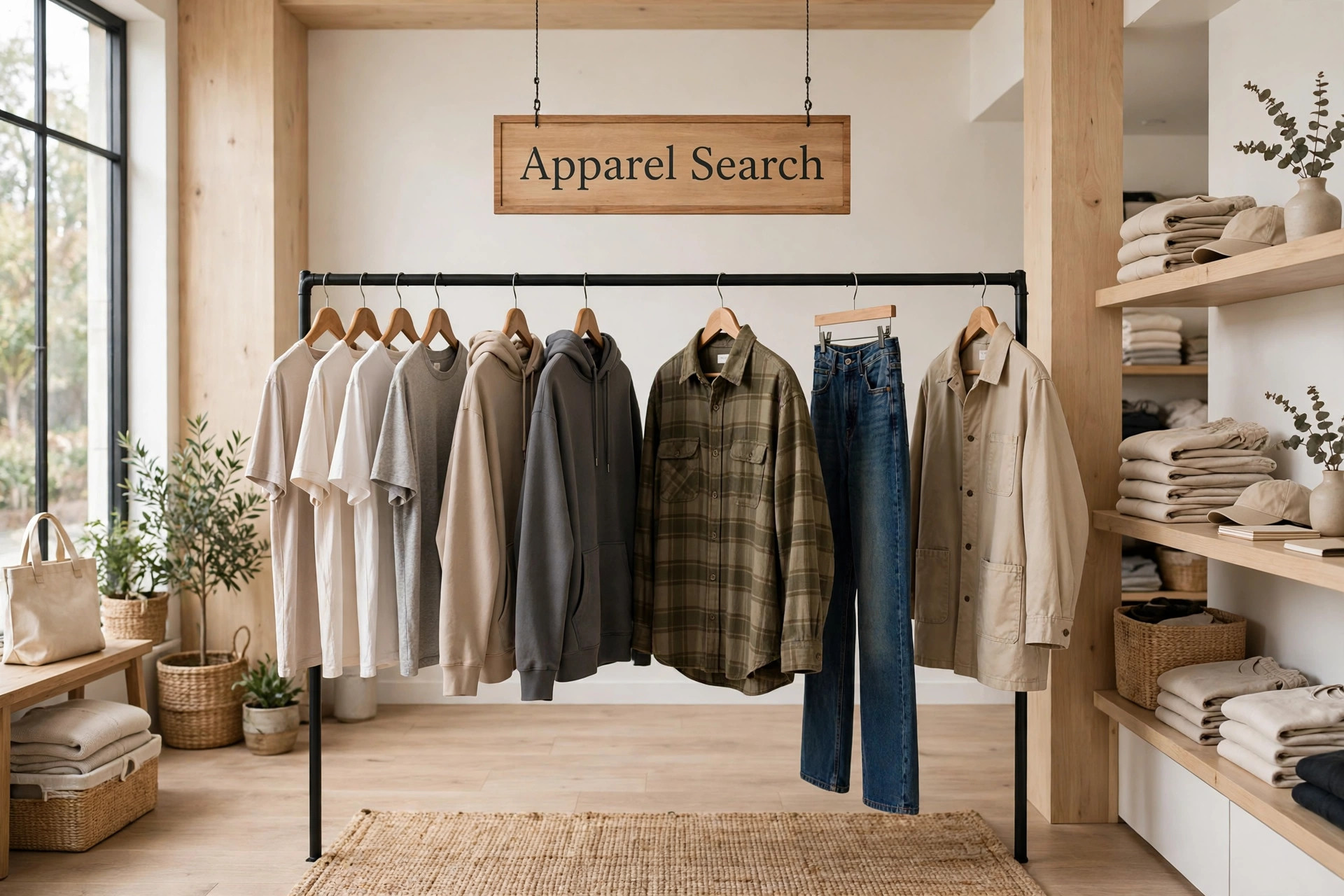
- T-shirts, sweatshirts and hoodies. Knit fabrics forgive, the styles hang from the shoulder by design, and neither block shapes them much in the first place. This is where shared design began and works with the fewest compromises.
- Overshirts, flannel shirts and work shirts. Worn open or as light jackets, they are ease garments: the straight block's lack of waist suppression matches how they are actually worn.
- Outerwear — chore coats, parkas, utility jackets. Coats are cut with wearing ease over layers, which absorbs most block differences; the category is forgiving.
- Straight-leg denim and relaxed trousers. A straight leg sidesteps the hip-curve question better than a tapered cut — though the waistband still decides the fit.
- Knitwear. Sweaters stretch and drape rather than fitting at fixed points, so one block serves a wide range of frames respectably.
- Sneakers, hats, scarves and bags. Accessories carry sizing questions but no block questions; footwear is a matter of size translation and width, covered in the companion guide.
The Fit Compromises, Stated Plainly
One block cannot be widened at the hip without widening somewhere it may not be wanted, because a pattern is one connected geometry. A shared block that fits a fuller hip will generally carry a broader shoulder and a longer body than a smaller-framed wearer needs; one cut close at the shoulder will pull at the hip of a curvier wearer. Waist definition is absent by design — that is the silhouette, and a belt or a different garment is the remedy, not a smaller size. Lengths grade tall, so petite shoppers in shared ranges often roll sleeves and accept a longer body as the look.
None of these are arguments against shared ranges. They are the specification sheet. A shopper who knows the block is straighter, longer and unshaped can predict how a garment will sit on their own body from the size chart alone — a better position than most department shopping puts anyone in.
The 30-Second Honesty Test
Before crediting a "unisex" or "gender-neutral" label, run three checks: Does the range publish one size chart in body measurements? Does the run start at a genuinely small size, not a men's small? Is the same garment also sold in a shaped "women's version"? One chart, a true small, and no parallel version — that is a shared block. Anything else is a department range with a shared name, to be shopped by the across-departments rules.
Common Questions
Is unisex the same as gender-neutral?
In everyday use the two labels overlap, and brands use them interchangeably. Unisex is the older term: a product designed to be suitable for anyone, historically for both sexes. Gender-neutral is the broader label now used for the same idea — clothing designed and sold without dividing it into men's and women's lines. In practice there is no consistent difference between a garment labeled unisex and one labeled gender-neutral. What matters is the cut and the size chart, and those vary by brand under either label.
Is unisex clothing just men's clothing offered in smaller sizes?
Sometimes, and that is exactly the version worth being skeptical of. A genuinely shared design is drafted on its own block: no bust shaping, no waist suppression, a straighter side seam, and a size run graded by body measurement. A relabeled men's range keeps the men's block — broader shoulder, longer body — and simply extends the run downward. The size chart tells you which you are looking at: a shared range publishes one set of chest and waist measurements for the whole run; a relabeled range usually just republishes the men's chart.
How do I find my size in a gender-neutral range?
Ignore your usual letter size and start from measurements. Take your chest and waist measurements in inches or centimeters and match them to the body measurements on the range's size chart. Then check length: shared blocks are graded on the longer, straighter scale, so the size that fits your chest may run longer in the body and sleeve than you are used to. Our companion page on shopping across departments walks through the translation.
Why does the same unisex garment fit two people so differently?
Because one pattern block is a set of compromises. A shared block trades bust shaping and waist definition for a straighter line, and grades shoulder and length on the taller scale. A wearer whose measurements sit close to that block gets a clean fit. A wearer with a much narrower shoulder or a much fuller hip is asking the cloth to do work the seams are not doing. That is not a defect in the garment — it is what one cut for everyone physically means, and fit-checking matters more in shared ranges than in department ranges.
Sizes Do Not Translate Themselves
Shop shared ranges or buy across the aisle — a men's overshirt, a women's knit — and the practical problem is the same: sizes are department dialects, not a common language. Our companion guide to shopping across departments gives the correspondences that roughly hold, the categories that travel well, and the fit checks to run in the fitting room.