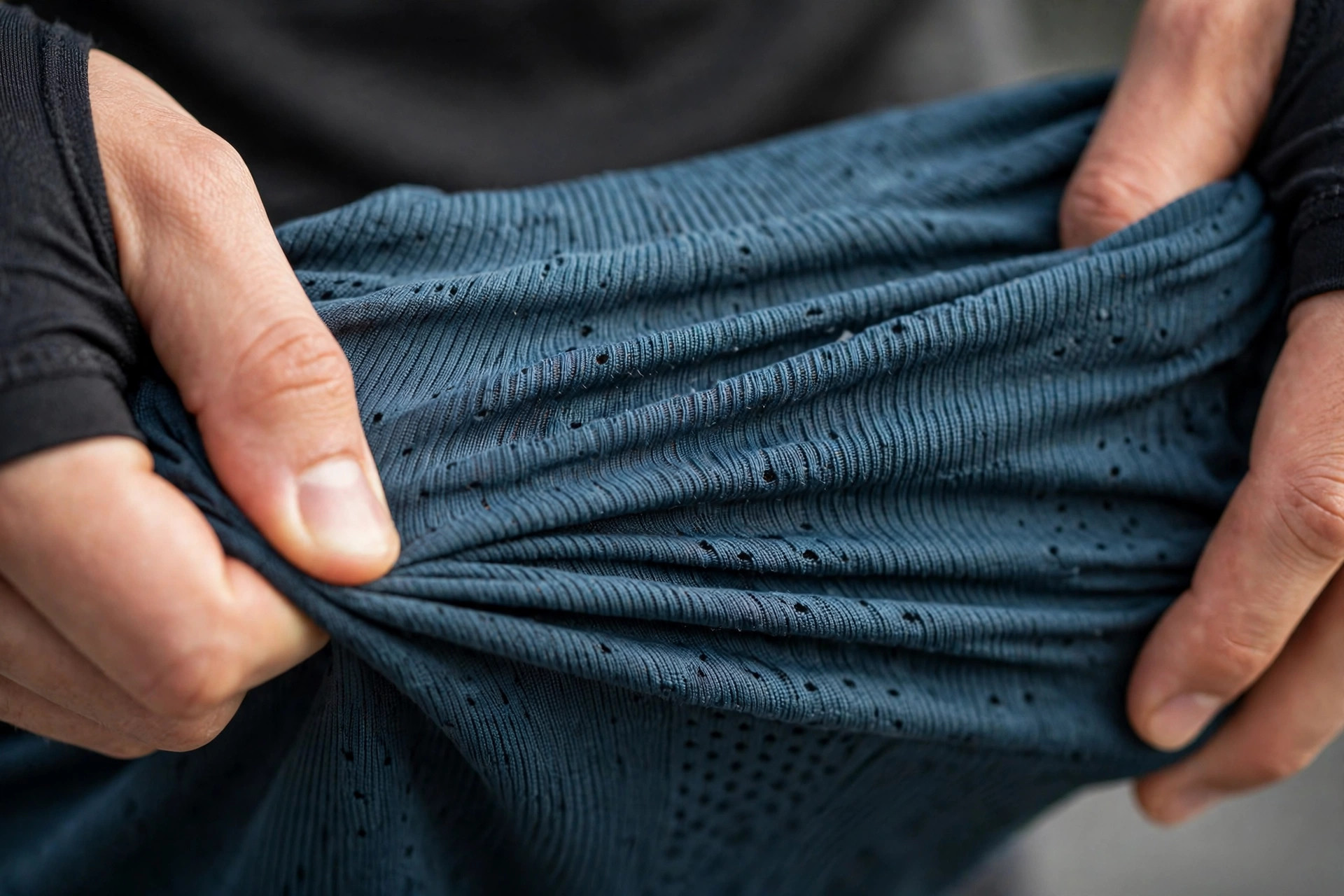
Elastane is a synthetic fiber prized for exceptional stretch and recovery - it can elongate several times its length and snap back. It is the generic fiber name; Lycra (a DuPont/Invista brand) and spandex (the North American generic term) describe the same fiber. Elastane is almost never used alone - a few percent blended into cotton, wool, or synthetics gives garments their stretch.
What Makes Elastane
Elastane is a segmented polyurethane: long, flexible segments give stretch while rigid segments lock the structure so it recovers. The result outperforms rubber - stronger, lighter, more resistant to body oils and UV. Even 2-5% elastane transforms a rigid woven into comfort-stretch denim or a fitted shirt that moves; swimwear and activewear use 15-30% for serious compression and shape retention.
Elastane Through History
DuPont chemist Joseph Shivers invented the fiber in 1958, and it reached the market as Lycra in the early 1960s - first in girdles and hosiery, where stretch without rubber's bulk was revolutionary. The 1970s and 1980s made it a fashion statement: disco-era stretch knits, 1980s aerobics wear, and the invention of stretch denim changed everyday clothing forever. No modern wardrobe exists without it.
Elastane Today
Elastane is everywhere: jeans, leggings, underwear, socks, swimwear, suiting with comfort stretch. The trade-offs are real - it degrades with heat, chlorine, and time (why old swimsuits go baggy), and it complicates textile recycling since blended fibers are hard to separate. Care tip: wash cold and skip the hot dryer to extend its life.
FAQs
- Is elastane the same as Lycra and spandex?
- Yes, essentially. Elastane is the generic fiber name (used in Europe), spandex the generic name in North America, and Lycra is the best-known brand name.
- Why do clothes lose their stretch over time?
- Heat, chlorine, body oils, and UV gradually break down elastane fibers. Cold washing and air drying slow the process considerably.
- How much elastane is in stretch jeans?
- Typically 1-3% - enough for comfort stretch without changing the denim look. "Super stretch" jeans may reach 5%.
- Can elastane be recycled?
- With difficulty. Blended fibers are hard to separate mechanically, which is one reason the industry is researching chemical recycling for elastane blends.
Glossary: see the full fashion glossary for more apparel industry terms.