Precious Gems Necklaces
The classic four, compared at the neck
Precious is the traditional name for just four gems, diamond, sapphire, ruby and emerald, a distinction of history and rarity rather than a modern quality grade. In necklaces, the four behave very differently: diamond is the hardest material in jewelry and suits line necklaces of many small settings; sapphire and ruby, both corundum at hardness 9, are the durable colored pair for pendants and strands; emerald, hard but brittle and almost always included and treated, asks for protective settings and gentle care. This guide compares the four as necklace stones: their formats, from solitaires to rivières and bead strands, what grading matters in each, treatments to expect, and how a buyer chooses among them.
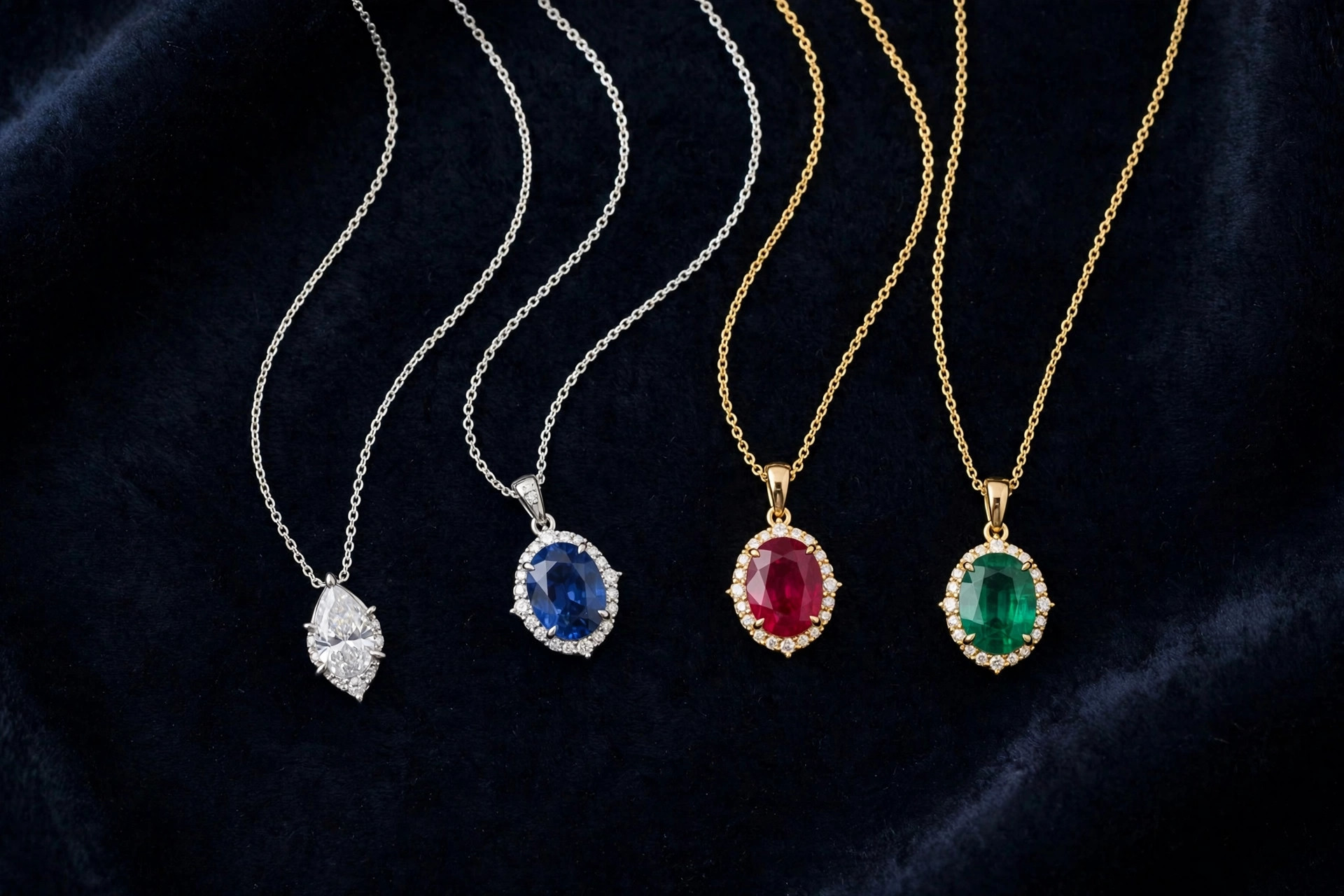
Precious Gem Necklaces: Adornments of Rarity and Beauty
Precious gem necklaces are a symbol of opulence and elegance, featuring gemstones revered for their rarity, beauty, and cultural significance. These necklaces epitomize the artistry and craftsmanship of jewelry designers, showcasing the allure and brilliance of precious gems.
Variety of Precious Gemstones:
Precious gem necklaces feature a wide array of gemstones, each with its unique characteristics and appeal. Some popular precious gemstones used in necklaces include:
Diamonds: Known for their exceptional brilliance and fire, diamonds are the epitome of luxury and sophistication.
Sapphires: Typically associated with deep blue hues, sapphires also come in a range of colors, adding vibrancy and allure to necklaces.
Rubies: Deep red rubies exude passion and elegance, making them a
timeless choice for necklaces.
Emeralds: Emeralds are prized for their
rich green color and have a captivating allure that symbolizes rebirth and
love.
Designs and Styles:
Precious gem necklaces come in an array of designs to suit various preferences and occasions. Some popular styles include:
Solitaire Pendants: A single gemstone pendant, often a diamond, sapphire, ruby, or emerald, suspended from a chain, allowing the gem to take center stage.
Multi-Stone Necklaces: Necklaces featuring multiple gemstones, arranged in patterns, graduated designs, or alternating colors for a captivating and eye-catching look.
Beaded Necklaces: Strands of precious gemstone beads, often with graduated sizes, creating a luxurious and classic appearance.
Symbolism and Significance:
Precious gemstones have been imbued with symbolism and meaning for centuries. They are often associated with qualities such as love, wisdom, protection, and prosperity. Wearing a necklace with a particular gemstone can carry personal significance and convey a message or intention.
Investment Value:
Precious gem necklaces are not only cherished for their beauty but also for their investment value. High-quality gemstones, especially diamonds, sapphires, rubies, and emeralds, can retain or even increase in value over time, making them a sound investment choice.
Customization and Personalization:
Many individuals choose to customize their precious gem necklaces to suit their style and preferences. Customization may involve selecting the gemstone, design, metal, and length of the necklace, creating a unique and meaningful piece of jewelry.
Pros and Cons of Purchasing Precious Gemstones vs. Semi-Precious Gemstones:
Pros of Purchasing Precious Gemstones:
Rarity and Value:
Precious gemstones are rare and valuable due to their scarcity in nature. This rarity contributes to their higher market value and makes them a potentially lucrative investment.
Durability and Hardness:
Precious gemstones like diamonds, rubies, sapphires, and emeralds are generally harder and more durable than semi-precious gemstones. Their hardness ensures long-lasting beauty and resistance to scratches.
Brightness and Brilliance:
Precious gemstones often have higher refractive indexes, resulting in greater brilliance and sparkle. Their superior optical properties enhance their visual appeal and make them stand out in jewelry.
Cultural and Historical Significance:
Precious gemstones have a long history of cultural and historical significance, associated with royalty, prestige, and ceremonial purposes. Their allure is steeped in tradition and symbolism.
Resale Value:
Precious gemstones tend to hold their value well and can potentially appreciate over time. They are often easier to resell in the market compared to semi-precious gemstones.
Cons of Purchasing Precious Gemstones:
Higher Cost:
The most significant drawback of purchasing precious gemstones is the higher cost associated with their rarity, quality, and demand. Precious gemstones can be significantly more expensive compared to semi-precious ones.
Limited Color Variety:
Precious gemstones like diamonds, rubies, and sapphires have a more limited color range compared to semi-precious gemstones. This limitation may restrict options for those seeking a specific color or hue.
Market Volatility:
The market for precious gemstones can be more volatile due to factors such as demand fluctuations, geopolitical events, or mining issues. This can impact the investment aspect of purchasing precious gemstones.
Pros of Purchasing Semi-Precious Gemstones:
Affordability:
Semi-precious gemstones are more affordable, allowing consumers to
purchase larger stones or multiple pieces of jewelry without a hefty
investment.
Variety of Colors:
Semi-precious gemstones offer a broader range of colors and hues, providing a wide spectrum of options for different preferences and designs.
Fashion and Trends:
Semi-precious gemstones often align with fashion trends, allowing consumers to keep up with the latest styles without a significant financial commitment.
Accessibility:
Semi-precious gemstones are more accessible, readily available, and can be found in numerous jewelry stores and online retailers.
Cons of Purchasing Semi-Precious Gemstones:
Lower Market Value:
Semi-precious gemstones generally have lower market values compared to precious gemstones. They may not retain value or appreciate at the same rate.
Durability Concerns:
Semi-precious gemstones are generally softer and less durable compared to precious gemstones. They may be more susceptible to scratches and damage over time.
Limited Rarity:
Although some semi-precious gemstones can be rare, they are generally more abundant compared to precious gemstones, reducing their perceived rarity and value.
The decision to purchase precious or semi-precious gemstones depends on individual preferences, budget, desired features, and the intended purpose of the jewelry. Both categories offer unique and appealing options, catering to a diverse range of consumers and tastes.
Precious gem necklaces are the epitome of luxury and refinement, capturing the essence of rarity and beauty. Whether worn for special occasions or as daily adornments, these necklaces embody the timeless allure and elegance of precious gemstones.
You may also want to learn about bracelets made of precious gems, precious gemstone rings and precious gem earrings.
Learn about precious gemstones.
Four Stones, Four Temperaments
Diamond necklaces trade in light: cut quality and matching across a line matter more than any single stone's paper. Sapphire necklaces trade in color, the velvety blue of a fine pendant stone, with ruby its red counterpart, the two often appearing as the colored anchors of formal jewelry. Emerald trades in character, its jardin accepted as the price of the finest green in gems. Formats follow: solitaires and tennis lines for diamond, halo and cluster pendants for sapphire and ruby, bezel-set pendants and bead strands for emerald.
A buyer comparing across the four should weigh the same short list each time: color first in the colored stones, cut and matching in diamond, treatment disclosure everywhere, and the setting's protection matched to the stone's toughness. The guides to each stone in this section take those questions one gem at a time, and the lab created gem guide covers the grown versions of all four, which have changed what a given budget buys at the neck more than any other modern development.
Common Questions
Why are only four gems called precious?
The label is a survival from older trade practice, when diamond, sapphire, ruby and emerald combined rarity, hardness and established demand, and everything else was classed semi-precious. Modern gemology does not use the distinction as a quality judgment: a fine tsavorite garnet or spinel can outprice a commercial emerald. The word survives in jewelry language, and this section keeps it as the name for the classic four while judging each stone on its own merits.
Which precious stone is most durable in a necklace?
Diamond is hardest and resists scratching completely in normal wear, though it can chip at thin edges. Sapphire and ruby, at hardness 9 with good toughness, are the most forgiving colored stones and suit any necklace format. Emerald is the delicate one of the four: hard but brittle, usually with surface-reaching inclusions and clarity treatment, best in bezel or halo pendants and cleaned only gently.
Do precious gem necklaces need certification?
For a significant center stone, yes: a laboratory report confirms the stone's identity, natural or created origin and treatments, diamond, sapphire, ruby and emerald all having created and treated versions that change value substantially. For small stones in line and cluster necklaces, a seller's written description of origin and treatment is the practical standard, with reports reserved for the stones that carry the price.