Anklet Bracelets
Ankle chains and anklets, a form of jewelry with centuries of history
Ankle bracelets, also known as ankle chains or anklets, are a captivating and enduring form of body jewelry that have adorned ankles around the world for centuries. Worn in ancient Egypt, India and many other cultures, and revived repeatedly by modern fashion, anklets range from fine plain chains to beaded, charm and gemstone designs. This guide explores the history of ankle bracelets, the styles and materials used today, sizing and fit, and how to wear an anklet with different footwear and outfits.
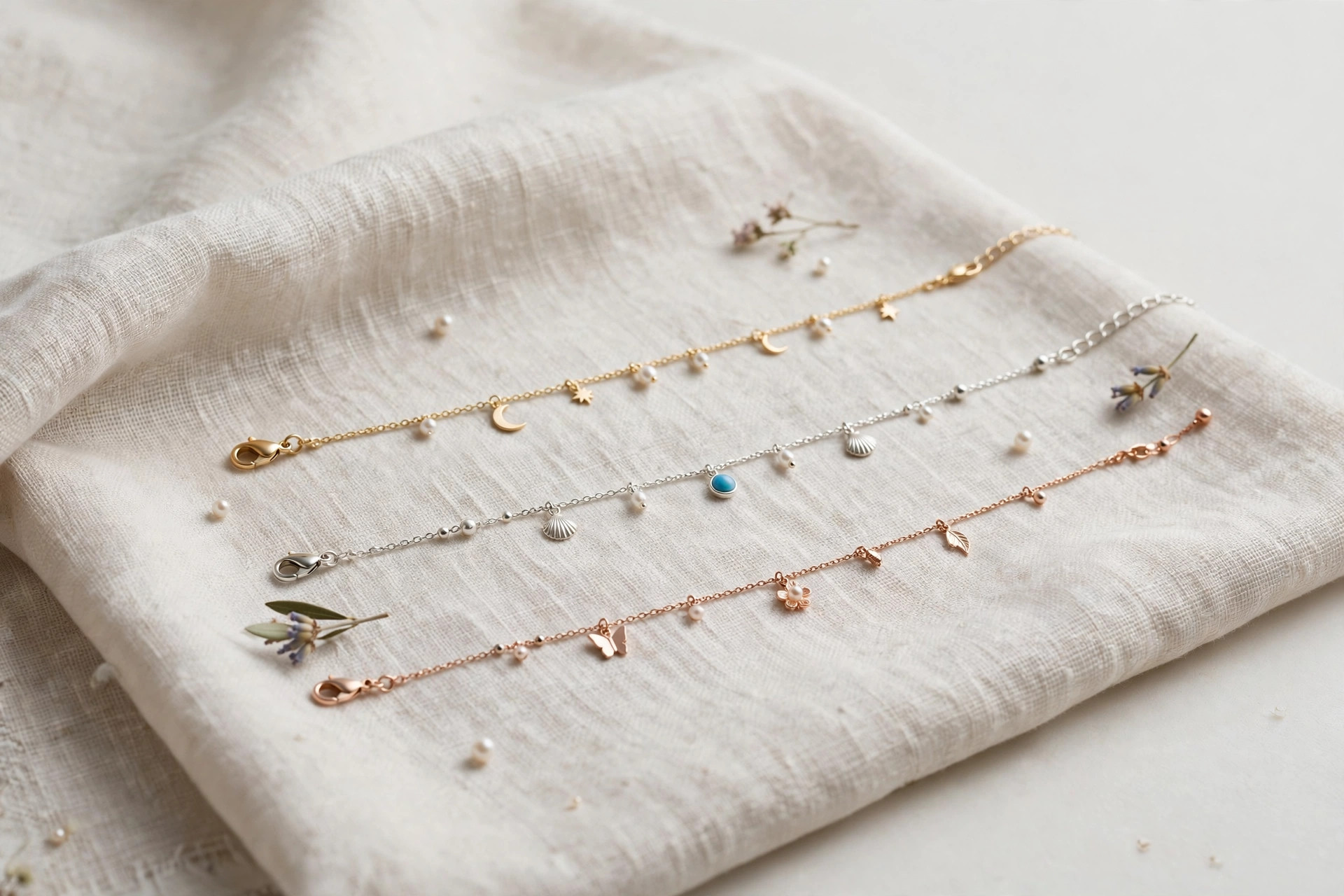
Ankle Bracelets: A Timeless Adornment for the Ankles
Ankle bracelets, also known as ankle chains or anklets, are a captivating and enduring form of body jewelry that have adorned ankles around the world for centuries. In this article, we'll explore the fascinating history of ankle bracelets, the materials used to craft them, and some popular jewelry stores where you can find these charming adornments.
A Brief History of Ankle Bracelets
Ankle bracelets have a rich and diverse history that spans cultures and civilizations. Here's a glimpse into their historical significance:
Ancient Egypt: Ankle bracelets can be traced back to ancient Egypt, where they were worn by both men and women. In Egyptian culture, they symbolized social status and were often crafted from precious metals like gold and silver.
Indian Culture: In India, anklets are known as "payals" or "pajeb," and they hold cultural significance. They are worn by married women as a symbol of matrimony and are often adorned with bells to signify their presence.
Ancient Greece and Rome: Ankle bracelets were popular among the ancient Greeks and Romans. These civilizations often crafted anklets from leather, braided cords, and even seashells.
Modern Western Culture: In modern times, ankle bracelets gained popularity in Western cultures during the hippie and bohemian movements of the 1960s and 1970s. They became associated with a free-spirited and laid-back lifestyle.
Today, ankle bracelets are worn for various reasons, including fashion, self-expression, and cultural significance.
Materials Used to Manufacture Ankle Bracelets
Ankle bracelets are crafted from a wide range of materials, catering to diverse tastes and preferences. Some common materials used for ankle bracelets include:
Metal: Gold, silver, and stainless steel ankle bracelets offer a touch of elegance and durability. These metals can be fashioned into delicate chains, intricate charms, or even simple bands.
Gemstones: Ankle bracelets adorned with gemstones like diamonds, sapphires, or turquoise add a luxurious and colorful touch to the ankle. These gemstone anklets can be as subtle or extravagant as desired.
Leather: Leather ankle bracelets are a popular choice for a more rustic or casual look. They often feature braided or woven designs and may include decorative elements like beads or metal accents.
Beads: Beaded ankle bracelets come in various styles, from simple seed bead designs to intricate patterns. They offer a vibrant and playful look.
Shells: Anklets made from shells provide a beachy and summery vibe. They are particularly popular for vacations and tropical getaways.
Popular Jewelry Stores Selling Ankle Bracelets
When it comes to purchasing ankle bracelets, there are numerous options, both in physical stores and online. Some popular jewelry stores and online retailers where you can find ankle bracelets include:
Kay Jewelers: A well-known jewelry chain that offers a variety of ankle bracelets, from simple and elegant to more elaborate designs.
Zales: Zales offers a range of ankle bracelets, including those featuring diamonds and gemstones, perfect for special occasions.
Etsy: If you're looking for unique and artisanal ankle bracelets, Etsy is a great platform to explore handmade and customized options.
Amazon: The online retail giant offers a vast selection of ankle bracelets, catering to a wide range of budgets and styles.
Local Boutiques: Check out local jewelry boutiques and artisanal shops in your area for one-of-a-kind ankle bracelet designs.
Ankle bracelets have a captivating history, drawing inspiration from various cultures and time periods. Today, they continue to be a versatile and charming accessory, available in an array of materials and styles, making them a beloved addition to any jewelry collection. Whether you wear them for fashion or cultural significance, ankle bracelets are a timeless adornment for the ankles.
Anklets as a Fashion Statement
Anklets can certainly make a fashion statement. Over the years, anklets have evolved from traditional or cultural symbols to versatile fashion accessories that can enhance your overall style and showcase your personality. Here's how anklets can make a fashion statement:
Personal Expression: Anklets allow individuals to express their unique style and personality. Whether you opt for a delicate chain, a bohemian beaded design, or a statement anklet with charms, your choice can convey your fashion preferences.
Versatility: Anklets are incredibly versatile. You can wear them with various outfits, from casual to formal, adding a touch of elegance or whimsy, depending on the design.
Layering: Anklets pair well with other jewelry pieces, such as bracelets and toe rings. Creating layered jewelry looks is a trend that has gained popularity, allowing you to experiment with different combinations and styles.
Seasonal Styles: Anklets are particularly popular during the summer months when people wear open-toed shoes and sandals. They complement beachwear, shorts, dresses, and other warm-weather attire.
Cultural Influence: Some anklets incorporate cultural or symbolic elements, making a statement about your appreciation for diverse traditions and artistry.
Social Media's Role in Understanding Jewelry Fashion
Social media plays a significant role in helping people understand and stay updated on fashionable jewelry styles, including anklets. Here's how it contributes to this process:
Visual Inspiration: Platforms like Instagram, Pinterest, and TikTok are visual mediums where jewelry designers, influencers, and enthusiasts share images and videos of their jewelry collections and styling tips. Users can draw inspiration from these visuals to discover new jewelry styles.
Designer Showcases: Many jewelry designers and brands have a strong presence on social media. They use these platforms to showcase their latest collections, collaborations, and behind-the-scenes content. This direct access allows consumers to stay informed about the latest offerings.
Influencer Endorsements: Influencers and fashion bloggers often collaborate with jewelry brands, wearing and promoting their pieces on social media. These endorsements introduce followers to trending jewelry styles and provide real-life examples of how to incorporate them into everyday outfits.
Community Engagement: Social media fosters communities of jewelry enthusiasts who share their passion, knowledge, and recommendations. Engaging with these communities allows individuals to learn from others, ask questions, and discover new trends and designers.
Online Shopping: Some social media platforms enable shopping directly through the app, making it convenient for users to explore and purchase jewelry styles they discover while scrolling through their feeds.
In essence, social media has democratized the fashion and jewelry industries, providing a platform for creators, consumers, and influencers to engage, share, and celebrate the ever-evolving world of jewelry fashion. It's a valuable tool for staying in the loop and expressing personal style through jewelry.
Learn more about jewelry in our fashion products section.
An Old Form That Keeps Returning
Few jewelry forms have as long a record as the anklet: ankle ornaments appear in ancient Egyptian and Indian dress, as dance and ceremonial jewelry, and as everyday adornment, before becoming a recurring modern fashion item. That history explains the range on sale today, from a single fine chain that reads almost like tailoring for the ankle to charm anklets that collect small pendants the way a charm bracelet does on the wrist. The bracelet guides in this section cover the wrist forms in the same materials, and the two are often bought as a matched summer set.
Fit is the practical difference between an anklet that is worn and one that stays in a drawer. The chain should clear the ankle bone, move a little as the foot flexes, and fasten securely enough for walking; designs with an extender chain handle both bare feet and socks-and-shoes days. Materials matter for the same reason: an anklet worn to the beach or pool needs metal and cord that tolerate water, while a gemstone anklet is better kept for dry, dressier occasions.
Common Questions
What is an anklet?
An anklet, also called an ankle bracelet or ankle chain, is a chain or band worn around the ankle. Anklets have been worn for centuries in cultures around the world and today come in fine chain, beaded, charm, and gemstone styles, usually fastened with a clasp and sometimes an extender chain for fit.
How should an anklet fit?
An anklet should sit comfortably just above the ankle bone with a little drape, not tight against the skin and not so loose that it slips under the heel. Measuring the ankle and adding a small allowance for movement gives the right length, and extender chains make one anklet adjustable between fits.
What can anklets be worn with?
Anklets are most visible with footwear that leaves the ankle bare, such as sandals, heels, and cropped or rolled trousers and skirts. Fine metal anklets suit dressier outfits, while beaded and woven anklets suit casual and beach styling.