Strand Bracelets
Several strands worn as one bracelet, plain, mixed or twisted
A strand bracelet combines two, three or more strands, of pearls, gemstone beads, crystals or fine chain, worn together as a single bracelet and usually gathered into a shared clasp. Strands may lie in parallel rows, twist together in the twisted style known as a torsade, or mix materials, a pearl strand beside a chain strand, for contrast. This guide covers strand bracelet construction and the spacer and clasp hardware that keeps strands orderly, the main styles, sizing when bulk changes fit, and care for a bracelet with several strings to maintain.
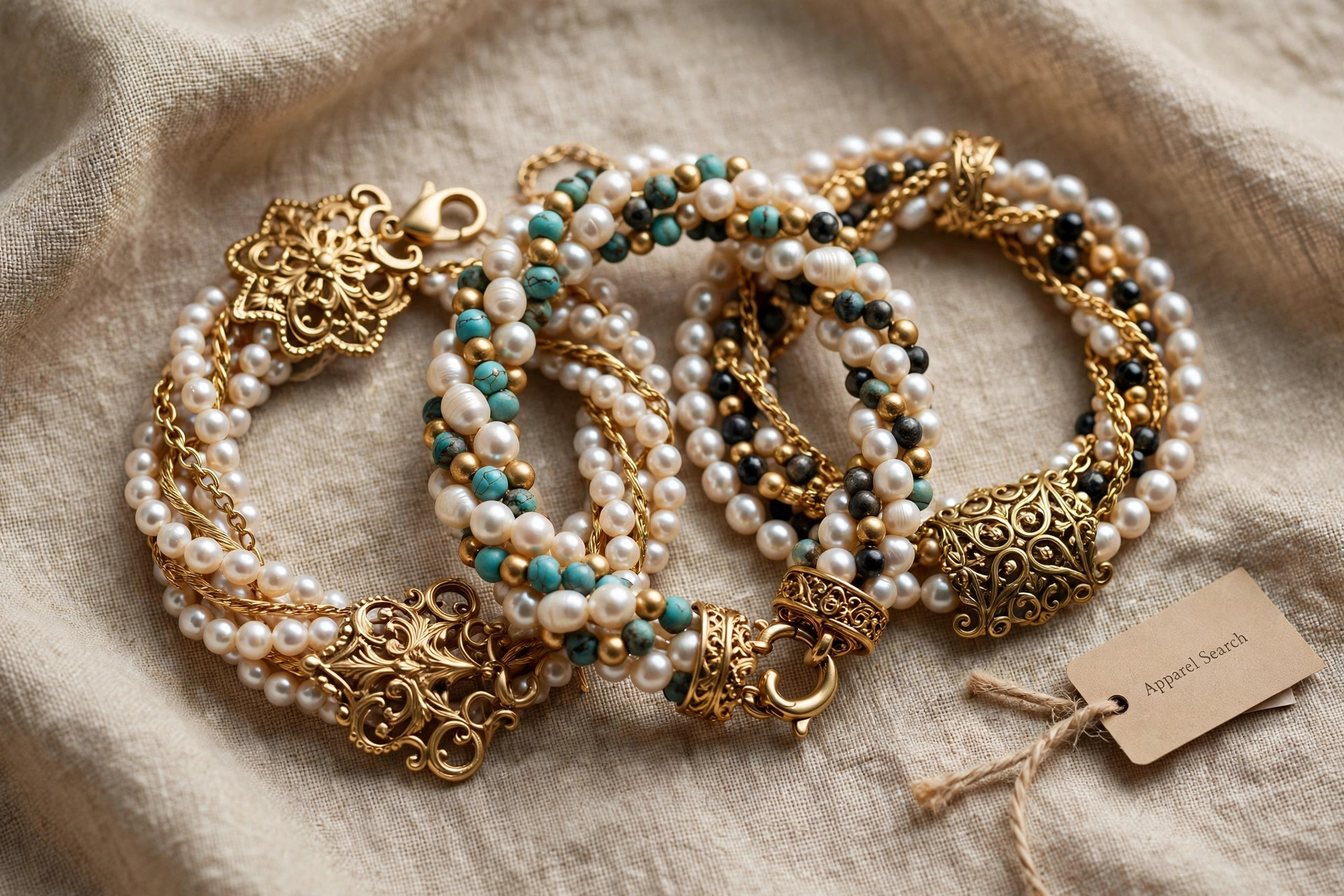
Strand Bracelets: A Stylish and Meaningful Accessory
Strand bracelets, also known as beaded or string bracelets, have become a popular and enduring accessory in the world of fashion and personal style. These simple yet versatile adornments have a rich history and offer a wide range of styles, materials, and meaningful designs that cater to various tastes and occasions.
Learn more about beaded bracelets.
A Glimpse into History
Strand bracelets have ancient origins, dating back thousands of years. Archaeological discoveries reveal that civilizations across the globe, from Egypt to Mesopotamia, used beads and strings to create bracelets. In many cultures, these bracelets were not just ornaments but also carried significant cultural, spiritual, or protective meanings.
Versatility in Materials and Styles
One of the appealing aspects of strand bracelets is their diversity in materials. Beads can be made from various substances, including:
Gemstones: Gemstone bead bracelets are popular for their vibrant colors and alleged healing properties. For example, amethyst is believed to promote calmness and clarity, while rose quartz symbolizes love and harmony.
Wood: Wooden bead bracelets offer a more natural and earthy look. They are often associated with a sense of grounding and connection to nature.
Metal: Metal beads, such as sterling silver or gold-plated beads, add a touch of elegance and sophistication to strand bracelets.
- Learn about sterling silver bracelets & gold-plated bracelets.
Glass: Glass beads come in a myriad of colors and patterns, allowing for creative and eye-catching designs.
Seeds and Shells: Eco-friendly enthusiasts appreciate bracelets made from seeds, shells, or recycled materials for their sustainable and unique appeal.
The styles of strand bracelets are equally diverse. They can be simple single-strand designs or complex patterns with multiple layers and charms. Some common styles include:
Friendship Bracelets: These bracelets often feature intricate knotting patterns and are given as tokens of friendship and camaraderie.
Stackable Bracelets: Mixing and matching different strand bracelets on your wrist is a trendy way to express your individual style.
Charm Bracelets: Strand bracelets with charms, such as hearts, stars, or initials, allow wearers to personalize their jewelry with meaningful symbols.
Mala Bracelets: Inspired by traditional Buddhist malas, these bracelets feature 108 beads and are used for meditation and mindfulness.
Expressing Individuality and Meaning
Strand bracelets are not just fashion accessories; they also hold significant personal meaning. Many people choose beads and symbols that resonate with their values, beliefs, or life experiences. For example:
Birthstone Beads: Some wearers opt for beads corresponding to their birth month as a way to connect with their astrological sign or birthstone's symbolism.
Inspirational Words: Bracelets with beads engraved with words like "strength," "love," or "peace" serve as daily reminders of personal goals and values.
Travel Memories: Collecting beads from different places or using colors that represent specific destinations allows people to carry memories of their travels wherever they go.
Spiritual Symbols: Beads with religious or spiritual symbols, such as crosses, Om symbols, or the evil eye, can provide protection or connect wearers to their faith.
Making and Sharing Memories
Strand bracelets are not only about personal expression but also about connections and relationships. They are often exchanged as gifts between friends, family members, or romantic partners. Handmade strand bracelets can carry sentimental value and are cherished as tokens of love and friendship.
Strand bracelets are a versatile and meaningful accessory that transcends mere fashion. They offer wearers a canvas to express their individuality, values, and experiences while connecting with traditions that span cultures and centuries. Whether worn as a symbol of friendship, a reminder of a special place, or a personal talisman, strand bracelets continue to capture the hearts and wrists of people worldwide.
Hardware Does the Quiet Work
The strands get the compliments, but spacers, end caps and clasps decide whether a strand bracelet wears well. Spacer bars at intervals keep parallel rows evenly separated instead of bunching, end fittings gather the strings without fraying them, and a clasp sized to the bracelet's combined weight, often a box clasp with safety catch or a decorative slide clasp, keeps the whole assembly secure. When a strand bracelet tangles, gaps or twists in wear, the fault is almost always in this hardware rather than in the pearls or beads themselves.
The pearl and beaded bracelets guides in this section cover the single-strand foundations this style builds on, including the knotting and restringing that multi-strand pieces need strand by strand. Restringing a strand bracelet costs more than a single strand simply because the work repeats, which is one more reason to check stringing tension and clasp function before buying a vintage or second-hand example.
Common Questions
What is a strand bracelet?
It is a bracelet made of multiple strands, two or more rows of pearls, beads, gems or chain, joined at a common clasp or end fittings so the rows are worn as one piece. Strand bracelets are distinct from simply stacking separate bracelets: the strands are fixed together, spaced and sized to sit as a designed unit.
What is a torsade bracelet?
A torsade is a multi-strand bracelet whose strands are twisted together before being clasped, creating a rope-like spiral of pearls or beads. The twist shortens the effective length, so torsades are sized by their worn length, and the style is a classic for pearl and gemstone bead bracelets, often with an ornamental clasp worn as a feature.
How should multi-strand bracelets fit?
Bulk changes fit: several strands take up room on the wrist, so a strand bracelet should be measured on the wrist it will wrap, with a little more allowance than a single chain of the same nominal length. Strands should move together without tangling or twisting over each other, and the clasp should be easy to operate with one hand.