Antique Necklaces
A century or more of necklace design
An antique necklace is a necklace at least 100 years old, made in the Georgian, Victorian, Edwardian, Art Nouveau or early Art Deco periods, and valued both as jewelry and as an artifact of its era's artistry and fashion. Antique necklaces include lockets, cameo pendants, festoon and lavalier necklaces, rivières of pasted or genuine stones, enamel work, seed pearl strands and mourning jewelry in jet and hair work. This guide covers the main periods and their signature necklace forms, the materials and techniques of each era, hallmarks and maker's marks, condition questions that decide value, from replaced stones to re-strung strands, and how antique necklaces are worn and cared for today. The distinction from vintage, which generally means 20 to 100 years old, matters to sellers and collectors alike.
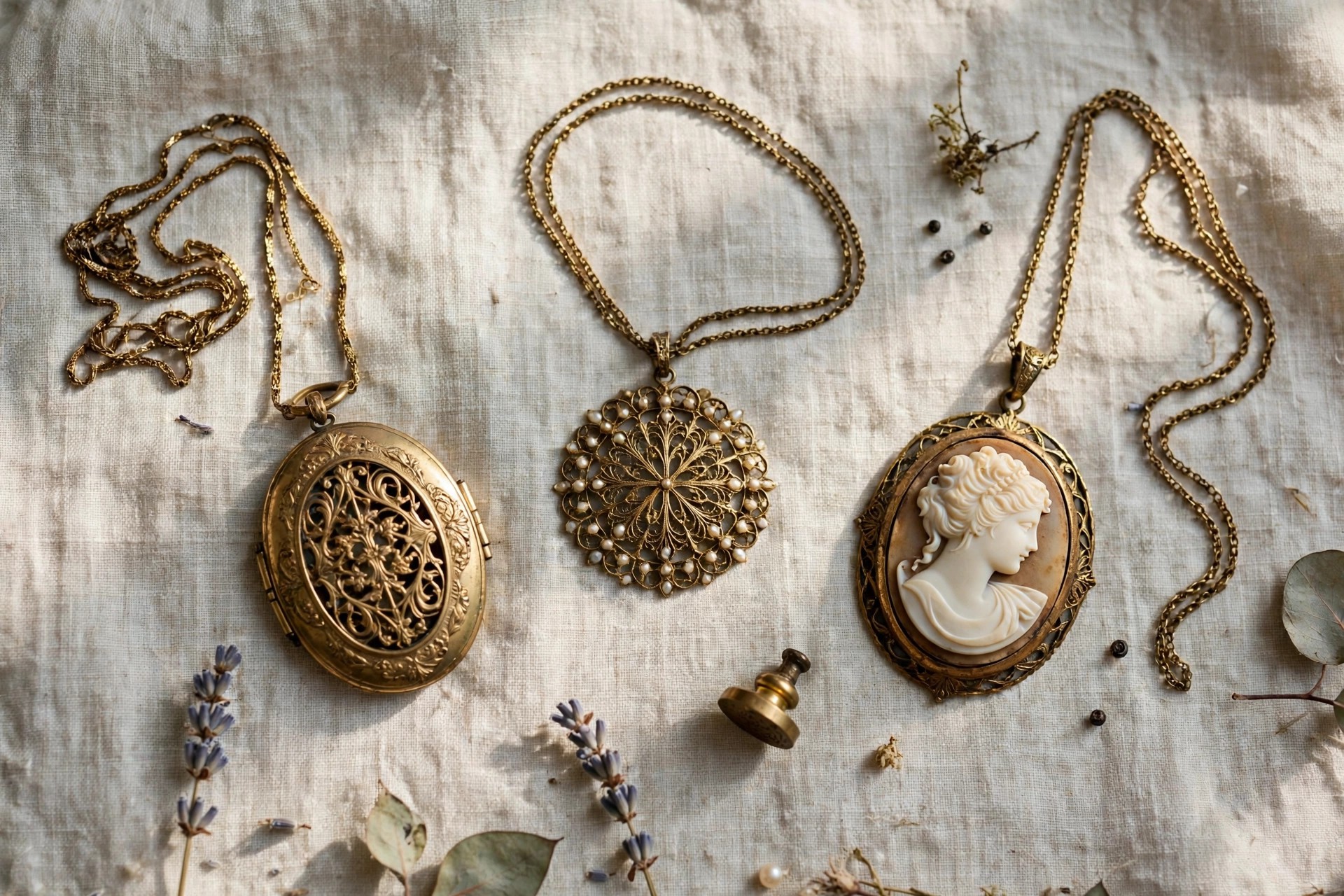
What is an Antique Necklace?
An antique necklace is a piece of jewelry that has been crafted and worn in the past and is considered to be of significant age and historical value. In most cases, jewelry is classified as antique when it is at least 100 years old. Antique necklaces encompass a wide range of styles, materials, and designs, and they often serve as beautiful artifacts that reflect the artistry and fashion of their respective eras.
Historical Evolution of Antique Necklaces:
Antique necklaces have a rich and diverse history that has evolved over the centuries. Here's a brief overview:
Ancient Civilizations: Jewelry, including necklaces, has been worn since ancient times. In civilizations like Egypt, Mesopotamia, and Greece, necklaces were crafted from materials like gold, precious stones, and beads. They often held symbolic or religious significance.
Renaissance and Baroque Eras: During the Renaissance and Baroque periods, intricate and ornate necklace designs featuring gemstones, pearls, and enameling became popular among European nobility and the elite. Many of these necklaces showcased the craftsmanship of the time.
Victorian Era: The Victorian era saw a wide variety of necklace styles, from sentimental lockets to elaborate mourning necklaces made from materials like jet, onyx, and amethyst. Queen Victoria's love for jewelry set trends that influenced necklace designs.
Art Nouveau and Art Deco Movements: The late 19th and early 20th centuries brought about two distinct jewelry movements. Art Nouveau emphasized natural motifs and flowing, organic designs, while Art Deco favored geometric shapes, symmetry, and the use of materials like diamonds, emeralds, and sapphires in striking patterns.
Retro and Vintage Eras: The mid-20th century saw the emergence of Retro and Vintage styles in jewelry. Retro jewelry was characterized by bold, oversized designs, often incorporating yellow and rose gold. Vintage pieces harkened back to earlier styles, with filigree work and more delicate designs.
Collectible Market for Antique Necklaces:
The market for antique necklaces is robust and appealing to collectors and enthusiasts alike. Antique necklaces are sought after for several reasons:
Historical Significance: Antique necklaces provide a tangible link to the past, often carrying the stories and styles of bygone eras.
Craftsmanship: Many antique necklaces showcase exceptional craftsmanship and attention to detail, making them valuable works of art.
Rarity: As time passes, antique jewelry becomes increasingly scarce, contributing to its desirability and value.
Unique Designs: Antique necklaces often feature designs that are no longer produced, making them unique and distinct from contemporary jewelry.
Gemstones and Materials: Antique necklaces can contain rare and valuable gemstones and materials, further increasing their worth.
Where to Shop for High-Quality Antique Jewelry:
Consumers interested in purchasing high-quality antique necklaces have several options:
Antique Jewelry Stores: Specialized antique jewelry stores often carry a curated selection of authentic antique necklaces. These stores are staffed with knowledgeable experts who can provide historical context and authentication.
Auction Houses: Major auction houses, such as Christie's and Sotheby's, regularly hold jewelry auctions that include antique pieces. These auctions are an excellent source for rare and valuable necklaces.
Estate Sales: Estate sales and auctions are frequently organized to sell jewelry and other belongings from estates, presenting opportunities to find antique necklaces.
Online Marketplaces: There are reputable online platforms and marketplaces specializing in antique jewelry, allowing consumers to browse and purchase antique necklaces from the comfort of their homes. It's important to research the seller's reputation and ask for documentation of authenticity.
Antique Fairs and Shows: Attending antique fairs and shows can be a rewarding experience, as dealers often bring a wide variety of antique jewelry, including necklaces, for sale.
When shopping for antique necklaces, it's crucial to ensure the authenticity, quality, and provenance of the piece. Consulting with a certified gemologist or antique jewelry expert can be helpful in making informed decisions and building a valuable collection of antique jewelry.
You may find interest in antique bracelets & antique earrings as well.
Learn about antique fashion to go with your jewelry.
Eras You Can Wear
Each antique period has a necklace language. Georgian pieces are hand-made, often with closed-back settings and nature motifs. Victorian design runs from romantic gold lockets and serpent forms to grand late-century diamond rivières and black mourning jewelry. Edwardian work is platinum, lace-like and diamond-set, while Art Nouveau flows into enamel and horn whiplash curves, and early Art Deco sharpens everything into geometry. Learning those signatures lets a wearer read a necklace's period at a glance, and lets a buyer spot the marriages and reproductions the market contains.
Wearing antique necklaces today usually means one considered piece against simple modern dress, which is how their detail reads best. Lengths from earlier eras can be shorter than modern taste expects, and a discreet extender or a longer added chain, kept reversible, solves that without altering the antique element itself. The antique jewelry section places necklaces in the wider antique category beside bracelets, earrings and rings. Bought for condition and honesty rather than sparkle alone, an antique necklace is both jewelry and a small piece of fashion history that remains in use.
Common Questions
What makes a necklace antique rather than vintage?
The trade convention is age: antique means 100 years old or more, while vintage describes pieces roughly 20 to 100 years old, and retro is often used for the 1940s and 1950s within that range. Antique-style or antique-look means a new piece made in an older manner, with no age at all. Sellers should state which they mean, since a genuinely Georgian or Victorian necklace carries historical value a reproduction does not, however similar it looks.
What should I check before buying an antique necklace?
Check condition first: stones secure in their settings, enamel intact, links and clasps sound or honestly described as repaired, and strands recently restrung if they are pearl or bead. Look for hallmarks and maker's marks, ask about replaced stones or later alterations, and expect wear consistent with age rather than perfection. Provenance and period correctness, a pendant married to a later chain, for example, both affect value and should be disclosed.
How should antique necklaces be cared for?
Gently, and less often than modern jewelry. Many antique pieces use closed-back settings, foil-backed stones, old pearls, enamel or hair work that water and ultrasonic cleaning can damage. Wipe with a soft, slightly damp cloth, store flat and separate, keep strands knotted and restrung when threads weaken, and take repairs to a jeweler experienced with antique work, since modern methods can destroy both value and fragile construction. When in doubt, do less.