Ruby Rings
Red corundum at its most vivid
Ruby is the red variety of corundum, the same mineral family as sapphire, colored by chromium. Only sufficiently saturated red corundum is called ruby; paler or pinkish material is classified as pink sapphire, a boundary that affects price. Ruby is the birthstone for July and the traditional gift for fifteenth and fortieth wedding anniversaries. At hardness 9 on the Mohs scale, with no cleavage and good toughness, ruby is one of the best colored stones for a ring worn every day. Fine Burmese rubies are famed for strong red fluorescence that makes them glow in daylight, while Thai, Mozambican, Tanzanian and other sources offer different tones at different prices. Heat treatment is common, and fracture-filled and synthetic rubies are widespread in commercial jewelry. This guide covers color judgment, treatments and disclosure, origin claims, settings and straightforward care. Ruby also tends to be cut to preserve weight and color depth rather than to ideal proportions, so judging a ruby by diamond cutting standards alone can mislead a buyer.
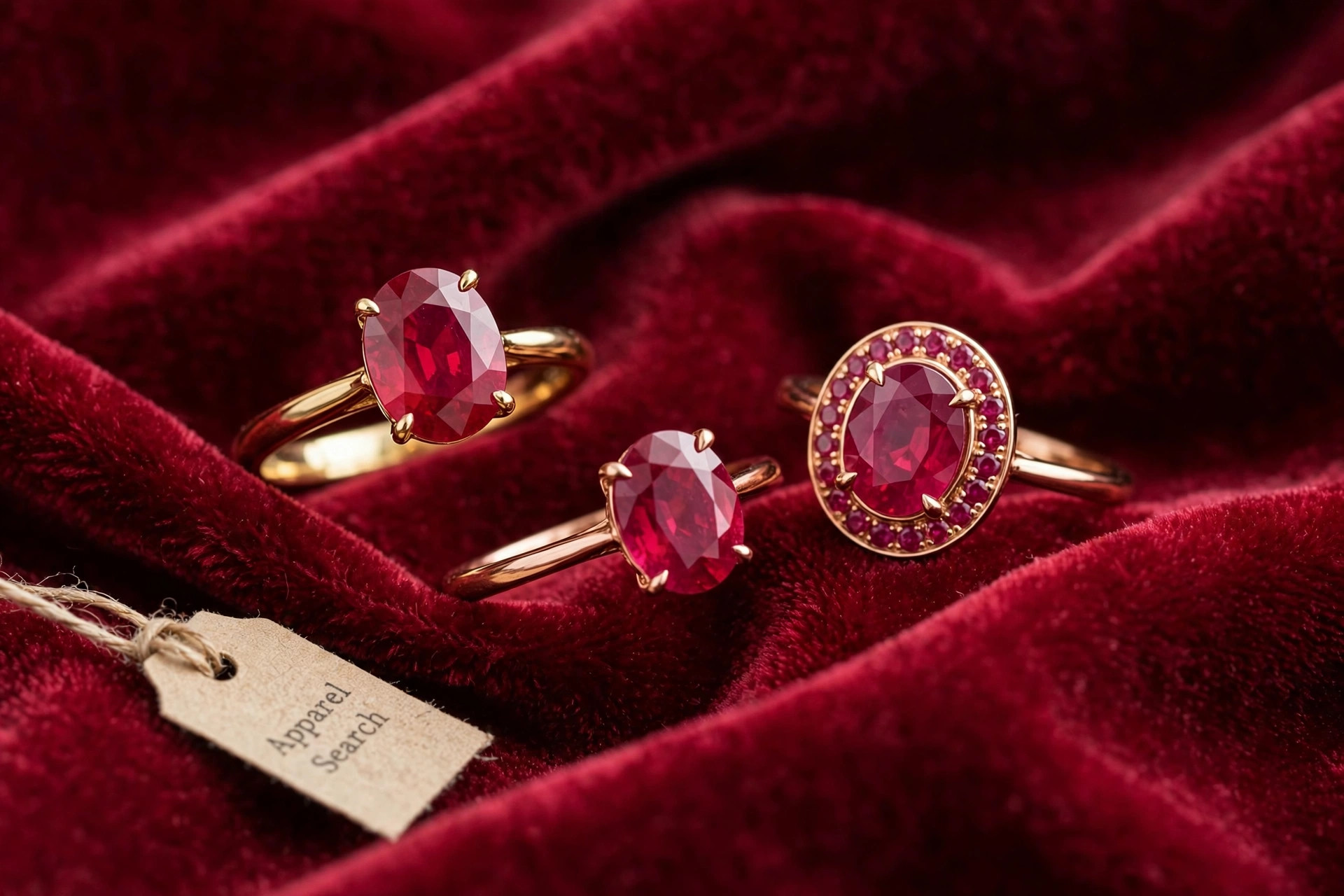
Ruby Rings: Symbol of Passion, Love, and Strength
Rubies, often referred to as the "King of Gemstones," are known for their vibrant red hue and exceptional beauty. Ruby rings have been cherished for centuries, captivating hearts with their fiery color and profound symbolism. Let's delve into the significance, features, and allure of ruby rings.
Symbolism and Meaning:
Passion and Love: The intense red color of rubies is synonymous with passion and love. Ruby rings symbolize deep love, desire, and fiery emotions, making them popular choices for engagement and anniversary rings.
Strength and Vitality: Rubies are associated with strength, courage, and vitality. Wearing a ruby ring is believed to invigorate the wearer and provide them with the energy to face challenges.
Historical Significance:
Throughout history, rubies have been highly esteemed gemstones. Ancient cultures believed rubies held the power to protect and bring good fortune. Royalty and nobility often adorned themselves with rubies, considering them a symbol of wealth and prestige.
Features and Quality of Ruby Rings:
Color: The finest rubies display a rich, red hue often described as "pigeon blood red." However, rubies come in various shades, from light pinkish-red to deep crimson, each with its unique charm.
Clarity: Rubies can have natural inclusions, often referred to as "silk." These inclusions can affect the clarity but also create a beautiful "star effect" (star rubies) or a velvety appearance (pigeon's blood rubies).
Cut and Shape: Rubies are typically cut into traditional shapes like round, oval, cushion, and emerald cuts to enhance their brilliance and color.
Carat Weight: Rubies are available in a range of sizes, and larger rubies are rarer and more valuable.
Styles of Ruby Rings:
Solitaire Ruby Rings: A single ruby set as the centerpiece, often surrounded by diamonds or set in a simple band, accentuating the ruby's vibrant color.
Ruby and Diamond Rings: Combining rubies with diamonds to create a stunning contrast and highlight the ruby's fiery red.
Three-Stone Ruby Rings: Incorporating three rubies, symbolizing the past, present, and future, often interspersed with diamonds.
Modern Trends:
Modern designs often experiment with creative settings, showcasing rubies in unique and unconventional ways to appeal to contemporary tastes.
Buying Tips:
Look for rich, red hues without any undertones of brown or orange.
Consider the carat weight, cut, and clarity to find a balance between size, color, and brilliance.
Ensure the ruby is sourced ethically and comes with appropriate certifications.
Famous Ruby Rings: A Glimpse into Elegance and Luxury
The Burmese Ruby Tiara of Queen Elizabeth II:
- A significant piece of the British Crown Jewels, featuring Burmese rubies and diamonds, gifted to Queen Elizabeth II in 1973.
The Red Cross Ring of Empress Joséphine:
- Empress Joséphine, the wife of Napoleon Bonaparte, owned a beautiful ruby and diamond ring, symbolizing love and passion.
The Sunburst Ruby Ring of Elizabeth Taylor:
- An exquisite ruby and diamond ring gifted to Elizabeth Taylor by her then-husband Richard Burton, known for its stunning design and deep red Burmese ruby.
Why Designers Love Working with Rubies?
Vibrant Color: The intense red hue of rubies is captivating and alluring, making them a favorite for designers seeking to create striking and vibrant pieces.
Versatility: Rubies can complement various metals and gemstones, offering versatility in design. They work well as centerpieces or in combination with diamonds and other gems.
Historical Significance: Rubies have a rich history and cultural significance, giving them a unique appeal that designers can infuse into their creations.
Symbolism: Rubies symbolize love, passion, and strength, allowing designers to craft jewelry with emotional and meaningful undertones.
Determining Ruby Quality in a Set Ring:
Color and Transparency: Assess the ruby's color; the most valuable rubies have a vivid, intense red hue. Check for transparency and absence of visible flaws.
Inclusions: Examine the ruby for inclusions, which can affect its clarity. High-quality rubies have minimal inclusions or those that do not affect the stone's overall beauty.
Cut and Shape: Evaluate the ruby's cut and shape; a well-cut ruby enhances its brilliance and reflects light beautifully.
Origin and Certification: Seek information about the ruby's origin, with Burmese rubies being highly prized. Check for certifications from reputable gemological laboratories.
Setting Quality: Assess the ring's overall craftsmanship, ensuring the ruby is securely set and aligned well within the ring.
It's essential to work with reputable jewelers and gemologists to ensure the quality and authenticity of a ruby ring. Understanding the ruby's characteristics and the aspects that determine its quality will help you make an informed decision when purchasing a ruby ring.
Ruby rings have an enduring allure, representing love, passion, and strength. As a timeless gem, a ruby ring is a perfect expression of profound emotions, making it a cherished choice for a meaningful and elegant piece of jewelry.
You most likely will also enjoy learning about ruby necklaces, ruby bracelets and ruby earrings.
Learn about precious gems and precious gemstone rings.
Color, Treatments and Settings
Judge ruby by color in daylight first: the best stones are a vivid, saturated red that does not go black in dim light or turn brown or purple at the edges. Cut should keep the color even across the face, without a pale window in the center. Inclusions are expected in natural ruby — fine rutile needles, called silk, can actually soften color pleasantly — but surface-reaching fractures and heavy filling reduce both beauty and durability and should lower the price substantially.
Disclosure separates a sound purchase from a costly mistake. Heat treatment alone is widely accepted when stated; lead-glass filling, diffusion and synthetic origin change value dramatically and must be declared. Yellow gold warms ruby and is traditional, while white metal and diamond halos sharpen the red by contrast. Because ruby holds up so well, it suits solitaires, three-stone rings and eternity bands, but filled stones should avoid high, exposed settings. For any ruby above a modest price, obtain an independent laboratory report confirming natural origin and treatments.
Common Questions
How is ruby different from sapphire if both are corundum?
Chemically and structurally they are the same mineral, aluminum oxide colored by trace elements. Chromium produces red ruby and, in paler stones, pink sapphire; iron and titanium produce blue sapphire, and other elements produce yellow, green and padparadscha colors. Ruby's distinction is therefore its red color and chromium fluorescence, not a different hardness or durability — both are hardness 9. Value differs because fine, saturated ruby is rarer in large clean sizes than most sapphire colors.
What does pigeon blood mean for a ruby ring?
Pigeon blood is a trade description for a vivid, slightly purplish to pure red ruby with strong fluorescence, historically associated with the finest Burmese stones. It is a color description, not a laboratory grade, and it is used inconsistently, so it should never substitute for seeing the stone in daylight and, for a valuable purchase, an independent report describing color and origin. A slightly less saturated ruby that stays bright in ordinary light may look better on the hand than a darker stone carrying a famous label.
How should I clean a ruby ring and what treatments affect care?
An untreated or simply heat-treated ruby can be cleaned in warm water with mild soap and a soft brush, and usually tolerates ultrasonic cleaning if free of fractures. Fracture-filled ruby, especially lead-glass filled material, is different: it is much less durable and can be damaged by heat, ultrasonic cleaners and even common chemicals, so it needs gentle hand cleaning only. Ask which treatments your stone has had, in writing, before choosing a cleaning method.