Sports Memorabilia Rings
Championship rings and replicas as collectibles
Sports memorabilia rings are rings collected as sports history rather than worn as everyday jewelry, a category headed by championship rings presented to players, coaches and staff, and extending to salesman samples, front-office versions, replicas and licensed fan rings. Genuine team-issued rings are large, heavy pieces in gold with diamonds and colored stones spelling out the team, season and title, and they were made in small numbers for named recipients, often with the name and number on the shank. Because authentic examples can be valuable, the market also contains copies at every quality level, from crude fan souvenirs to near-exact reproductions. This guide explains the main classes of sports memorabilia rings, the marks and documentation that separate a team-issued ring from a replica, typical makers, and how collectors store, insure and verify these pieces. It also notes the differences between football, baseball, basketball and hockey rings as collecting areas, and why condition, originality and a named recipient matter far more than size or sparkle alone in this market for serious collectors.
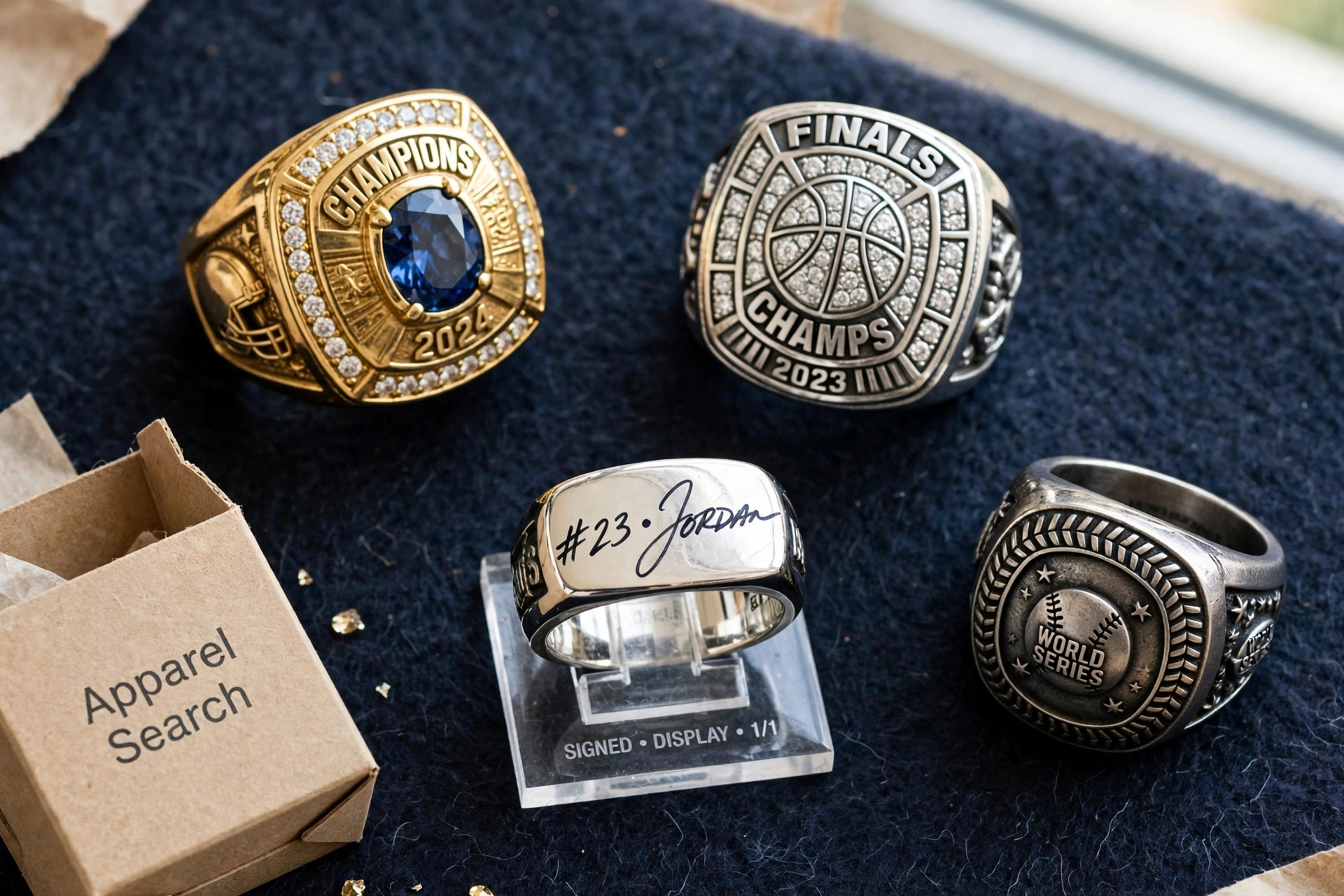
Sports Memorabilia Rings: A Symbol of Victory and Legacy
Sports memorabilia rings, particularly championship rings, hold a special place in the hearts of athletes, fans, and collectors alike. These rings symbolize victory, hard work, and the honor of being crowned a champion in the world of sports.
Popular Sports Championship Rings:
Super Bowl Rings: Championship rings from the NFL's Super Bowl are among the most sought-after sports memorabilia rings. The intricate designs and association with one of the biggest sporting events in the United States make them highly prized.
World Series Rings: Rings awarded to the winners of Major League Baseball's World Series are iconic in the sports memorabilia world. They often showcase team logos, diamonds, and other precious gemstones, commemorating the victory.
NBA Championship Rings: Rings from the National Basketball Association's (NBA) Finals are revered by basketball enthusiasts. These rings typically feature unique designs, incorporating the team's logo, gems, and the NBA trophy.
Stanley Cup Rings: Rings awarded to the champions of the National Hockey League (NHL) in the Stanley Cup Finals are a pinnacle of hockey memorabilia. They often feature creative designs that reflect the sport's intensity and history.
First Use of Championship Rings:
The first major sports league to utilize championship rings was Major League Baseball (MLB). The tradition of awarding championship rings to the World Series winners began in the 1922 season when the New York Giants received gold and diamond rings to commemorate their victory.
Other Collectible Sports Memorabilia Rings:
Hall of Fame Rings: Rings presented to athletes upon induction into their respective sports' Hall of Fame are highly collectible. These rings symbolize a lifetime of achievement and are often intricately designed to reflect the athlete's career.
Olympic Rings: Rings associated with the Olympic Games are also collectible, especially those presented to athletes who have achieved Olympic gold. They symbolize the pinnacle of sporting achievement on a global stage.
College Championship Rings: Rings awarded to the winners of college sports championships, such as the NCAA Men's Basketball Tournament or College Football Playoff National Championship, are cherished by fans and collectors.
History of the Sports Memorabilia Collecting Market:
The sports memorabilia collecting market has evolved over the years from a niche hobby to a multi-billion-dollar industry. It gained significant momentum in the 1970s and 1980s with the emergence of sports card shows, autograph signings, and dedicated memorabilia shops.
The internet revolutionized the sports memorabilia market, allowing collectors to connect and trade globally. Online auctions and marketplaces made it easier to buy and sell rare items, including sports memorabilia rings.
High-profile auctions, exhibitions, and trading events contribute to the growth of the market. Authenticity, rarity, condition, and the player associated with the item greatly influence its value and desirability in the collectors' community.
Sports memorabilia rings represent triumph, excellence, and the pride of being a champion. Whether from major league sports or significant events like the Olympics, these rings hold immense value in the hearts of collectors and sports enthusiasts, preserving the legacy of great moments in sporting history.
Reputable Auction Houses and Retailers for Sports Memorabilia Rings:
Heritage Auctions:
- Heritage Auctions is one of the largest and most reputable auction houses for sports memorabilia. They frequently feature sports championship rings in their auctions.
SCP Auctions:
- SCP Auctions is known for handling significant sports memorabilia collections and often includes championship rings in their auctions.
Goldin Auctions:
- Goldin Auctions is another reputable auction house specializing in sports memorabilia, including championship rings.
Christie's and Sotheby's:
- These prestigious auction houses occasionally feature high-profile sports memorabilia, including championship rings, in their auctions.
Sports Memorabilia Retailers:
Retailers specializing in sports memorabilia, both online and physical stores, often offer a selection of sports championship rings. Examples include Steiner Sports, Fanatics Authentic, and SportsMemorabilia.com.
Evaluating Authenticity of Limited Edition Collectible Jewelry:
Certificate of Authenticity (COA):
Look for a valid and reputable Certificate of Authenticity provided by the seller. This document confirms the item's authenticity and provides details about the jewelry's provenance.
Authentication Expertise:
Seek items from reputable sellers or auction houses with a track record of dealing in authentic collectibles. Expert authentication significantly enhances credibility.
Research and Documentation:
Conduct thorough research on the specific item you are interested in. Authentic limited edition collectibles often have detailed documentation, history, and information about the manufacturing process.
Material and Craftsmanship:
Examine the quality of the materials and craftsmanship. Authentic limited
edition collectibles use high-quality materials and demonstrate fine
craftsmanship.
Serial Numbers and Markings:
Genuine limited edition collectibles often have unique serial numbers, hallmarks, or other identifiable markings. Verify these against available records.
Provenance and History:
Understand the item's history and provenance. Items with a well-documented and verifiable history are more likely to be authentic.
Seller Reputation:
Buy from reputable and established sellers or auction houses with
positive reviews and a strong reputation for dealing in authentic
collectibles.
Independent Appraisal:
Consider seeking an independent appraisal from a certified appraiser to confirm the item's authenticity and value.
Customer Reviews and Testimonials:
Check customer reviews and testimonials from previous buyers to gauge the credibility and reliability of the seller or auction house.
Remember, due diligence is key when evaluating the authenticity of limited edition collectible jewelry. If in doubt, seek advice from experts in the field of collectibles or consult a reputable appraiser.
Learn more about sports memorabilia in our fashion industry terminology section.
You may find the following sections of our fashion website to be of interest:
Classes of Rings in the Hobby
Beyond the player ring itself there are staff and front-office rings in the same design but sometimes smaller or in lower materials, championship pendants made from ring tops, and salesman sample rings made by the manufacturer to show the design, often marked as samples and made in non-precious metal. Below those sit licensed replica editions sold to fans in limited runs, and unlicensed copies with no official standing. Knowing which class a ring belongs to matters more than its shine, because value drops steeply between classes even when designs look similar.
College bowl and conference rings, minor league title rings and rings from defunct leagues form an active collecting area at lower prices than major professional titles, with the same authentication rules. Buy from dealers who guarantee authenticity in writing, compare the ring against documented examples of the same year and maker, and be wary of a player-grade story attached to a ring with fan-grade construction.
Common Questions
How can I tell a real championship ring from a replica?
A team-issued ring is solid precious metal, usually 10k or 14k gold, with real stones, crisp deep engraving, a recipient name and correct maker marks from firms such as Jostens, Balfour or Tiffany. Replicas are typically lightweight alloy with plated finish, synthetic stones, shallow or misspelled detail and no verifiable recipient history. Weight, metal testing and provenance paperwork together are the test; no single feature proves authenticity.
What paperwork adds value to a memorabilia ring?
The strongest provenance is a letter or appraisal naming the original recipient, team and season, ideally supported by the presentation box, team correspondence or a documented chain of ownership from the recipient. A generic certificate printed for replica editions adds little. Rings that can be matched to a named player or a photographed presentation consistently command the highest collector interest.
Should a collectible championship ring be worn or resized?
Collectors generally advise against both. Wearing softens engraving, wears stones and shanks, and any resizing or polishing permanently reduces originality and value, since collectors prize an untouched ring in its issued size and finish. Display in a closed case away from humidity, handle with clean dry hands, and insure the ring at an appraised collectible value rather than its metal weight.