About Modal Fibers
A beechwood cellulose fiber engineered for softness and wet strength — the smooth hand inside premium underwear, tees and sheets.
Modal is a regenerated cellulose fiber made predominantly from beechwood pulp, produced by a modified viscose process tuned to give the fiber higher strength when wet and better dimensional stability than standard rayon. It was developed as a more durable answer to early rayon: a cellulosic fiber that keeps the softness and absorbency people wanted, without shrinking, stretching out or going weak in the wash to the same degree.
In the market, modal is the softness fiber. Its surface is exceptionally smooth, so modal jersey feels silky against the skin, drapes closely and takes deep, even dye shades. That is why it concentrates in underwear, loungewear, t-shirts, baby clothing and bedding — products where the fabric touches skin all day or all night and where a harsh hand would be noticed immediately.
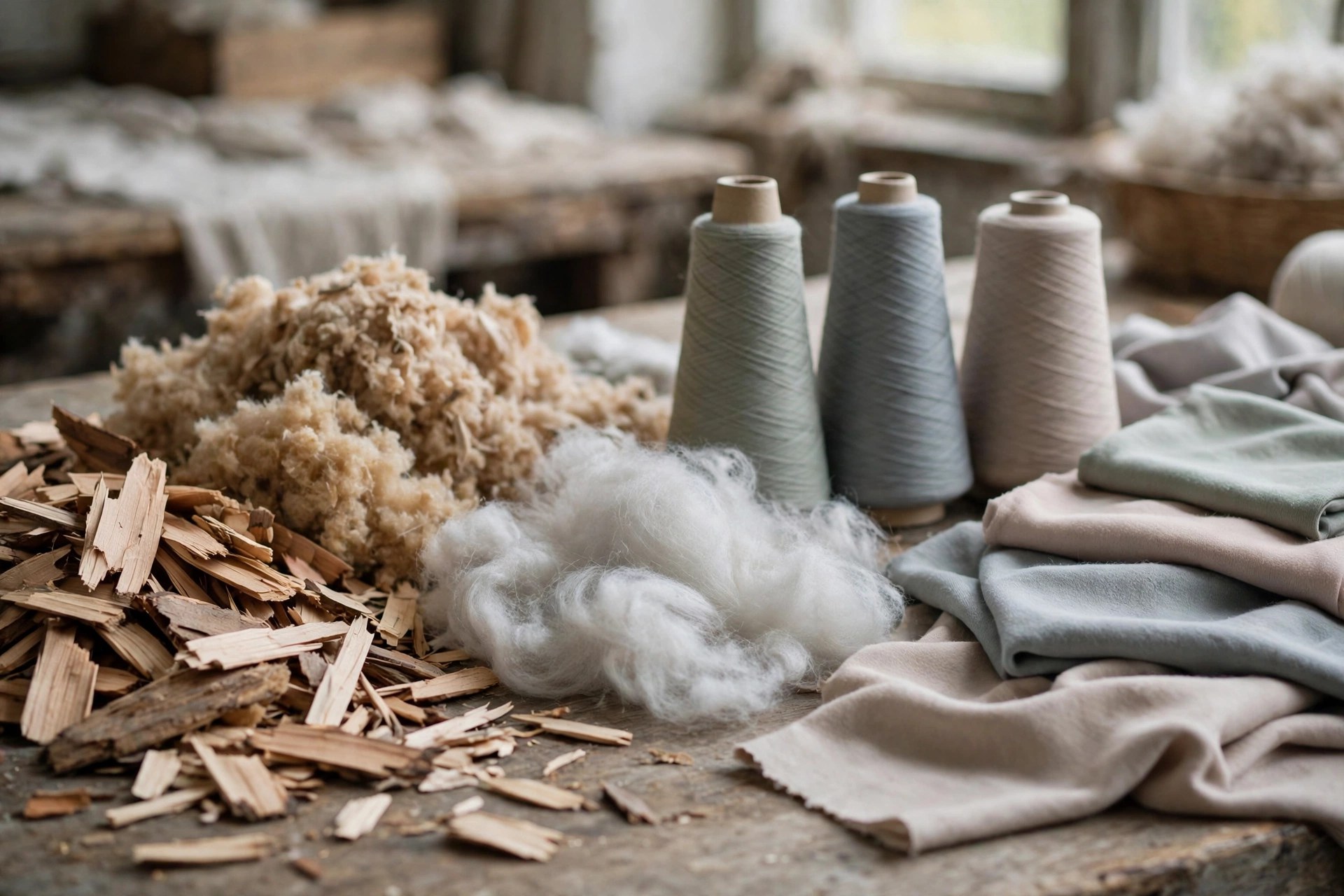
Modal and the Cellulosic Fiber Family
How Modal Is Made
Beech trees are chipped and pulped, and the purified cellulose is put through a viscose-type chemistry — steeping, xanthation and dissolution — with the recipe and spinning conditions adjusted so the regenerated fiber comes out with higher polymerization and a structure that holds up in water. The filaments are spun, washed, finished and cut mainly into staple fiber, because most modal is spun into soft knitted jerseys rather than woven as filament.
Beechwood sourcing is part of the modal story: beech is a self-seeding hardwood that grows widely in European forests, and the best-known modal production draws pulpwood from managed forests close to the fiber plant. As with every wood-based fiber, buyers who care about sourcing should ask for the chain-of-custody certification behind a specific supply rather than relying on the generic fiber name.
Softness With Better Wet Behavior
Standard viscose rayon loses a large share of its strength when wet and can shrink or distort in laundering; modal was engineered specifically to improve on both points. Modal fabrics keep their shape and size through repeated washing far better, stay soft instead of hardening, and resist the gray, worn look that tired rayon takes on. The fiber is also highly absorbent — more absorbent than cotton by weight — so it pulls moisture off the skin in underwear and sleepwear.
Modal is rarely the whole garment story. It is blended constantly: with cotton for tees that hold their fit, with a small share of elastane for underwear and leggings that must stretch and recover, and with polyester where cost or abrasion demands it. In each blend modal plays the same role — it is the ingredient added for hand feel and moisture comfort.
Modal, Lyocell or Viscose?
All three are regenerated cellulose, and the pages on this site treat them separately because their processes and behavior differ. Viscose is the original process and the softest-priced, with the weakest wet performance. Modal is the modified-viscose fiber, stronger wet and more stable, sold on softness. Lyocell is made by a different, closed-loop solvent process and is the strongest of the three in most constructions, with a smoother, cooler hand. Choosing among them is a fabric engineering decision, not a quality ladder.
More to Explore
Common Questions
What is modal made from?
Modal is regenerated cellulose made mainly from beechwood pulp. The pulp is dissolved using a modified viscose process and regenerated as fiber, so modal is a manufactured fiber built from a natural raw material.
Why is modal used so much in underwear?
Its surface is very smooth, it absorbs moisture well, and it keeps its shape and softness through repeated washing. Those three traits are exactly what next-to-skin garments need most.
Is modal better than viscose rayon?
For wet strength and dimensional stability, yes — modal was developed to improve those weaknesses of standard viscose. Viscose remains cheaper and drapes beautifully in woven fabrics, so each fiber keeps its own uses.