Judo Clothing Stores
Retailers for judo uniforms, judo gi and judogi
Judo clothing has one job no other sport asks of a uniform: it has to survive being grabbed, pulled and used as a lever, class after class. The judo gi — jacket, trousers and belt, together called the judogi — is therefore the heaviest uniform in the martial arts, woven from thick cotton with reinforced lapels, shoulders and knees. The stores listed on this page are martial arts retailers that stock judo clothing, drawn from the wider martial arts clothing directory. Below the listings you will find how a judo gi differs from a karate gi, how judo sizes work, what competition requires, and how to wash a gi without shrinking it out of its size.
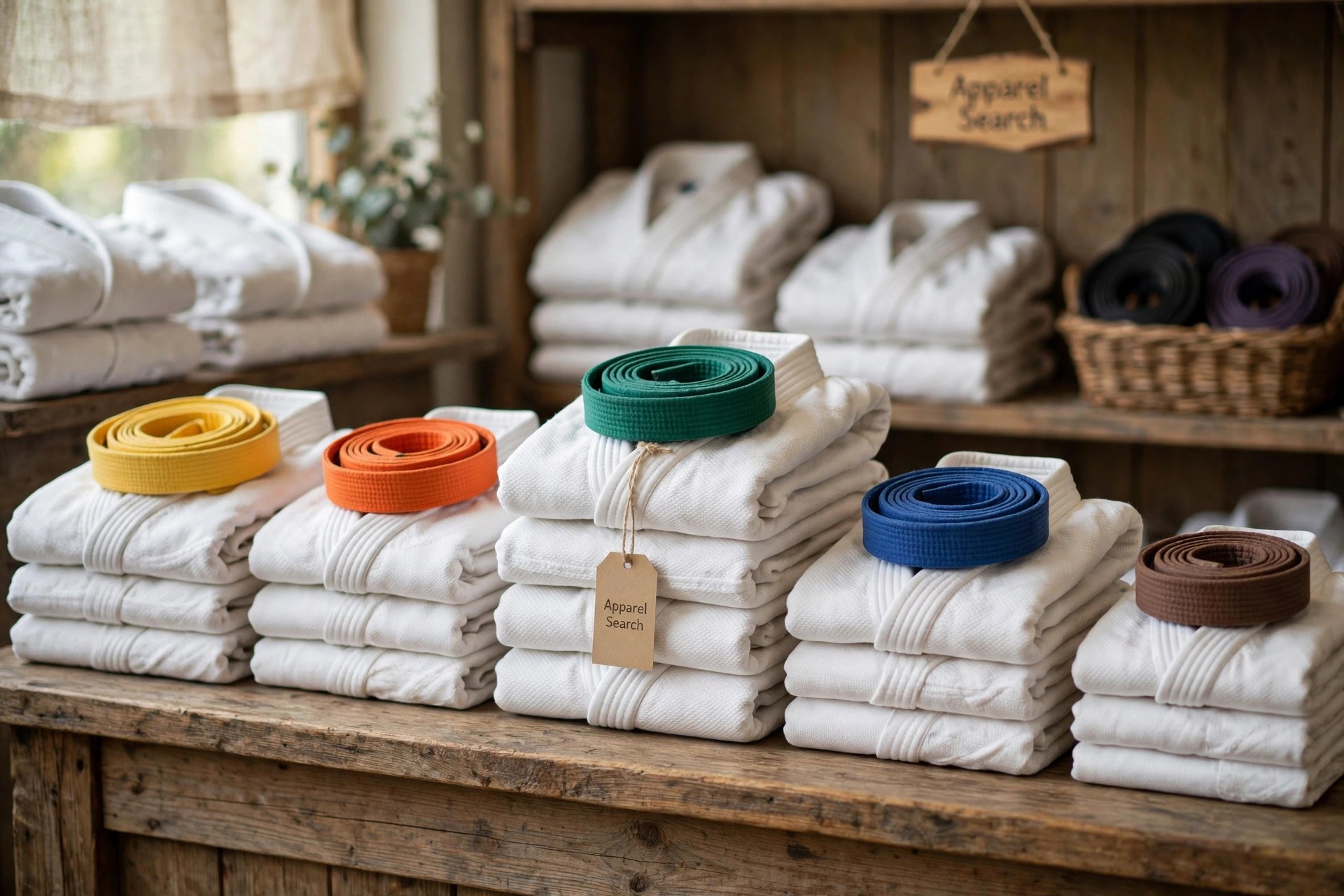
Judo Clothing Retailers
Blitzsport: Blitz was first established 10 years ago by directors who have a combined 95 years competing, instructing and coaching experience at both national and international levels, in the martial arts and sporting field. As a family run company they work together to provide the majority of martial arts products that every martial arts / fighter / club / council / armed forces etc. may possibly require.
Playwell Martial Arts (United Kingdom): international supplier of martial arts uniforms and equipment.
UK Martial Arts Online (UKMAO): specialise in supplying a great range for Martial Arts that includes Karate clothing. Since 2000 they have operated a fast and efficient service with quick delivery and a fast response to your queries. UK Martial Arts Online is home to so many Martial Art styles and they can supply Karate clothing all across the UK. They have a great range of Karate clothing available for you from the leading suppliers and manufacturers. They are sure you can find the right Karate clothing for you. They have steadily become a force to be reckoned with in the world of online commerce in Martial Arts. They offer an exhaustive range of outstanding, top quality Martial Arts Clothing, Protection and Equipment (including Karate clothing), to suit your style from the leading Manufacturers both in the UK and from the US.
What Makes a Judo Gi Different
A judogi has three parts: the uwagi jacket, the zubon trousers and the obi belt. The jacket is the engineering. It is woven in a dense, textured cotton — single weave for lighter training suits, double weave for the heaviest competition suits — with a thick, stiff lapel designed to be gripped. Seams are reinforced at the shoulders, chest and underarms, the skirt of the jacket is cut to a regulated length, and the trousers are reinforced at the knees because so much judo happens on the ground. A karate gi, by contrast, is built to move and snap, not to be hauled on, and will not last long in regular judo practice; that difference in construction is exactly why judo clothing has its own stores and its own page in this directory. Beginners usually start with an inexpensive single-weave gi and move to heavier weaves as their training and competition ambitions grow.
Judo Gi Sizing, Fit and Competition Colors
Judo uniforms are sized by height, not by chest or waist: sizes are marked in centimetres, typically from about 110 cm for small children up to 200 cm for tall adults, and you choose the size closest to the wearer's height. Cotton gis shrink on their first washes, so a new gi should feel slightly long in the sleeve and leg; that extra length is deliberate. Fit matters beyond comfort. In competition the jacket sleeve and trouser leg lengths, the width of the lapel and the looseness of the jacket are all regulated, and international events require one competitor to wear white and the other blue so officials and spectators can tell them apart — most clubs train in white and keep blue for tournaments. The martial arts clothing stores directory lists the retailers for the other disciplines alongside judo, and judoka who cross-train in wrestling can also browse the wrestling clothing stores linked from that page.
Washing and Caring for a Judo Gi
Wash a judo gi in cold water and let it air dry. Hot water and tumble dryers are the two things that shrink a gi out of its regulation fit, and a heavy double-weave gi can take a full day or more to dry, which is why regular players own two gis and rotate them. Wash the gi after every session — it absorbs a great deal of sweat, and training partners will thank you — but wash the belt rarely, if at all: many judoka never wash their obi, and in any case a belt should never go through a hot wash that could fade its color. Hang the jacket by its shoulders to keep its shape, check the lapel stitching and knee reinforcement for wear each season, and retire a gi whose lapel has gone soft or whose weave has torn, because a weakened jacket is both a rules problem and a safety problem on the mat.
Common Questions
What is a judo uniform called?
The full uniform is the judogi, usually shortened to gi. It consists of the uwagi jacket, the zubon trousers and the obi belt.
How are judo uniforms sized?
By height, in centimetres — you pick the size closest to the wearer's height. Cotton gis shrink slightly in the first washes, so a new gi should start a little long in the sleeve and trouser leg.
What colors do judo competitors wear?
White is the standard training and competition color. In international competition one player wears white and the other wears blue, so the two competitors are easy to tell apart.
How should a judo gi be washed?
In cold water, then air dried. Hot washes and tumble dryers shrink the heavy cotton weave and can take a gi out of its correct fit.