Country of Origin Markings for the Apparel Industry
How foreign-made clothing, footwear and accessories must be marked with their country of origin for import into the United States
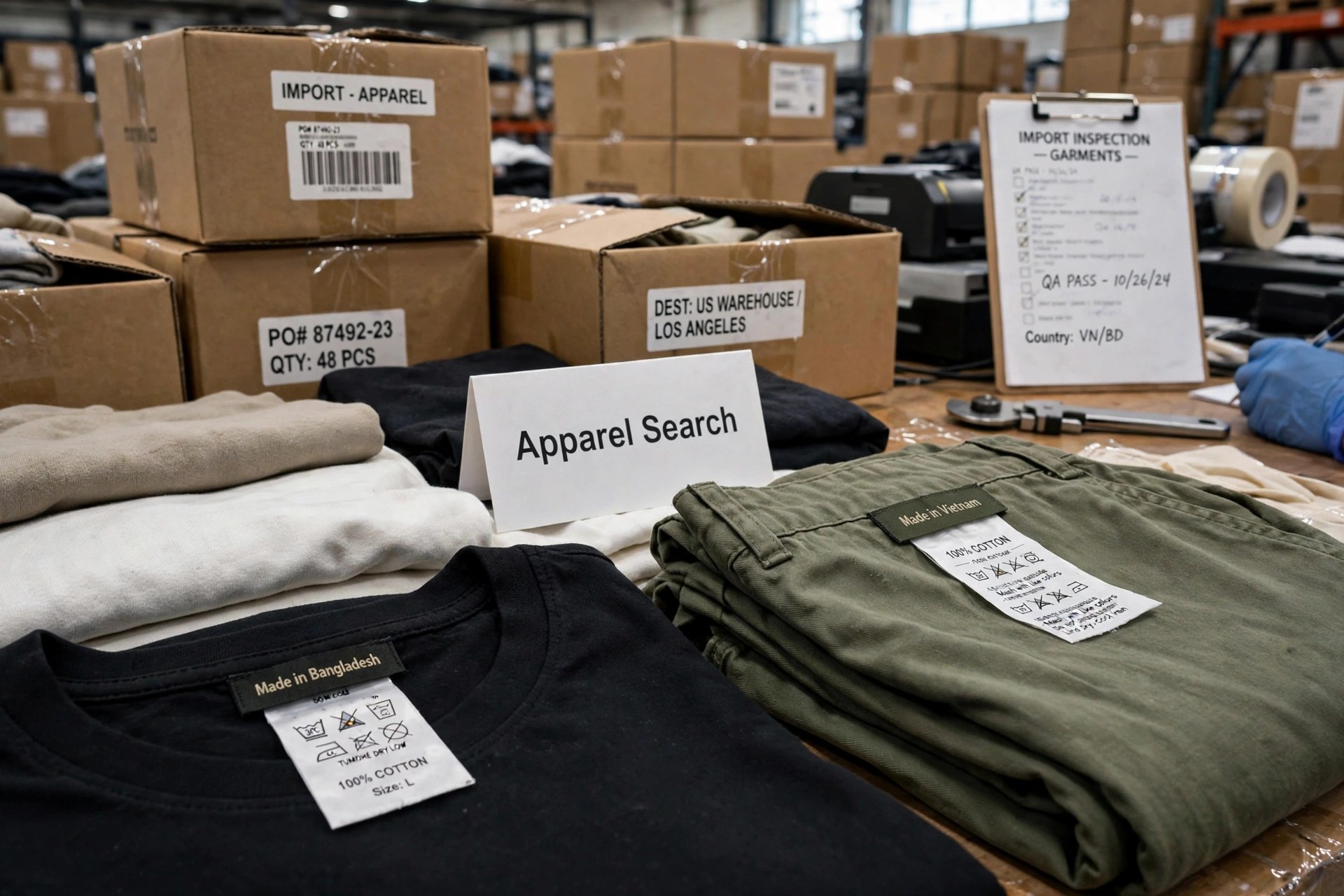
Every article of foreign origin entering the United States must be legibly marked with the English name of the country of origin unless an exception from marking is provided for in the law. Prior to importing your goods into the United States, you should ensure the overseas supplier has marked the goods with the country of origin — the marking must be legible and permanent enough for the ultimate purchaser to be made aware of the goods' origin.
Below is information that is helpful to fashion industry companies importing clothing, accessories and footwear into the USA: the core marking rule, and the two regulations that govern what happens when a U.S. place name or an American-sounding trade name also appears on the article. You should also consult directly with an apparel industry customs broker or the appropriate government agency to learn the most current requirements.
Customs & Labeling Guides
The Basic Marking Rule: §134.11
Section 304 of the Tariff Act of 1930, as amended (19 U.S.C. 1304), requires that every article of foreign origin (or its container) imported into the United States shall be marked in a conspicuous place as legibly, indelibly, and permanently as the nature of the article (or container) will permit, in such manner as to indicate to an ultimate purchaser in the United States the English name of the country of origin of the article, at the time of importation into the Customs territory of the United States.
Containers of articles excepted from marking shall be marked with the name of the country of origin of the article unless the container is also excepted from marking. In practice for apparel, that means the marking decision is made garment by garment and carton by carton before the goods leave the factory: a sewn-in or otherwise permanent label on the garment itself, and the country of origin on its container where the article itself qualifies for an exception.
When Other Place Names Appear: 19 CFR 134.46 and 134.47
19 CFR 134.46 requires the name of the country of origin of a good to be preceded by “made in,” “product of” or similar words if words or letters referencing a location other than the country of origin — for example “United States” or “American” — appear on an imported article or its container and may mislead the consumer as to the actual country of origin. A garment made overseas but carrying a U.S. city name, a U.S. flag motif with wording, or American-themed branding is exactly the case this rule addresses.
19 CFR 134.47, on the other hand, states that when “United States,” “America” or the name of a U.S. location appears as part of a trademark or trade name, the associated good must be legibly, conspicuously and permanently marked to indicate the name of the country of origin of the article, preceded by “made in,” “product of” or similar words in close proximity or some other conspicuous location. Brand owners importing private-label apparel under a U.S.-sounding trade name should read the two rules together: the qualifier has to sit close to the potentially misleading wording, not hidden on a distant part of the package.
What This Means for Apparel, Footwear and Accessories
For clothing, the marking usually lives on the garment's label alongside fiber content and care information — but country-of-origin marking and care labeling are separate legal requirements with separate rules, so a label that satisfies one does not automatically satisfy the other. Learn the wash care labeling rules alongside this page, and treat the COO (country of origin) question as its own compliance step in the import checklist.
Before importing goods into the United States, ensure the overseas supplier has marked the goods with the country of origin, and check a production sample rather than assuming the factory's standard label is compliant. The marking must be legible and permanent enough for the ultimate purchaser to be made aware of the goods' origin — a marking that washes out, peels off or hides inside a seam where a purchaser would never see it fails the purpose of the rule even if the words are technically present.
Currency of This Information and Where to Check
The information on this page was retrieved from various government websites in March 2015. It may be outdated and incomplete, and requirements are subject to change without prior notice — consult directly with an apparel industry customs broker or the appropriate government agency to learn the most current requirements before you import.
The references below are the starting points for that check: U.S. Customs and Border Protection's informed compliance publication on marking of country of origin on U.S. imports, the text of 19 CFR Part 134 on the eCFR site, and the U.S. International Trade Commission publication on country-of-origin marking. If you know of additional information or resources that will help educate the apparel industry in regard to country of origin labeling, let Apparel Search know.
More Shipping & Freight Guides
Common Questions
What does U.S. law require for country-of-origin marking?
Unless excepted by law, section 304 of the Tariff Act of 1930 (19 U.S.C. 1304) requires every article of foreign origin imported into the United States to be marked in a conspicuous place as legibly, indelibly and permanently as the nature of the article permits, indicating to the ultimate purchaser the English name of the country of origin.
When must 'made in' wording precede the country of origin?
Under 19 CFR 134.46, when words referencing a location other than the country of origin — such as 'United States' or 'American' — appear on the article or its container and may mislead the consumer, and under 19 CFR 134.47 when a U.S. name appears as part of a trademark or trade name, the country of origin must be preceded by 'made in,' 'product of' or similar words in close proximity.
Is this page's information current?
The information was retrieved from government websites in March 2015 and may be outdated or incomplete; requirements can change without notice. Consult a customs broker or the appropriate government agency for the most current requirements before importing.