Serial Shipping Container Code (SSCC)
The GS1 license plate for cases, cartons, pallets and cargo containers — and how it speeds receiving
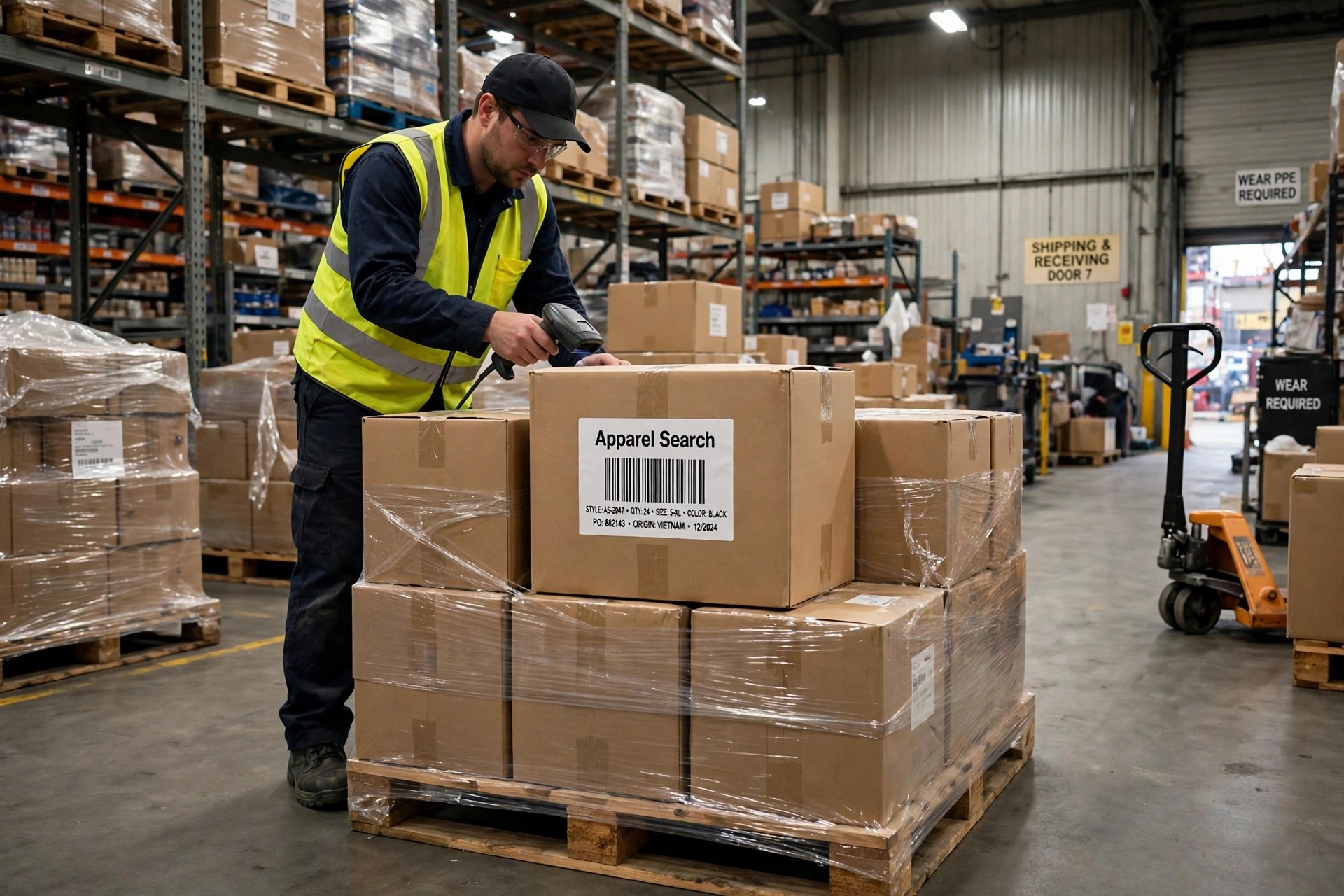
The Serial Shipping Container Code — the SSCC — is used to identify logistics units, such as cases, cartons, pallets, or air and boat cargo containers of trade items, as they travel through shipping and receiving. A logistics unit is whatever grouping is actually being moved and handled: for an apparel shipment that might be a single carton of folded shirts, a pallet of cartons bound for one store, or a container load moving between warehouses. Each distinct unit gets its own code, so the unit — not just the product inside it — can be tracked from the shipping dock to the receiving dock.
When used in conjunction with electronic business transactions, the SSCC acts as a license plate, identifying the contents of the logistics unit. Like a license plate, the number itself does not describe the goods; it is the key that points to the record that does. The SSCC enables companies to link to additional information about the logistic unit — what is packed inside, in what quantities, for which order and destination — held in the sender's and receiver's systems.
Container & Marking Guides
How the Number Is Built
An SSCC is an 18-digit number with a fixed structure. It opens with an extension digit, a single digit from 0 to 9 that simply expands the numbering capacity available to a company. Next comes the GS1 Company Prefix, licensed to the company assigning the code, which is what makes the number globally unique — no two companies hold the same prefix. The company then adds its own serial reference, numbering each logistics unit in sequence, and the final digit is a check digit calculated from the seventeen digits before it, so scanners and systems can catch a misread number instead of matching the shipment to the wrong record.
On the unit itself the code is printed as a barcode — in the GS1-128 symbology it is carried with the Application Identifier (00) in front of it, which tells the scanner that the number it has just read is an SSCC and not a product code. That distinction matters in an apparel warehouse, where the same scan gun reads trade-item barcodes on cartons and SSCC labels on the pallets those cartons sit on, and the two kinds of number must never be confused.
Information That Travels Ahead of the Goods
The information the SSCC points to can be communicated via a Dispatch Advice or Advanced Shipping Notice (ASN) prior to the logistic unit's arrival. The supplier sends the notice electronically when the shipment leaves, listing each unit's SSCC alongside its contents, so the receiving warehouse knows what is coming, in which units, before the truck backs up to the dock. For fashion distribution — where one delivery may hold cartons for several departments, sizes and colorways — that advance breakdown is what lets receiving staff plan labor, space and put-away instead of opening every carton to find out.
Upon receipt the SSCC will be scanned, providing the required information to speed up the receipt of goods as well as the subsequent invoicing process. One scan per unit replaces counting and keying carton by carton: the system matches the scanned code to the ASN, books the contents into stock, and flags anything missing or unexpected at the dock rather than days later. Because the received units are already matched to the shipment record, the invoice that follows can be checked against what actually arrived with far less manual work.
Using SSCCs on Apparel Shipments
In practice, the code only works if it is applied consistently at the point of packing. Each case, carton or pallet that will be handled as a unit needs its SSCC label applied before it leaves, and the number must be recorded against that unit's true contents at the same moment — a correct code attached to the wrong contents is worse than no code, because every downstream system will trust it. Mixed cartons and re-packed pallets need new units and new codes; a pallet rebuilt mid-journey is a different logistics unit from the one that started out, even if most of its cartons are the same.
Learn more about the Serial Shipping Container Code at the GS1 website, which maintains the standard. Readers working through the rest of the shipping paperwork may also want the glossary of international trade terminology and the shipping & transportation industry definitions section, and the main Shipping guide ties the identification of units to the containers and pallets they travel in.
Common Questions
What is the Serial Shipping Container Code used for?
The SSCC identifies a logistics unit — a case, carton, pallet or cargo container of trade items — as it travels through shipping and receiving. Paired with electronic business transactions it works as the unit's license plate: scan the code and you reach the information that describes exactly what is inside that unit.
How is the SSCC number put together?
An SSCC is 18 digits long. The first is an extension digit that expands the numbering capacity, the next block is the GS1 Company Prefix licensed to the company that assigns the code, then comes the serial reference that company gives the individual unit, and the last digit is a check digit calculated from the others so a mis-scan can be detected.
How does the SSCC speed up receiving?
The details behind the code travel ahead of the goods in a Dispatch Advice or Advance Ship Notice (ASN). When the unit arrives, staff scan its SSCC, pull up the information already sent, and check the delivery against it — which speeds up the receipt of goods and the invoicing that follows, because neither has to start from the paperwork on the day.