Men's Gloves on Amazon
Dress leather, winter warmth and work-ready pairs
Gloves are the most task-specific garment a man owns: the pair for a winter commute, the pair for the worksite and the pair for a formal coat share nothing but a shape. Amazon's men's glove department holds them all — leather dress gloves, insulated ski and winter gloves, work gloves, driving gloves, knit basics and touchscreen-ready styles for the phone age.
This guide sorts the categories by job, explains the materials and insulation labels, and gives the sizing method that glove shopping online depends on. A glove that fits badly is worse than no glove: circulation, not just insulation, keeps hands warm.
Gloves in the basket, cold-weather shopping continues at the Apparel Search Amazon clothing guide — coats, hats and boots are all in the same store.
Gloves by Job
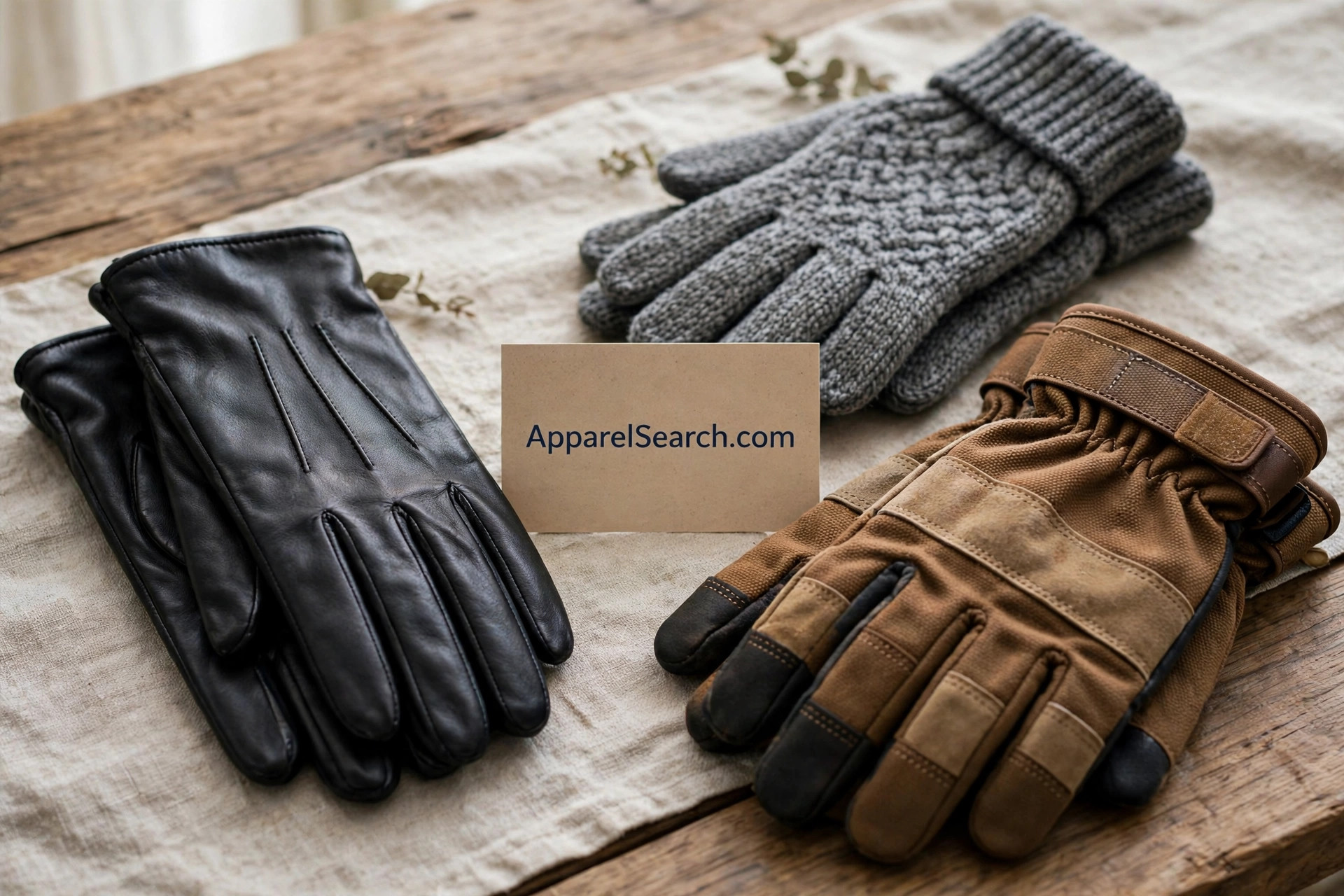
Dress gloves in leather — smooth, close-fitting, often lined in cashmere, wool or silk — belong with overcoats and suits. Driving gloves, fingerless or full-fingered with knuckle cutouts and perforations, exist for grip and feel on the wheel. Winter and ski gloves trade elegance for engineering: waterproof membranes, insulation layers and gauntlet cuffs that seal out snow.
Work gloves split by hazard — leather palms for abrasion, cut-resistant knits for handling, insulated versions for cold storage and winter sites. Knit and fleece gloves are the everyday winter basic, and touchscreen-compatible fingertips have become standard across nearly every category.
Materials, Linings and Insulation
Leather grades matter: deerskin is supple and tough, sheepskin fine and dressy, cowhide hardwearing. Linings decide warmth per thickness — cashmere is the luxury standard, fleece the practical one, and branded synthetic insulations are rated by weight, with higher gram numbers for colder work. A waterproof-breathable membrane is the feature that separates a ski glove from a fashion glove with ambitions.
Read the construction details in listings: pre-curved fingers, reinforced palms and sealed seams are the markers of gloves built for use rather than appearance. Reviews from buyers in your climate zone are the warmest data available.
Sizing and Care
Measure around the knuckles of the dominant hand, excluding the thumb; the inches convert to glove sizes on the brand's chart, and letter sizes (S–XL) map from the same measurement. Between sizes in dress leather, choose the snugger — leather relaxes to the hand. In insulated gloves, a little air space is insulation itself, so do not size down.
Let gloves dry naturally away from radiators, condition dress leather occasionally, and store pairs flat or clipped together. A good pair, dried properly, serves for years of winters.
Two Pairs Cover the Winter
For most men the glove wardrobe is two pairs deep: a lined leather pair for dressed and driving days, and an insulated technical pair for real weather — snow, sites and stadiums. Knit gloves fill the gaps in coat pockets and car consoles, where a forgotten pair is always the one needed. Bought in that order and dried properly after wet days, two good pairs outlast a drawer of cheap ones, and the hands — asked to work in the cold more than any other part of the outfit — notice the difference daily.
Common Questions
How do I measure for men's gloves?
Wrap a tape around the knuckles of your dominant hand, excluding the thumb. The inch measurement converts to your glove size on the brand's chart.
What is the warmest glove lining?
It depends on the job: cashmere lines dress gloves elegantly, fleece is the practical everyday lining, and weighted synthetic insulation in a waterproof ski or work glove gives the most warmth for severe cold.
Do touchscreen gloves work with phones?
Yes — conductive fingertips on the thumb and index finger operate capacitive screens. The feature is now common across knit, fleece and even many leather styles.