Men's Hats on Amazon
Caps, brims, beanies and flat caps for every season
A hat is the most expressive square foot of a man's wardrobe, and Amazon's men's hat department is correspondingly vast: baseball caps by the thousand, fedoras and trilbies, flat caps, beanies, bucket hats, sun hats with real UV ratings, and cold-weather headwear of every weight. Team and brand logos fill whole sub-departments of their own.
Hat shopping online succeeds on two things: an honest head measurement and a clear sense of the job — sun, warmth, formality or allegiance. This guide covers both, plus the shapes and materials that define each style.
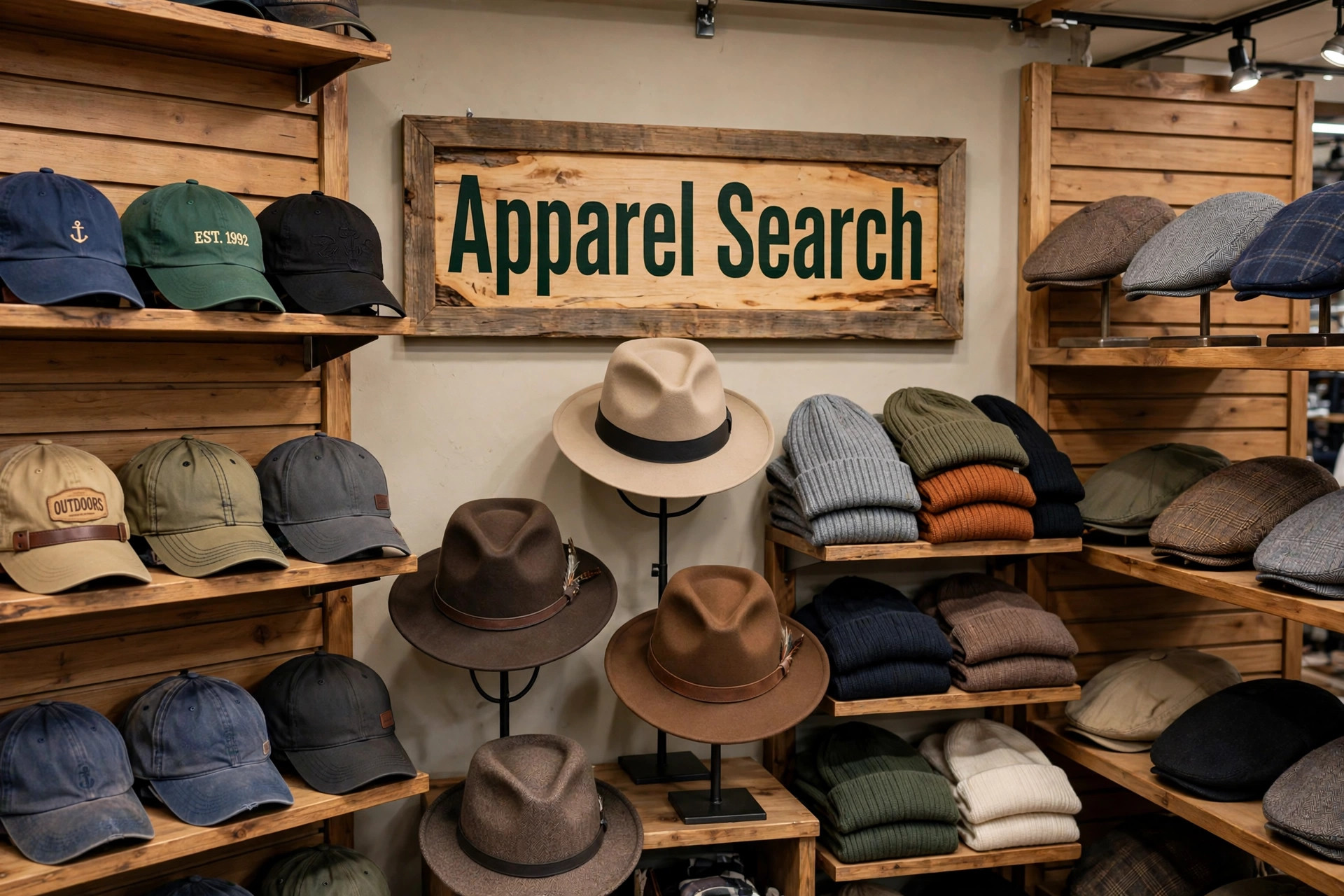
Hat sorted, the rest of the outfit is one store away — the Apparel Search Amazon clothing guide covers clothing and shoes for the full look.
The Styles and Their Jobs
The baseball cap is the default: shade, casualness and team identity in a six-panel package, fitted, snapback or adjustable. Beanies own winter — cuffed or fisherman styles in wool, acrylic or blends. Flat caps bring a tailored note to casual jackets, in tweed for winter and linen for summer. Fedoras and trilbies are the dress hats: felt for the cold months, straw for the warm ones, brim width setting the formality.
Sun hats are equipment, not costume: wide brims, UPF ratings and chin cords for water and trail. Bucket hats split the difference between sun protection and street style. Each style in the store's filters maps to one of these jobs — start from the job and the shortlist builds itself.
Measuring and Materials
Measure around the head just above the eyebrows and ears, where a hat band sits; the inches convert to hat sizes (a 23-inch head is roughly a 7 3/8 or a large). Fitted styles demand the exact number; adjustable styles forgive. Between sizes, most men prefer the larger with a hat-sizing insert over a tight band that headaches by noon.
Materials carry the season: wool felt holds shape and sheds weather, straw breathes, cotton twill washes, technical synthetics wick and pack flat. Lining, sweatband quality and stitching show in close-up photos — the details that separate a hat that lasts from one that wilts.
Wearing It Well
Proportion is the rule: brim width and crown height should echo the wearer's build and face — narrow brims on slighter frames, broader brims on larger ones. A hat should sit level or with a slight forward tilt, and it should look deliberate: the difference between a hat man and a man in a hat is mostly confidence and fit.
Store hats on a hook or shelf, not crushed in a drawer; stuff a crown with tissue for travel. A hat bought well becomes a signature — the store's depth means the signature can be entirely your own.
One Hat Per Season, Worn Properly
A man building a hat habit does best one season at a time: a beanie and a flat cap for winter, a cap and a brimmed sun hat for summer, in colors that serve the coats and jackets he already owns. The discipline is in the wearing — a hat worn daily for a month becomes his; a hat worn twice stays a costume. Start with the season you are in, choose the shape by the mirror test explained above, and let familiarity do what no styling advice can: make it look like it belongs on your head.
Common Questions
How do I find my hat size?
Measure around your head just above the eyebrows and ears. Convert the inches using the brand's chart — 23 inches is about a size 7 3/8, or large in letter sizing.
Which hat is best for sun protection?
A wide-brim sun hat with a stated UPF rating — it shades the face, ears and neck. Bucket hats and legion-style caps with neck flaps are strong alternatives.
What is the difference between a fedora and a trilby?
Brim width, mainly: a fedora has a wider brim (around 2.5 inches) and a pinched crown; a trilby is its narrower-brimmed, sharper relative.