Princess Cut Ball Gown
The Apparel Search guide to finding your perfect gown.
Shop Princess Cut Ball Gowns Now
Shop Princess Cut Ball Gowns on eBay Shop Princess Cut Ball Gowns on AmazonThe eBay and Amazon links on this page are affiliate links. If you make a purchase through them, Apparel Search may earn a commission.
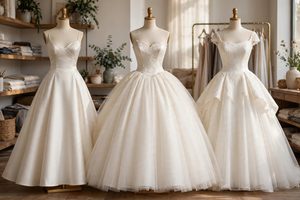
The princess cut gets its name from its royal effect, not its shape: long vertical seams run from shoulder (or armhole) all the way to the hem, sculpting the gown to the body without a horizontal waist seam. The result is an unbroken, elongated line that looks custom-made — because the seams give a tailor endless room to adjust.
This is the couture-lover's cut. It creates a smooth, continuous silhouette that lengthens petite frames and showcases hourglass figures. The seaming also allows for beautiful fabric play — alternating panels of satin and lace, or subtle color blocking — that a seamed waist would interrupt.
Who It Flatters
Wonderful for petite women, since the unbroken vertical lines add visual height. Hourglass figures get a glove-like fit that follows their curves. It also flatters fuller figures beautifully, as the long seams create a lengthening effect with no waistband digging in. Tailoring is easy, so between-size shoppers should size up and alter down.
Styling a Princess Cut Gown
The clean lines invite a single focal point: a dramatic necklace, an embellished belt, or bold earrings — pick one. Because the silhouette is so sleek, fabric choice drives the mood: mikado or duchess satin for architectural formality, crepe for modern minimalism, lace panels for romance.
What to Look For When Buying
Seam quality is the tell: they should lie flat with no puckering. A well-made princess gown needs minimal alterations, but budget for a hem and possibly taking in the bodice seams. Check that the skirt has enough fullness at the hem to balance the fitted top — otherwise the "ball gown" reads more like a sheath.