Fashion Design Schools
Apparel Search fashion summary — a short guide to fashion design schools.
Fashion design schools train people to become fashion designers, illustrators and pattern makers. The need for training starts with the nature of the work: because of the time required to bring a garment to market, designers must anticipate changes in consumer tastes, so design education teaches both clothing aesthetics and the reading of taste itself. A school cannot teach what will be in style after you graduate — but it can teach the concepts behind fashion design, which is what makes anticipation possible.
Fashion Design Schools — Explore & Resources
What Design School Teaches
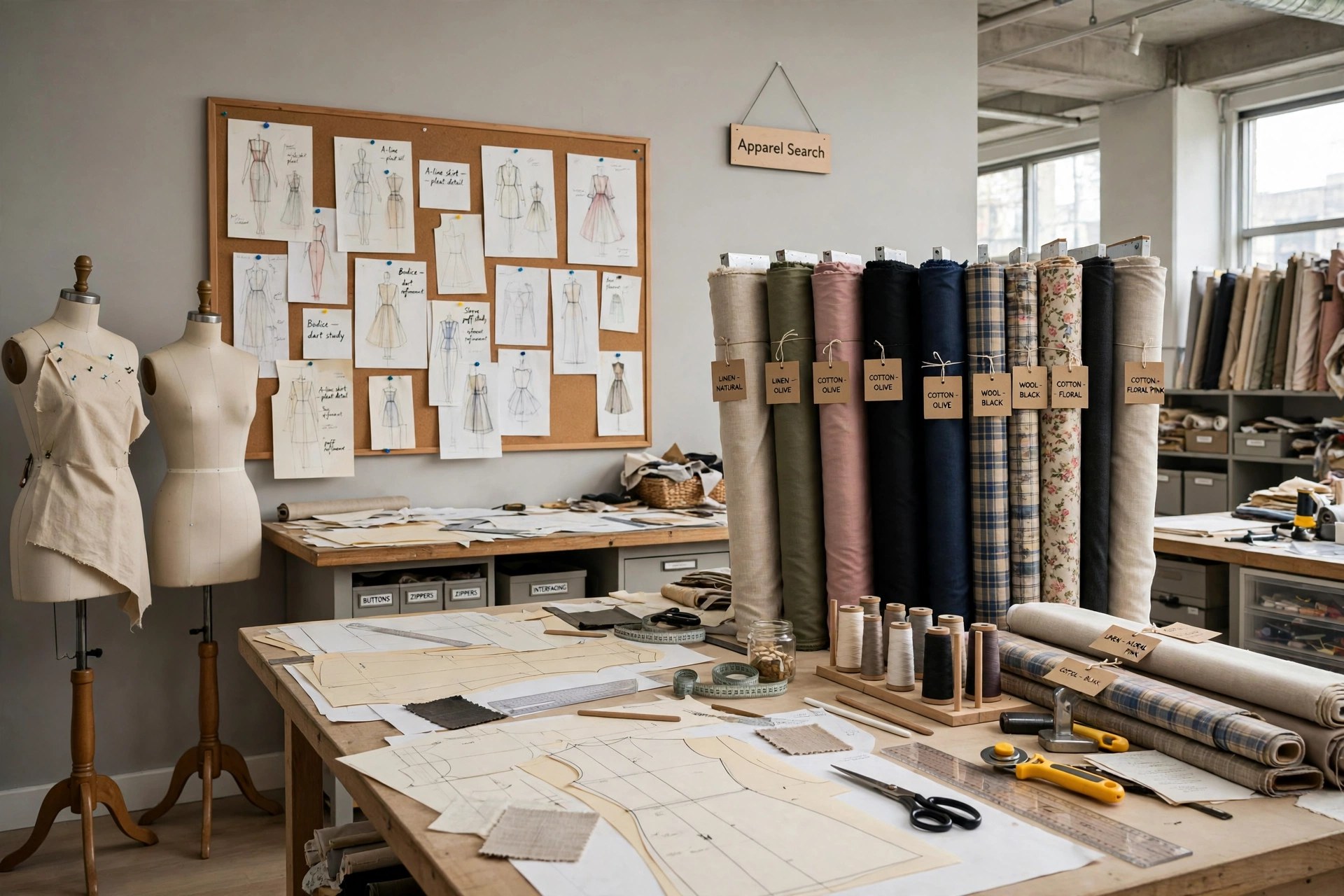
Many fashion design degree programmes teach traditional and computer-generated design techniques for making stylish clothing, footwear and accessories from start to finish. Designers create original clothing, accessories and footwear: they sketch designs, select fabrics and patterns, and give instructions on how the products they design are to be made. Designers conduct research on fashion trends and interpret them for their audience, and the resulting designs are used by manufacturers to produce the garments. Before that process can begin, a designer must understand fashion design itself, garment construction, fabrics and trimmings — exactly the curriculum a design school exists to deliver.
Good programmes add the commercial layer: the marketing, entrepreneurial and creative skills needed to promote designs in the global fashion market. Degrees exist across design, merchandising and the business side of fashion, and an education in fashion design does not have to start in college — some high schools offer courses in fashion design, with provision for high school students covered in the link below.
Noted Schools and Continuing Learning
Fashion design schools to consider include Central Saint Martins and the Royal College of Art in London, and Parsons, The New School of Design and the Fashion Institute of Technology in New York — with many more findable through the best and top fashion design schools pages linked below, and through search. Location matters less than fit: the right school is the one whose specialisms match the designer's intended market.
Graduation is not the end of the syllabus. Fashion is influenced by trends and by cultural and social attitudes, and the working designer's skill is continuous learning: trends change, cultures adjust and attitudes sway. Professionals return for courses in new methodology and technique — a designer who sketches with pencil may take a course in CAD, for example. The fashion drawing summary and the fashion college summary linked below branch from here, as do the designer resources for those already working.
Photos

Common Questions
What do you learn at a fashion design school?
Design concepts, garment construction, fabrics and trimmings, sketching, pattern work and computer-generated design techniques — plus trend research and the marketing and entrepreneurial skills to sell designs.
Which fashion design schools are best known?
Central Saint Martins and the Royal College of Art in London, and Parsons and the Fashion Institute of Technology in New York, are consistently named. The best and top schools pages linked here compare the wider field.
Can fashion design study start before college?
Yes. Some high schools offer fashion design courses, and short courses and CAD classes let working designers keep learning after graduation — fashion changes constantly, so designers treat learning as continuous.