Fashion Houses
Apparel Search fashion summary — a short guide to fashion houses.
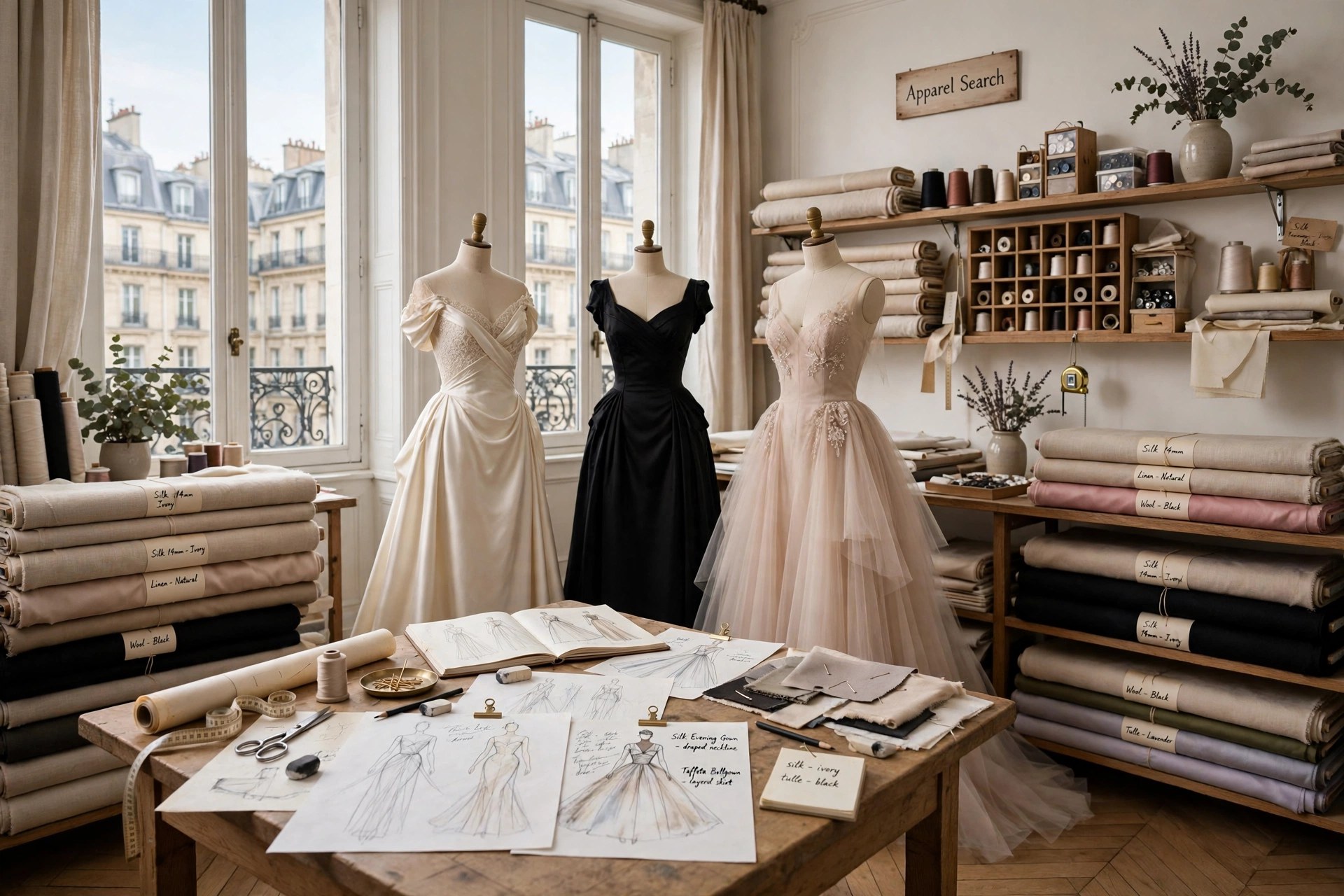
A fashion house is a company specialising in the design and sale of high-fashion clothing and accessories. Typically a house creates clothing designs and puts them into production, organised around one main master designer with several other designers working under that designer's guidance. The house — not the individual garment — is fashion's oldest organising unit.
Fashion Houses — Explore & Resources
Worth and the Invention of the Fashion House
The modern industry of firms and fashion houses run by individual designers started in the 19th century with Charles Frederick Worth, who from 1858 was the first designer to have his label sewn into the garments he created. That label changed the trade: clothing stopped being anonymous craft production made to a customer's order and became authored design, sold under a name whose reputation carried the value.
The structure Worth established still describes a house today. A creative head sets the direction, a studio of designers and artisans develops it, and production follows the design rather than the other way round. Fashion houses are associated with high-end designers and brands — developers of clothing and footwear, however large and important, are not typically considered fashion houses, because the house model begins with design authorship rather than manufacturing or distribution.
The Great Houses by Country
French designers have long created the most renowned and coveted fashion brands in the world: fashion design and production gained prominence in France from the 15th century and exploded into a rich industry for local consumption and export from the 17th century. Paris remains at the heart of it, and the French houses include Chanel, Yves Saint Laurent, Christian Dior, Jean-Paul Gaultier, Paco Rabanne, Chloé, Hermès and Louis Vuitton.
Italy's houses include Fendi, Versace, Biagiotti, Valentino, Prada, Dolce & Gabbana, Armani, Gucci, Max Mara and Etro. Britain's include Alexander McQueen, Matthew Williamson and Stella McCartney, with most English fashion houses located in London. Together the three capitals define the traditional geography of the fashion house — though the system's vocabulary, from atelier to haute couture, remains French wherever in the world a house operates.
Houses in the Modern Industry
The fashion house model has stretched considerably since Worth's time. Houses now sit inside large luxury groups alongside independent family firms; creative directors rotate between houses, carrying followings with them; and a house's business extends far beyond its founding garments into fragrance, accessories, eyewear and hospitality, all traded under the house name and its codes. What has not changed is the organising principle: a recognisable creative identity, set at the top, expressed consistently across everything the house makes. Fashion companies that lack that single authored identity may be excellent businesses, but the industry does not call them houses — the distinction Worth's label created is still the working definition.
Common Questions
What is a fashion house?
A company specialising in designing and selling high-fashion clothing and accessories, typically led by one principal designer with other designers working under their guidance, creating designs and putting them into production.
Who founded the first fashion house?
Charles Frederick Worth is credited with starting the modern fashion house system in 1858, as the first designer to sew his label into the garments he created.
Which countries are known for fashion houses?
France leads historically, with houses such as Chanel, Dior, Hermès and Louis Vuitton in Paris; Italy follows with houses such as Gucci, Prada, Versace and Armani; Britain's houses, including Alexander McQueen and Stella McCartney, centre on London.