Fashion Industry Technology
Apparel Search fashion summary — a short guide to fashion industry technology.
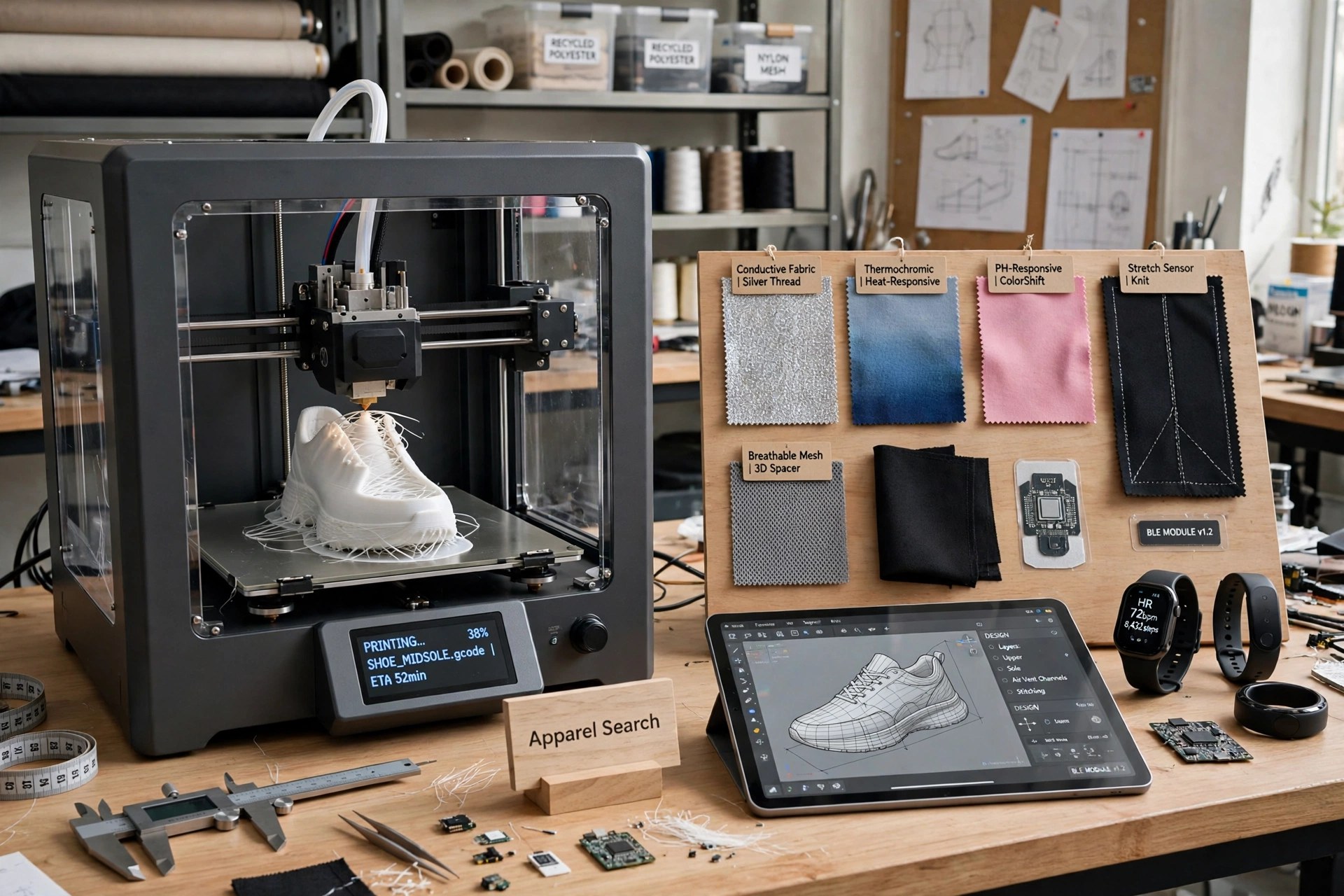
Technology is involved in nearly everything the fashion industry does: fabrics, manufacturing processes, design methods, transportation, warehousing and retailing. And it is no longer only behind the clothing — wearable technology means the technology is now part of the clothing itself. Wearing a computer in the form of clothing is not a future prediction; it currently exists.
Fashion Industry Technology — Explore & Resources
Where Technology Works in Fashion
The list of working applications is long: design software; virtual reality shopping experiences; augmented reality; smart video walls and interactive mirrors; software to spot and predict fashion trends; digitisation and mobile shopping at any time and place; wearable technology in glasses, watches, jackets, gloves and shoes; personalised product recommendations built on data collection; upgraded point of sale systems; functionality-focused fabrics; and personalised shopping experiences generally. The way consumers view, browse and purchase fashion has changed permanently in the digital age, with 3D printing and smartphones among the clearest causes.
Artificial intelligence is the largest current frontier. The industry was slow to harness some new technologies — virtual reality and AI were only scratched at the surface for years — but rapid advances in machine learning have pushed AI into the mainstream: in fashion it supports predictive forecasting, capacity planning and merchandising, which means consumers see better product availability and faster, more accurate deliveries.
Augmented Reality, Printing and Smart Fabrics
Augmented reality has roots in a 1992 US Air Force-funded project called Virtual Fixtures, which offered a real-time view of surroundings enhanced by computer-generated information and was designed to help surgeons operate remotely. Decades of development later, AR became a significant retail sales tool: beauty brands were early adopters, with companies such as L'Oréal offering AR apps that let customers test products without mess, and the same approach suits eyewear, makeup and clothing try-ons.
On the production side, direct-to-garment printing and 3D printed clothing move manufacturing closer to the individual order, while smart fabrics weave electronics into the textile itself and fitness trackers turned the fashion accessory into a sensor platform. The business direction is consistent: technology is making clothing faster to produce, less expensive and better in quality, and businesses assessing their future should follow fashion technology news as a standing input, because tech keeps breathing new life into the textile and apparel market.
What to Watch Next in Fashion Technology
The technologies most likely to expand next are the ones already proven at small scale. Artificial intelligence is moving from forecasting into design assistance and automated product description. Augmented reality try-on is spreading from beauty and eyewear into clothing fit, where the prize — fewer returns — is largest. 3D printing remains strongest in footwear components and prototypes rather than whole garments, while smart fabrics are finding their first mass uses in sport and health monitoring rather than in everyday dress. The pattern to expect is the industry's usual one: slow adoption, then rapid catch-up once a technology proves it saves money or sells product, which is precisely what happened with e-commerce and with AI planning tools.
Common Questions
How is technology used in the fashion industry?
Across design software, manufacturing, fabrics, logistics, warehousing and retail: virtual and augmented reality shopping, trend-prediction software, personalised recommendations, upgraded point of sale, 3D printing, direct-to-garment printing, smart fabrics and wearable devices.
What does artificial intelligence do for fashion?
AI supports predictive forecasting, capacity planning and merchandising, helping brands and retailers stock the right products and deliver them faster and more accurately. It reached fashion later than some industries but is now in the mainstream.
What is wearable technology in fashion?
Technology worn as clothing or accessories — glasses, watches, jackets, gloves and shoes with computing and sensing built in, plus smart fabrics with electronics woven into the textile itself.